 |
| Image by Unicorn Riot |
Anti-Uranium Summit Sheds Light on Toxic Industry
By Sean Summers, Unicorn Riot June 17, 2026
Watch videos: https://unicornriot.ninja/2026/anti-uranium-summit-sheds-light-on-toxic-industry/
Coconino County, Arizona – At the feet of Wii’i Gdwiisa, or Red Butte as it’s called in English, the winds are strong. Just a few miles south of the Grand Canyon’s rim sits the tall sandstone butte surrounded by juniper trees and vast desert lands.
A makeshift tarp awning flaps in the gusts while people work to hold the much-appreciated shade structure in place. On a folding table sit a variety of Geiger counters, used to detect radioactive particles. They chime periodically, reporting background radiation detected from nearby objects or carried in the wind.
Rodney picks up a Soviet-era brick of a machine and demonstrates how it works to the crowd gathered before them. They wave a wand over a sample of uranium ore that they brought to illustrate their point, and a robotic crackle leaks out of the headphones attached to the device.
“We want to be looking for alpha radiation,” they tell the crowd.
That’s because just five miles north of where this small crowd has amassed sits the Pinyon Plain uranium mine. Reactivated for uranium extraction in 2024, workers have since been removing uranium-rich limestone deposits from the ground. Energy Fuels, the mining company that oversees the operation, piles the radioactive ore near the mine before it is trucked to its mill about 300 miles away.
In the time between its extraction and shipment, it sits, exposed. Wind is a constant here with gusts regularly reaching 50 miles per hour. As the pile awaits loading and trucking to southern Utah, the winds sweep the fine dust from atop the deposits and carry it across the land where it eventually settles, blanketing the region with a fine layer of radioactive contaminants.
That’s why Rodney, a Dineh organizer local to the area, chose to host this educational session during the Red Butte Land Defense Summit which took place in May.
Organized by an autonomous group of activists and artists called Stop T.H.E.M. – an acronym for the production process of uranium in the region: transportation, hauling, extraction and milling – the event saw several hundred people travel to the area to learn about the land and the threat that uranium extraction poses to the region.
In bringing people to the area, organizers hoped not only to educate others about the threat of uranium extraction but also to inspire a deeper understanding of what’s at stake.
“If people aren’t here to tangibly witness what has been occurring, and is actively occurring, they won’t connect with it at all,” Rodney told Unicorn Riot.
What’s been occurring near Red Butte is a revitalization of the uranium industry in a region long plagued by the harms of radioactive contamination.
“If people aren’t here to tangibly witness what has been occurring, and is actively occurring, they won’t connect with it at all.”Rodney, artist-activist with Stop T.H.E.M.
In 2024, Energy Fuels began actively mining a dormant claim near Tusayan, Arizona. The mine had sat largely inactive since the 1980s, but the company retained the rights to use it. When energy prices began to climb and global politics made sourcing domestic uranium more appealing, the company reinvigorated its efforts to extract uranium from Pinyon Plain to be sold to the U.S. government.
While the current operation is new, uranium mining has long been present in the area and Dineh, Havasupai and Hopi and Ute Indigenous communities have suffered the consequences for decades.
Red Butte sits between the Navajo Nation and the Havasupai reservation. Regarded as the birthplace of the Havasupai people, it’s held as a sacred site.
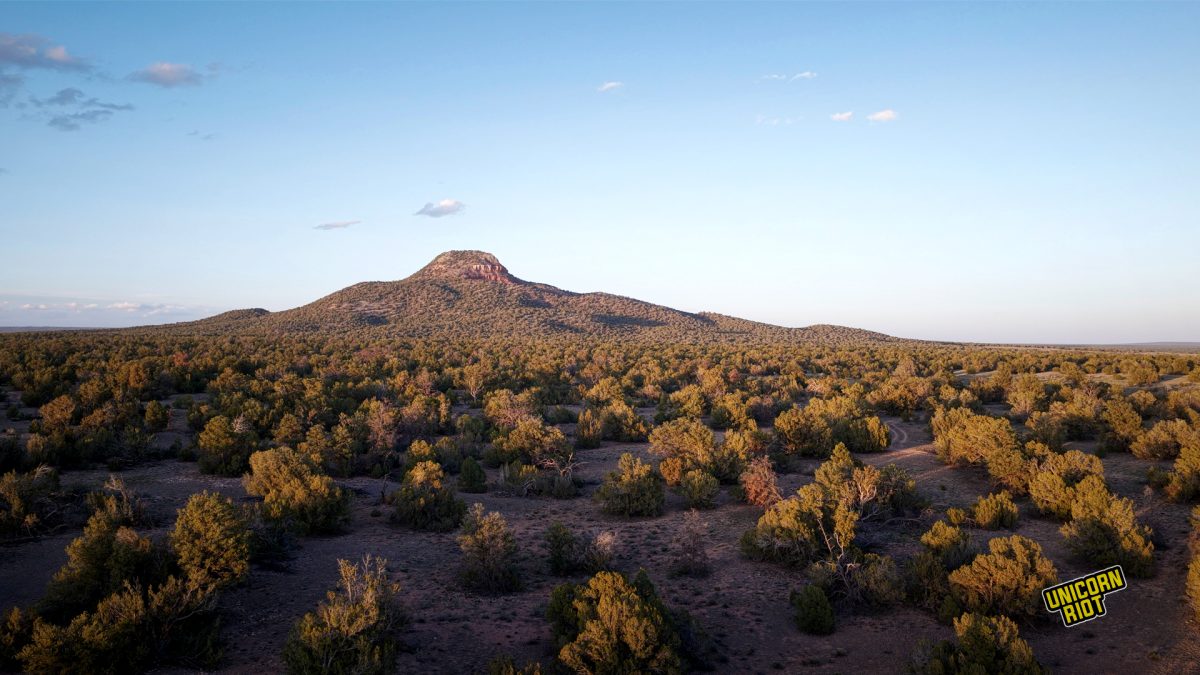
Wii’i Gdwiisa, as it’s called by the Havasupai, sits just south of the Grand Canyon.
It’s also federally protected, as it sits within the Baaj Nwaavjo I’tah Kukveni Ancestral Footprints of the Grand Canyon National Monument. Energy Fuels is only allowed to operate the Pinyon Plain Mine a few miles north of Red Butte, within the national monument, because its claim predated the designation.
Related: Indigenous Grand Canyon National Monument Designation Wins in Appeals Court [May 2026]
While this extraction is relatively new, the industry it’s part of has a long and troubling history.
In the middle of the 20th century, as the U.S. raced to build the first nuclear bomb and develop nuclear energy, uranium mining took hold in the southwest. For decades, companies mined uranium throughout the region, including on the Navajo Nation. The mines often hired Indigenous locals to dig up the ore, putting them in sustained, close contact with the cancerous element.
Despite it being known for decades beforehand that uranium caused higher rates of lung cancer and other illnesses, workers were provided little-to-no protective equipment and the hazards weren’t adequately explained.
When the U.S. government stopped buying uranium in 1971, many of the mines and mills stopped operating. What was left was a slew of open mines, slag piles containing irradiated dirt and rocks, and a legacy of sickness and death in the Indigenous communities where the mining happened.
To the Stop T.H.E.M. organizers that Unicorn Riot spoke with, what’s happening at Pinyon Plain is just the latest phase in a long colonial effort.
“This is the final genocide,” Rodney, an organizer with Stop T.H.E.M., told Unicorn Riot. They described the toxification of Indigenous sacred sites as an irreversible step in the centuries-long effort to kill, displace and subjugate Indigenous people in North America.
“The final genocide is the ultimate severance between us and the land,” they added. The Havasupai, Rodney said, are no longer allowed by their tribal leaders to visit the ceremonial sites near Red Butte because of the toxic threats posed by uranium.
And while Rodney is not Havasupai, they see the same fate coming for all Indigenous people in the area if uranium mining continues.
On the third day of the summit, participants organized a rally to highlight the risks posed by uranium mining. On a two-lane highway near the mine, about 150 people gathered on May 17 to wave signs and inform people, most of whom were on their way to Grand Canyon National Park which is just a few miles up the road, about uranium mining in the area.
To the Stop T.H.E.M. organizers that Unicorn Riot spoke with, what’s happening at Pinyon Plain is just the latest phase in a long colonial effort.
Part way through the rally, protesters identified a semi-truck operated by Hammon Trucking, a company contracted by Energy Fuels to haul uranium ore from the mine to the Energy Fuels mill outside Blanding, Utah.
Protesters launched a spontaneous blockade of the truck, surrounding it and demanding that it stop its travel toward what protesters assumed was the mine. Rallygoers chanted, while some vandalized the rig with anti-uranium messages. Others measured the radioactivity of the trailer used to carry uranium ore.
After a short standoff with police, the crowd moved to a nearby dirt road that leads to Red Butte. Protesters had another short confrontation with local, state, and national law enforcement officers. The crowd dispersed without arrests, and some left rocks in the road to block the path for vehicles who might follow.
More than confronting police and vandalizing a truck, the rally was a cry for people to pay attention to what is happening at Pinyon Plain Mine.
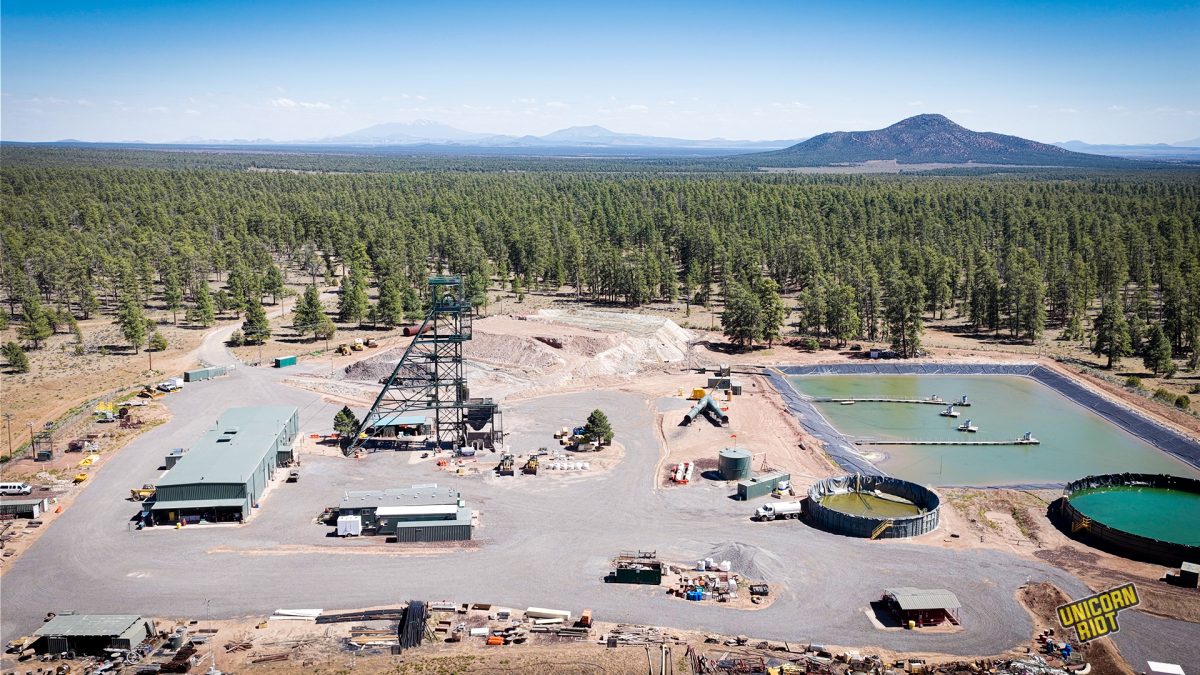 Pinyon Plain Mine viewed from above with Red Butte in the background.
Energy Fuels mines uranium-laden limestone found in the area around Red Butte in a process known as breccia pipe mining.
David Kramer, a hydrogeologist at the University of Nevada Las Vegas, explained the process to a crowd of attendees at the summit.
Over millennia, geologic forces have formed underground vertical tubes or “pipes” of limestone and other deposits that cut through layers of rock and water. These limestone deposits store uranium, which sits, buried and relatively inert unless disturbed.
At the Pinyon Plain Mine, Energy Fuels drills down into the breccia pipe, blasts the stone deposits and hauls the uranium-laden ore to the surface.
As a result of that blasting and drilling, Kramer said, the now-loosened uranium deposits are able to permeate other geological layers in ways that they couldn’t while bound in the limestone.
Most crucially for Kramer’s work, the uranium can travel into the aquifers that the breccia pipe intersects or is nearby.
At the Pinyon Plain Mine, Energy Fuels drills down into the breccia pipe, blasts the stone deposits and hauls the uranium-laden ore to the surface.
For years, Kramer and other scientists have monitored the springs that these aquifers feed, testing for contaminants and pollution. In recent years, he said they’ve registered increased levels of uranium in these waters.
While he and his colleagues can’t yet connect the contamination directly to Energy Fuels’ renewed mining, he sees it as likely that the mining operation is contaminating the aquifers.
To those who are paying attention to the mine and stand to suffer its impacts, the risk of contamination is too great to accept.
So, with the goal of stopping uranium extraction not only at Pinyon Plain Mine, but throughout the region, Stop T.H.E.M. is determined to keep fighting.
Related UR Coverage on uranium mining:
Uranium Mining Permit Hearing in Black Hills Halted [June 2026]
Indigenous Spiritual Walk in Utah Protests Last Conventional Uranium Mill [November 2024]
White Mesa Indigenous Community and Supporters Rally Against Uranium Mill [October 2024]
Indigenous Human Rights Hearing in DC Scrutinizes Uranium Industry [February 2024]
Inaugural ‘No Uranium In Treaty Territory’ Summit Held in Rapid City [October 2019]
EPA to Hear Public Comments in Proposed Uranium Mine in Black Hills [October 2019]

No comments:
Post a Comment