Indigenous Peoples and Human Rights
Showing posts with label Snake River. Show all posts

August 9, 2022

Yakama and Umatilla Tribes Unite for Comprehensive Salmon Recovery


Yakama and Umatilla Tribes unite for comprehensive salmon recovery

Tribes call for inclusive solutions to saving Columbia Basin salmon


Contact:

Andrea Tulee, Public Information Officer
Andrea_Tulee@Yakama.com
Kaeleen McGuire, Public Relations Specialist
KaeleenMcGuire@ctuir.org

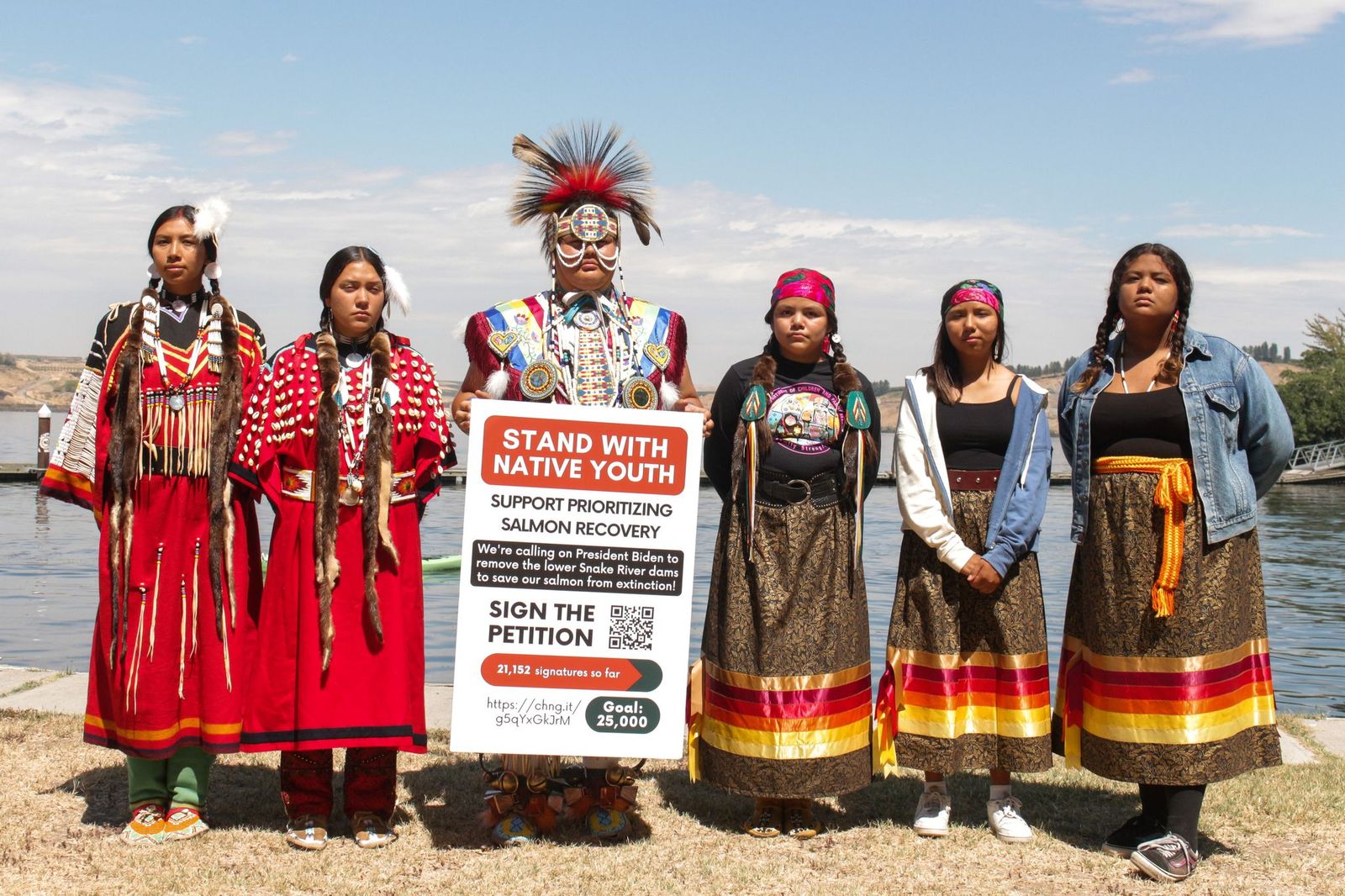
PRESCOTT, Washinton –– On Tuesday, Aug. 9, tribal leaders from around the Pacific Northwest gathered at Fishhook Park to advocate for working together to restore Columbia Basin salmon populations. The event highlighted the power of partnerships in finding comprehensive solutions to salmon recovery.

Leaders from Yakama Nation and the Confederated Tribes of the Umatilla Indian Reservation (CTUIR) celebrated the role of salmon in Northwest Native cultures and recommended taking immediate action to ensure endangered salmon do not go extinct.

The tribes also advocated for a comprehensive fish restoration strategy, which included considering breaching the four lower Snake River dams. They noted that tribes regularly work with non-Native communities to find collaborative solutions to challenges in the region—and they can do so again to keep these vital fish from disappearing forever.

July 17, 2021

On the Red Road in Salt Lake, Native Americans call on Biden to protect Bears Ears


Tribal members call on Biden to protect Bears Ears

Leaders and activists seek the protection of sacred Bears Ears landscape


© Provided by Salt Lake Tribune (Zak Podmore | The Salt Lake Tribune) Hank Stevens, Navajo Nation representative and co-chair of the Bears Ears Inter-Tribal Coalition, sits on the trailer carrying the Lummi Nation's totem pole from Washington state to Washington, D.C., on Saturday, July 17, 2021.
Read article at MSN: https://www.msn.com/en-us/travel/tripideas/indigenous-leaders-call-on-biden-to-enlarge-bears-ears-national-monument-as-25-foot-totem-pole-travels-from-washington-state-to-washington-dc/ar-AAMhWzR

By Red Road to DC
Censored News

SALT LAKE, Utah —The sacred landscape of Bears Ears needs immediate protection, said members of the Hopi Tribe, Navajo Nation, Ute Mountain Ute Tribe, Pueblo of Zuni, and Ute Indian Tribe.

In an event held as part of the Red Road to DC, a cross-country tour highlighting Indigenous sacred sites at risk, area tribal members called for the restoration and expansion of protections for the original Bears Ears National Monument that were illegally removed during the Trump administration. Organizers of the Red Road tour stopped in Salt Lake City to display a totem pole by Lummi Nation carvers to highlight sacred sites at risk due to development and infrastructure projects.

"This is a historic journey where Tribes have united to create a ceremonial trail across Indigenous Nations," said Hank Stevens, Co-Chair of the Bears Ears Inter-Tribal Coalition and Navajo Nation representative. "We are ecstatic for the opportunity to be a part of the Red Road Journey to Washington D.C."

July 15, 2021

Red Road to DC: For Generations to Come


July 14, 2021

Native activists begin cross-country tour to highlight at-risk sacred sites


Group says Biden must address crisis posed by development in Indian Country


Schedule July 14 -- 29, 2021


BELLINGHAM, Washington — Native American activists and allies from across the country today began a cross-country tour called the Red Road to DC to highlight the threats to Indigenous sacred sites. They will transport a totem pole carved by the House of Tears Carvers from Lummi Nation to each sacred site to highlight the importance of President Biden taking immediate action to protect the areas. 


"It is our Xa xalh Xechnging, our sacred obligation, as Lummi people, to care for our lands, waters, and all living things on Earth," said Jewell James (Lummi), master carver at House of Tears Carvers. "Each person who comes to the events at the sacred sites who lays their hands on it, is instilling it with a message and a prayer that the places Indian people pray, and collect foods and medicines, will be protected."