 |
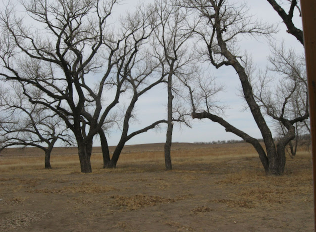
| Trees at Sand Creek Massacre. Photo by Brenda Norrell |
The history of the Smithsonian Institution, like the history taught in US classrooms, is largely one of deception and fiction
By Brenda Norrell
Censored News
The Smithsonian's dark history includes the collection of American Indian brains for a racist experiment that claimed to reveal the relationship between race and intelligence. Brains were collected for bounty.
One of the massacres where this sinister collection of brains was carried out was at Sand Creek in Colorado, a brutal massacre where fleeing Cheyenne and Arapaho women and children were murdered in 1864. The following article is republished, so the facts will not be forgotten, with a special thank you to Pawnee professor James Riding In who provided much of the information.
After the publication of this article, I wrote the Smithsonian and asked if it was true that more than 10,000 Indian skulls remained at the Smithsonian. There was no response. --Brenda Norrell
Smithsonian harbored Ishi's brain
by Brenda Norrell
March 19, 1999
The Smithsonian Institution admits, after a probe and nearly a century of secrecy, that it housed the brain of Ishi, a Yahi Indian who walked into Oroville, Calif., in 1911. But the admission comes only after American Indians demanded a befitting burial and the University of California researchers probed the whereabouts of Ishi's remains, that the Smithsonian admits that Ishi's brain was in a warehouse at the National Museum of Natural History.
Pointing to scientific racism, James Riding In, Pawnee professor at Arizona State University, said American Indian skulls at the Smithsonian are part of the U.S. Army's research intended to show that whites were superior based on the size of their skulls.