REKINDLING RESISTANCE
Posted on August 1, 2026 by Kan1enkehaka
Mohawk Nation News
https://mohawknationnews.com/blog/2026/08/01/rekindling-resistance/
GREAT WHITE ROOTS OF PEACE
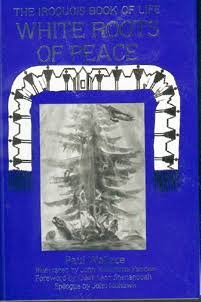
MNN. July 26, 2026. To acquire peace, Dekanawida did not base his ideas on faith and hope. He described a giant white pine that reached into the sky, symbolizing the sisterhood and brotherhood of all human beings. At its roots were the five nations of the original Rotinonhsión:ni Confederacy. A structure was designed to make the individual the center of power so that no dictator could seize control. The people met to discuss issues and came to an understanding. The governmental structure included the separation of powers of the judicial, executive and legislative branches. The Rotinonhsión:ni nations were made up of democratic social units to form a peaceful confederacy of all Indigenous people. After the upheaval of Indigenous culture by the European invasion, the Iroquois and many other Indigenous nations, such as the Aztec, Blackfeet, Sioux, Hopis, and others had the same ideas about the return of Indigenous thought.
https://mohawknationnews.com/blog/2026/08/01/rekindling-resistance/
GREAT WHITE ROOTS OF PEACE
MNN. July 26, 2026. To acquire peace, Dekanawida did not base his ideas on faith and hope. He described a giant white pine that reached into the sky, symbolizing the sisterhood and brotherhood of all human beings. At its roots were the five nations of the original Rotinonhsión:ni Confederacy. A structure was designed to make the individual the center of power so that no dictator could seize control. The people met to discuss issues and came to an understanding. The governmental structure included the separation of powers of the judicial, executive and legislative branches. The Rotinonhsión:ni nations were made up of democratic social units to form a peaceful confederacy of all Indigenous people. After the upheaval of Indigenous culture by the European invasion, the Iroquois and many other Indigenous nations, such as the Aztec, Blackfeet, Sioux, Hopis, and others had the same ideas about the return of Indigenous thought.
TEXT
-RESISTENCE
-CIRCLE OF CHIEFS
-SEATING IF THE GRAND COUNCIL
-CIRCLE WAMPUM
-WAMPUMS 1-16; 5-11; 17-27; 28-35; 35; 36-41; 56-65; 79-92 war; 93-104 Rights of the people; 108-117 Funerals;
-POWER OF COMPLETE UNDERSTANDING
-WAMPUMS 5-11 CONSENSUAL DECISION MAKING
-THREE CRITERIA: PEACE, RIGHTEOUSNESS AND POWER; JUSTICE SYSTEM
-FOUR PRINCIPLES OF INDIGENOUS LAW
-WAMPUM 4 – OPENING THANKSGIVING
-MARRIAGE, CHILDREN
-THE COUNCIL FIRE
-POWER OF THE PEOPLE
-WAMPUM 25 – VIOLATION OF GREAT LAW
-PINE TREE CHIEF
-WAMPUM 36 – THE WAR CHIEF AND HIS MEN
-WAMPUM – CLAN MOTHERS
-WAMPUMS 42-54: CONDOLENCE CEREMONIES
-WAMPUM 44: LINE OF DESCENT
-WAMPUM 46: NAMING CEREMONY; FIFTY CHIEFS NAMES
-WAMPUMS 56-65: SYMBOLISM
-WAMPUM 58: SUBMITTING TO FOREIGN NATIONS
-WAMPUM 59: DROPPING BLACK WAMPUM
-WAMPUM 60: RECITIBG KAIANEREKOWA
WAMPUM 67: ADOPTIONS
-WAMPUMS 72-73: HOLDING CONFEDERACY LAND
-WAMPUM 76: BLOOD CLAIMS
END: WHAT THE KAIANEREKOWA REPRESENTS IN TERMS OF INDIGENOUS PHILOSOPHY
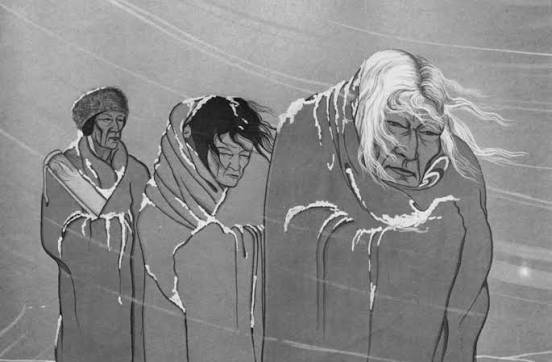
Dekanawida saw that if war continued, greed and suffering would continue, and eventually possibly our extinction. We would distrust each other and the principles of peace between our people would dissolve. We would become involved with the “serpents” (the Europeans) of materialism, who would become so powerful that they would almost destroy the Indigenous people. Dekanawida told our people that when the worst time came we must gather our minds as set out in the Kaianerehkó:wa, the great peace. His message would return as a light coming from the east. After the fight among the serpents, at which time the Indigenous people would remain neutral, we would reassemble and renew our knowledge of the principles of the Kaianerehkó:wa. Dekanawida said that the fight between the serpents would become so violent that there would be an environmental catastrophe, “the mountains would crack, the rivers would boil, and the fish
would turn up on their bellies”. He also predicted that all the elm trees would die. Once Dekanawida’s message
returned, the Indigenous people would be great nations as before. The abuse by the Europeans was seen as a
time for us to renew our minds and help lead mankind to respect the natural world.
The roots of the great white pine stretch out to the north, south, east and west. Other nations are invited to follow the roots to the source and take shelter under the branches of the great white pine.
RESISTANCE:
This section delves into the cultural roots of Mohawk resistance, explaining the protocols, symbols and traditions that supports our sovereignty. The first part lays down the basic principles of the Kaianerehkó:wa, introducing its complex system of consensual decision-making to all people. Told is the story of the formation of the confederacy, the meaning of the Kaianerehkó:wa’s 117 articles and the corresponding wampums, as well as the organization of councils. The second part explores the deeper meaning and function of wampums in the Iroquois tradition, revealing how they are materially designed to keep the words and enclose the memory of past agreements, making them available for future generations to know. The third part explains how being a warrior and a mother is an every day responsibility that pertains to every free and sovereign Indigenous person.
To understand the principles of the Kaianerehkó:wa, four aspects must be considered:
(1) the Structure of the longhouse, i.e., the people within our clans and our duties and responsibilities;
(2) how an issue is passed from one party to another so that there are checks and balances;
(3) the basic criteria when deliberating, those of peace, righteousness and power; and
(4) the symbols, such as the small condolence ceremony when we cleanse our eyes so we may see clearly, our ears so we may listen well and drink clear pure water so we may speak directly and truthfully. In the process, the will of each individual is preserved.
All parts of the Kaianerehkó:wa must work together so we can function communally in our best interests. Today, some groups have formed which use one aspect to the exclusion of the others, such as using only the structure without the philosophy or using the symbols and turning it into a religion or using the structure and putting another ideology onto it.
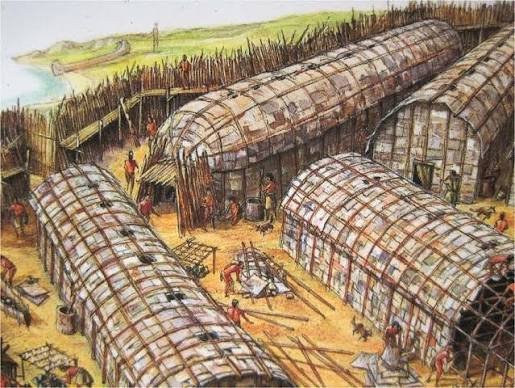
To acquire peace, Dekanawida did not base his ideas on faith and hope. He described a giant white pine that reached into the sky, symbolizing the sisterhood and brotherhood of all human beings. At its roots were the five nations of the original Rotinonhsión:ni Confederacy. A structure was designed to make the individual the center of power so that no dictator could seize control. The people met to discuss issues and came to an understanding. The governmental structure included the separation of powers of the judicial, executive and legislative branches. The Rotinonhsión:ni nations were made up of democratic social units to form a democratic and peaceful confederacy of all Indigenous people.
After the upheaval of Indigenous culture by the European invasion, the Iroquois and many other Indigenous nations, such as the Aztec, Blackfeet, Sioux, Mapuce, Hopis and others, had the same ideas about the return of Indigenous thought. Dekanawida saw that if war continued, greed and suffering would continue, followed by our possible extinction. We would distrust each other and the principles of peace of the confederacy. We would become involved with the “serpents” (the Europeans) of materialism, who would become so powerful that they would destroy almost all of the Indigenous people.
CIRCLE OF CHIEFS: The Rotinonhsión:ni confederate council consists of fifty civil chiefs: Onondaga fourteen, Mohawk nine, Seneca eight, Oneida nine, Cayuga ten. The Rotinonhsión:ni Confederacy structure is not hierarchical. It is a series of circles within circles with a process to form relations between each segment of society. They operate on a cyclical basis, just like the natural world. The most important is the unborn individual, surrounded by a circle of the family, then by the circle of the clan, then by the circle of the chiefs and clan mothers, then by the circle of the Kanien’kehá:ka/Mohawk national council and finally by the Confederacy grand council.
++++++
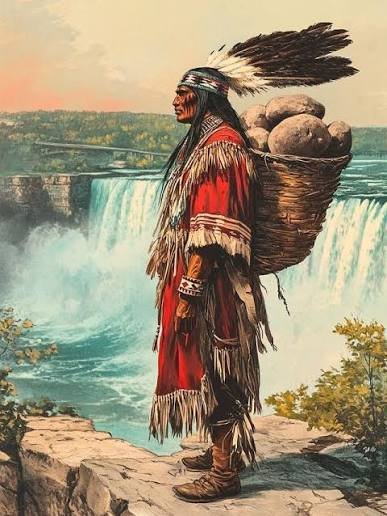 Dekanawida told our people that when the worst time came, we will gather our minds as set out in the Kaianerehkó:wa. His message would return as a light coming from the east. After the fight among the serpents, the Indigenous people would remain neutral, reassemble and renew our knowledge of the principles of the Kaianerehkó:wa. Dekanawida said that the fight between the serpents would become so violent that there would be an environmental catastrophe, “the mountains would crack, the rivers would boil, and the fish would turn up on their bellies”. He also predicted that all the elm trees would die. When Dekanawida’s message returns, the Indigenous people will be greater nations than before. The abuse by the Europeans was seen as a time to renew our minds and help lead mankind to respect the natural world.
The Rotinonhsión:ni established separate nations along the Great Lakes, the Saint Lawrence River, in Upper New York State and farther south. We, along with the Tuscaroras, Hurons, Eries, Wenros, Cherokee and Minquas, spoke an Iroquoian language. Each nation had national territories and trade relations with our Iroquois and non-Iroquois neighbours. All Iroquoian peoples are organized into clans and share the same basic structure and ceremonies of thanksgiving to creation. In particular, the Ohén:ton tsi karihwatéhkwen, the words that come before all, to remind us of our duties and responsibilities to all creation.
Wampum 7 indicates that the Kaianerehkó:wa is an interdependent system of relationships of all elements of nature, which are all equal. For many generations there had been blood feuds within and between Iroquois nations, usually over seeking justice for the death of someone from their clan. These blood feuds threatened our systems of law, order and social unity. The Five Nations Confederacy was at first an alliance of five Rotinonhsión:ni/Iroquois nations—the Mohawk, Cayuga, Onondaga, Oneida and Seneca.
These are the basic philosophy and structure of the Kaianerehkó:wa.
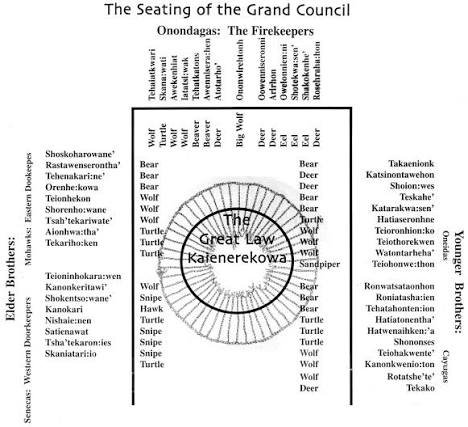
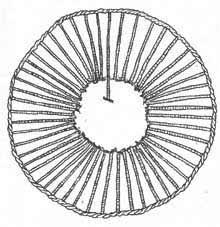
THE CIRCLE WAMPUM
The Circle Wampum represents the 50 families of the alliance for the kaianerekowa, the great peace. The longer string represents the Onondaga chief who maintains the knowledge of the people. The center holds the culture, language, ceremonies and customs of the people. The Rotinonhsión:ni confederate council consists of fifty civil chiefs: Onondaga fourteen, Mohawk nine, Seneca eight, Oneida nine, Cayuga ten. The Rotinonhsión:ni Confederacy structure is not hierarchical. It is a series of circles within circles with a process to form relations between each segment of society. They operate on a cyclical basis, just like the natural world. The most important is the unborn individual, surrounded by a circle of the family, then by the circle of the clan, then by the circle of the chiefs, then by the circle of the Kanien’kehá:ka/Mohawk national council and finally by the Confederacy grand council.
Wampums 1 to 16:
The organization of the confederacy: Dekanawida and the Chiefs plant the Tree of Peace; Thadodáho and the Onondaga chiefs become the caretakers of the council fire; the nations are divided into three parties; Mohawks are appointed as the head of the confederacy; how issues are passed and how new laws are made.
Wampum 2 provides those other than the Iroquois the path to trace their roots and take shelter under the Tree of Peace, as long as they follow the laws of the Kaianerehkó:wa and live according to the philosophy of the Rotinonhsión:ni.
Wampums 5 to 11, Confederacy Structure: sets out the structure of the Rotinonhsión:ni Confederacy, the Five Nations Hereditary Council. Rotinonhsión:ni means “those who make the longhouse”. Each nation keeps control over its own affairs, its dealings with other nations of the confederacy and with non-member nations that the grand council becomes involved with. Within each nation, local settlements and clans are autonomous, independent and Clans and settlements have their own meetings. Nations meet in councils as the issues warrant.
Wampums 17 to 27:
The rights, duties and qualifications of statesmen: the roles of the clan mothers; how chiefs are deposed or resign; the qualifications and roles of chiefs.
Wampums 28 to 35:
Condolence of chiefs: how titles are passed on.
Wampum 35:
Pine Tree Chiefs are temporary chiefs.
Wampums 36 to 41:
Chiefs: titles, names, functions, installation and duties.
Wampums 56 to 65:
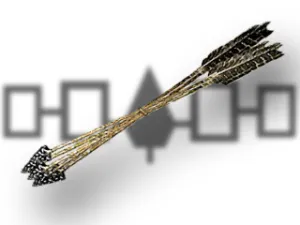 The meanings of symbols: such as five arrows bound together means unity of one body and one mind; a single arrow is easily snapped, binding a is commitment to the great peace, remembering who are the traitors and how we deal with them; the confederacy belt, saying the Kaianerehkó:wa; the rites of installation and burying of the weapons.
Wampums 79 to 92: war:
The Warrior Society; establishes peace with an outside nation; conducting warfare; relations after war; the peace chiefs and related protocol.
Wampums 93 to 104:
Rights of the people: referendum; men’s council; women’s council; all council fires; the rights of all men and women; the festivals of thanksgiving.
Wampums 108 to 117:
Funerals: the rites of passage.
POWER OF COMPLETE UNDERSTANDING
Dekanawida gathered the other nations together. It is a violation of the Kaianerehkó:wa to introduce measures in the confederate council if the Kanien’kehá:ka Mohawk have protested against them. The decision-making process gave the member nations an actual power of veto, which equalized all the nations. The traditional Kanien’kehá:ka Mohawk take on the duty to maintain the original philosophy of the Kaianerehkó:wa great peace and rejects the Christian influenced Handsome Lake Code, which is patriarchal that refers to heaven, hell, personal sin, and a judgment day based on Christian theology. The Kaianerehkó:wa is a completely equal interdependent relationship among all living things.
On the other hand, the requirement of complete understanding on all decisions of the confederacy council gives all nations a de facto veto power and, thus, does not set the Kanien’kehá:ka Mohawk apart from our brethren. Those Mohawks who refuse to compromise with the Handsome Lake Code questionthe Code adherents to explain how they see the natural world. We traditional are constant in our adherence to the original constitution. All members of the confederacy have a duty to understand and explain the philosophy of peace and power throughout the Six Nations, to other Indigenous nations and throughout the world when asked to do so. Some Handsome Lake Code followers do not realize that the Code is not intrinsically “traditional” to Indigenous thinking but is colonial.
Wampum 5 to 11: CONSENSUAL DECISION-MAKING PROCESS:
As Dekanawida outlined the Mohawk Council is divided into three parts, with each having three chiefs for a total of nine. The three clans are: the Bear Clan, the first part and the firekeepers; the Turtle Clan, the second part; and the Wolf Clan, the third part. The “well keeper” announces the subject for discussion and passes the issue over the council fire to the Turtle Clan and Wolf Clan. The Bear Clan listens to the discussions of the Turtle Clan and Wolf Clan. If an error is made or the proceedings are irregular, the Bear Clan calls attention to it. When a case is decided by the Turtle Clan and Wolf Clan, the Bear Clan confirms their decision. If the Turtle Clan disagrees with the Wolf Clan, then the Bear Clan, as the firekeeper, asks the two sides to deliberate again and to provide new information. Usually, the two sides are now likely to agree. The decision is then accepted by the Bear Clan. Should the Turtle and Wolf Clans again disagree on their second deliberation, the Bear Clan, as the firekeeper, then passes the decision that it sees fit. Should the Bear Clan disagree with the decision of the Wolf and Turtle Clans, whose decisions are the same, both the Turtle Clan and the Wolf Clan must deliberate again. If their decision is the same as before, the Bear Clan has no choice but to sanction their joint decision.
In the decision-making process: all opinions have to be considered; all must be completely reasonable; all should come with an open mind; all must fully understand the other’s viewpoint; no participant can repeat a position once it has been fully explained and understood; if a person does not agree with the views that have been stated, then they must fully explain their dissenting view; no one can impose their will or make decisions for another; all must understand the viewpoint and agree of their own free will. The goal is not total agreement, but total understanding; if there is no agreement, then the consensus is to retain the status quo. If there is understanding by all, then they go ahead with the decision. Although no one can ensure that all will fully understand the other’s viewpoint, one must try to explain as fully as possible, and the respondent must try to understand, asking for clarification throughout the process. The chiefs and the war chief who presides over the meeting makes sure that the Kaianerehkó:wa and collective rational thought and behaviour are followed. Persons are asked throughout the process if they fully understand. If not, the process stops until all explanations have been provided. One cannot be stubborn and refuse to understand, as they will be questioned and must follow the criteria of peace, righteousness and power at all times.
All human beings are capable of rational thought, which leads to solving even the most difficult problem. The underlying philosophy is that human beings are loving, caring and wish to interact in a positive way. It is known that people cannot think clearly when they are in psychological pain, have feelings of rage or lose hope. The consensual decision-making process must bring people from despair to hope. Every person has a responsibility to develop their mind. To think is to create a sane world for the present and future generations, a world safe from the emotional, irrational behavior of people controlled by fear, hatred, greed, jealousy, suspicion and conflict. The main obstacle to our survival is fear.
THREE CRITERIA OF PEACE, RIGHTEOUS AND POWER:
The clans consider the pros and cons of the issue. Three criteria must be met: Skén:nen, peace: Does it preserve the peace that is already established? Karihwí:io, righteousness: Is it morally correct, just as the natural world is correct? Ka’shatsténhsera’, power. Does it preserve the integrity of the nation? What does it do for the present and how does it affect the future seven generations? The seven generations concept means that decisions made today must benefit the people forever into the future.
Dekanawida raised the idea of reasoned thinking to a principle. Every human being has the potential to use their mind to create a better life through peace, power and righteousness. In entering the consensual decision-making process, all ideas are put into the process, the needs and attitudes of each is considered and complements the decision. Also, the individual has a duty to be directly involved and to bring their ideas into the discussion within their clan. The final decision will be fully satisfactory to some, satisfactory to others and relatively satisfactory to the remainder and will reflect elements from every group. This is a slow careful process requiring the reaching of a full understanding by each individual, and not a decision made by a “leader”. We have no leaders. We are one people. The person who explains the decision is a spokesperson.
JUSTICE SYSTEM:
If the issue concerns a person’s behaviour, the accused may defend themselves. Depending on the severity of the infraction, the accused has the right to be heard before the council fires of the men and women of their clan and the chief statesmen of their nation, as well as the chief statesmen of the confederacy. Basically, this is a trial by jury. Decisions have to be justified, rational and follow the process. All are on watch that the defendant’s voice is not lost. In Iroquois society, those performing the “court” function are persons selected by the people according to our process. In the Iroquois constitution, the people select the clan mothers, chiefs and war chiefs, who can be recalled by the people at any time. Adjudication is carried out with the advice, guidance and wisdom of the people as a whole, who keep in mind the continuity of the genealogical information, history, traditions and values of the nation. Carrying out responsibilities is a burden, a duty and a privilege. It is crucial that the people make the decision.
Should a clan feel unable to deal with an issue, they may ask another clan to deal with it. Depending on the issue, the Six Nations Iroquois Confederacy serves as a court of appeal for individual community issues, as well as a court of first instance in disputes that cannot be resolved at the community level. Great councils meet where the wisdom of the communities is pooled and applied. THE FOUR PRINCIPLES OF INDIGENOUS LAW ARE: NATURAL LAW; TRUTH, AS THE HIGHEST POINT OF BEING; AND JUSTICE AS THE APPLICATION OF TRUTH; APPLYING. RESPECT IN DEALING WITH ALL MATERS; LIBERTY BASED ON THE FIRST THREE PRINCIPLES OHENTON TSI KARIHWATEKWEN – THE WORDS THAT COME BEFORE ALL MATTERS.
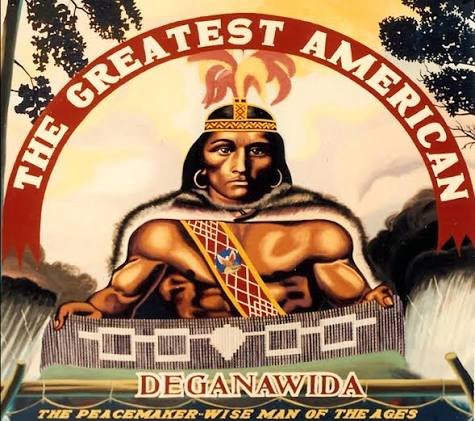 Wampum 7: As karonhiatajeh, kanienkehaka Mohawk visionary, reminds us, “The opening thanksgiving is recited at every gathering of the people. Thanks is given to all that helps human life. It does not mean that the people worship these useful gifts, but they thank the power that produces them. The Kaianerehkó:wa thanksgiving opening address puts people within an interdependent system of relationships among all elements of nature, which are equal. The Handsome Lake Christian based Code outlines a hierarchical order of the “spirit” forces, as well as a hierarchy of offices in the longhouse and a hierarchy of medicines arranged according to ‘power'”. He provided the following insights into the basis of the Kaianerehkó:wa as set out in the Ohén:ton tsi karihwatéhkwen, “The words that come before every matter”. The opening begins by paying respect to the people who still follow the Kaianerehkó:wa, reminding them of the necessity of good relations among themselves in order to be more productive and happy.
Then respect is extended to the Earth, which is our mother, and how female functions parallel the role of the Earth. The immunities and medicines they inherit come from living on her. Their mother is one of the family. The earth has a specific role and way of doing things. The waters are the cousins with whom each person associates every day and are a necessary part of their lives. From there, respect is extended to the contents of the waters, the fish, plant life and other beings, such as fFood and medicines needed to live healthily. Plant life, such as corn, beans and squash [the perfect diet], with strawberries and other foods, is referred to as the “sisters”. They are given the same respect as their mother and cousins. Then respect is given to their brothers and sisters, the animals, insects and birds, who too are beneficial to the people. The people grow up with their relations, who constantly help one another and are all part of the continuation of life. Then respect is extended to the grandfathers, the four winds and thunderers, who too are part of the family. They help to renew elements of nature for the people and continually show their natural and beneficial functions. The grandmother is the moon, which has great knowledge. From the moon, the people learn the best time to put seeds in the ground and when to pick medicines. She controls women’s cycles and when new phases are coming onto the Earth.
The sun is the eldest brother, the example for the men to follow. The sun gives support to the Earth by warming it so things can grow. He helps give support and reinforcement to the people. He beautifies everything that has been put on the Earth. The men also protect and support all the people. They help raise the children and ensure their well-being and the continuation of life. Then respect is given to the distant cousins, the stars. They were used by our ancestors for direction. We do not always see them, but when we do they are at their brightest. They have a lot of knowledge and strength, should we ever need them. All elements of creation are an important and necessary part of the whole world, not above or beneath anything. Every individual in the family has a different function. In raising the names in the longhouse, every child is a child of the people, who together support that child and recognize and develop their natural abilities. Thus, the natural world is the family, and respect is given to all the relatives equally. There is no hierarchy.
Now, let us turn our attention to the Ka’shatsténhserakó:wa, the Sha’oié:ra, the great natural power. We shall never know the face of this power or the name of this power or where it dwells. All we will know is the creation of this power, and that it is logical. It is neither male nor female. Kaianerehkó:wa comes from the word Kaienere, which means the great, good path. Roiá:ner, the word for chiefs, means he has a path. Iakoiá:ner, the clan mother, means she has a path. They have a natural direction whicch is set for everyone to follow which is good and beneficial to all. There is an eagle that sits at the top of the tree, which will scream a warning if we go off that path. The eagle is a symbol of the people. They are told to be watchful, as well as to emulate their “great vision” to distinguish the situation at hand from past experiences. They are to look in all directions with an open mind. The forty-nine chiefs are equal in power. Some nations have more clans, greater territory and larger populations, but all are equal. The people are not rulers but have a specific path that was set out for them. They must follow the great path, which is the Kaianerehkó:wa. The term chief is inaccurate and misleading. The Roiá:ner does not lead the people according to his own will but only according to the Kaianerehkó:wa. The elder notes, “All family members come from the same creation—mother, father, grandmother, grandfather, sisters, brothers, cousins, nephews and nieces. How can there be peace and harmony when one is above the rest?” The Kaianerehkó:wa is real democracy based on natural righteousness which acknowledges all that is real. Kaianerehkó:wa means everything alive is real. Karihwí:io means it is real and it is perfect. This concept has been erroneously used to describe the Handsome Lake Code, which is an ideology based on Christianity.
Marriages considered seriously. Children are gifts from creation. During marriage ceremonies young couples are instructed that “If creation wants to, children will be sent to you”. Children are gifts from creation and are to be treated as such. The family is rooted in powerful matrilineal clan systems where generations shared a communal longhouse. Children belong to their mother’s clan and are named at the longhouse before the community. This philosophy unites the Rotinonhsión:ni, which is a force that colonial Canadians and Americans have violated. The Rotinonhsión:ni constantly reaffirm their sovereign nationhood, reclaim their lands, powers and possessions and make their presence felt nationally and internationally. Outside threats from the colonists have forced the Rotinonhsión:ni to constantly consider our political position. We always remind them of our philosophy, treaties, history and constitution and the Kaianerehkó:wa. Young Kanien’kehá:ka people study the Kaianerehkó:wa and our languages to remain in contact with creation. Our true philosophy has withstood attack and near annihilation but continues to provide direction to the young people.
Kanien’kehá:ka activism is based on exercising our rights and reminding the public of our true image. For example, at the United Nations, we eloquently present our cases. The ancient Kaianerehkó:wa philosophy and constitution are major factors in our resistance, existence and unity. We constantly assert and affirm our sovereignty. The Rotinonhsión:ni being geographically located in both the colonies of the United States and Canada must constantly exercise diplomatic acuity in dealing with us on various matters, such as land claims, programs and services. The Kaienere’ko:wa provides the will and spirit to exercise this identity.
THE COUNCIL FIRE:
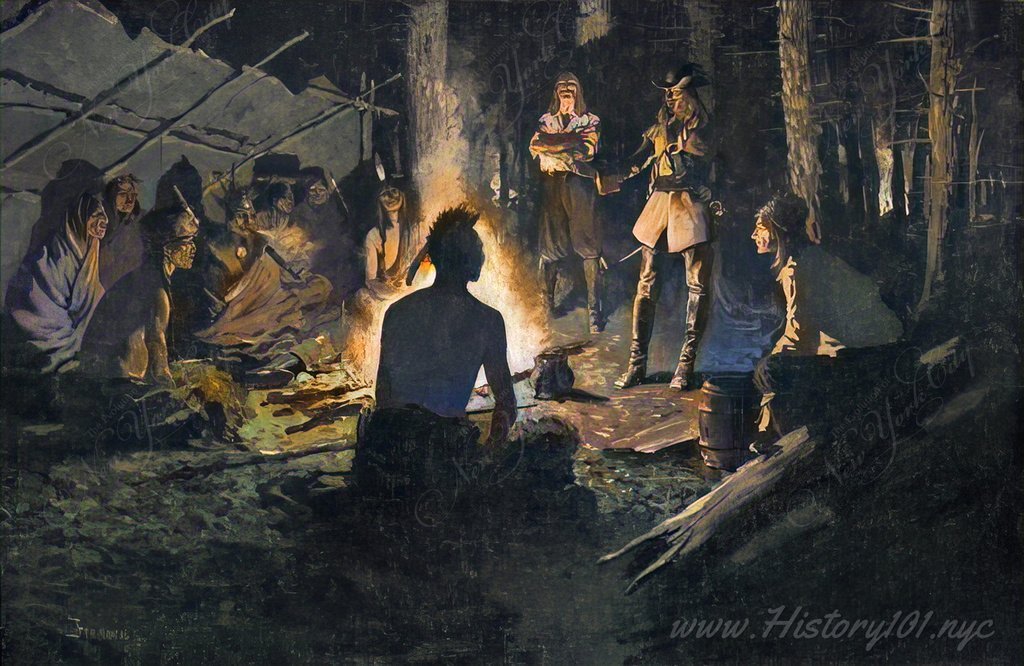
The council fire is the confederacy’s dispute resolution system. In selecting a new chief, the clan mother, the men and the women of the family and clan of the deceased chief must all agree. The name is selected by the people and then submitted to the chiefs. If they confirm the nomination, then the candidate is submitted to the other two clans. If confirmed, he is raised by the condolence ceremony before all of the people. In Iroquois, the chief is the Roiá:ner, from the word path, which means one who follows the footprints of the previous Roiá:ner. When he goes off that path, he loses his voice and cannot lead the people. The custom is that no one shall put themselves up as a ‘leader’. They shall be invited to be a leader. There are, in fact, no leaders, as such. They are “spokespersons” or “representatives” who carry the will of the people. They are asked three times to be a representative. The candidate refuses each time, asking if others are more suitable. If none is found, then the candidate is asked a fourth time, which he must accept. By this time, he has received the majority backing of the house and has been confirmed at a people’s meeting, where he is “stood up” as a representative. After this process, it is difficult to remove a person as a spokesperson or from any position.
POWER OF THE PEOPLE. Wampum 16: This is one of the most powerful rights that citizens have in making government policy, particularly when the leaders do not heed their wishes: “If the conditions call for an addition to or change of this law, the case shall be carefully considered. If a new beam is placed on the rafters of the longhouse which seems necessary or beneficial, it shall be called, ‘Added to the Rafters’”. The clans tell the war chiefs, who must tell the council to heed the will of the people. The chiefs do not go against the will of the people because of the people’s power of impeaching those who commit treason.
Wampum 25 provides that if a chief of the league should establish any authority other than that of the Kaianerehkó:wa, he shall be warned three times and then dismissed by the war chief on behalf of the people.
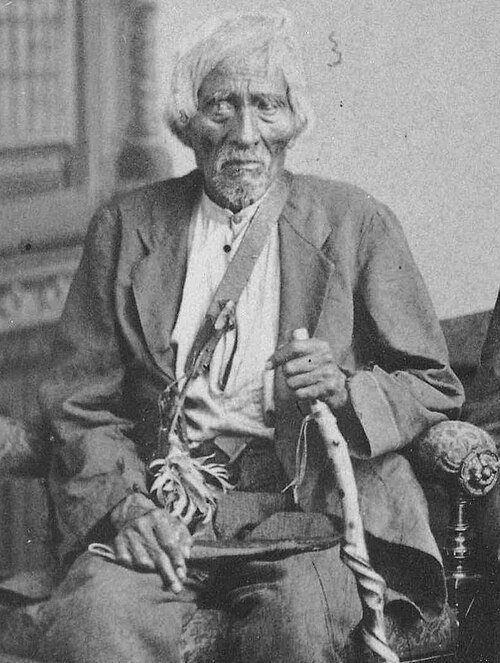
John Smoke Johnson “tekahionhake” [1792] was adopted by the Six Nations of Grande River to sit as a Pine Tree chief to act as a translator and also fought in the War of 1812 for the Mohawks. He sat in council with the Hereditary Chiefs.
Wampum 35 provides for the election of Pine Tree Chiefs. Should any men, inside or outside the nation, help with special ability or show great interest in the affairs of the nation, the chiefs may elect him to sit with them. He shall be proclaimed a Pine Tree sprung up for the nation, but he has no power except as an advisor. Joseph Brant was sprung up as a Pine Tree Chief to be a translator for the Rotinonhsión:ni. A Pine Tree Chief has only one duty and can only do what they are stood up for. Brant became a Freemason, which is part of colonial society. He broke the Two Row Wampum agreement and Wampum 58 of the Kaianerehkó:wa by submitting to the laws of a foreign people. He was deposed by the fifty confederacy chiefs in 1805. This was a precedent, because a Pine Tree Chief traditionally cannot be cut down, only ignored for all time. He signed treaties and agreements as a “chief” when he was a British subject as a colonel in the British army. These agreements are null and void.
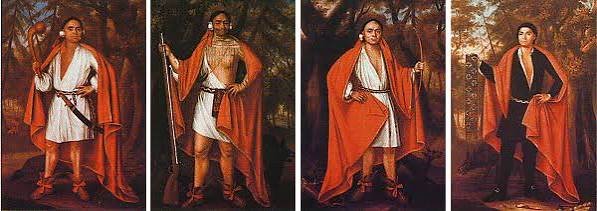
In 1710 these 4 Warriors were sent by the Iroquois Confederacy to London England to put on the first International Conference on World Peace, inviting 13 European monarchs including the Czar of Russia.
Wampum 36 – THE WAR CHIEF AD HIS MEN, provides definite functions for the war chief and his men (Warrior Society). The war chief is the mediator between the people and the chiefs during both times of war and times of peace. He is charged with the protection, defense and welfare of the people. These duties may take many forms, such as peacekeeping, teaching, speaking to the people, repossessing lost lands, maintaining human rights, diplomatic relations with other nations and any other work that promotes the welfare of the people. If there is no council or the national council and Thadodáho are not functioning properly, the people then assume the functions of government, and the war chief and his men carry out the wishes of the people’s council.
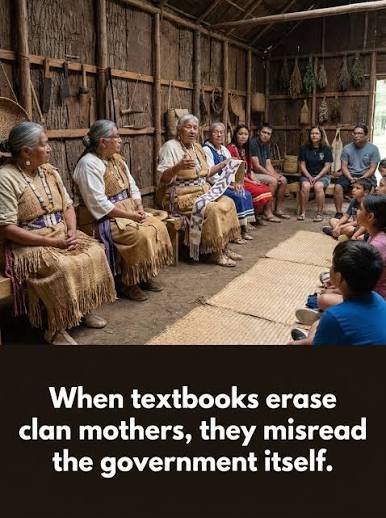
Clans, Wampum 37: Provides that the women head the clans, are the sole title holders of the nation’s soil and in them are vested the birthrights. The Europeans, not being members of any of these clans, have no right to own any land in this part of the world. Karoniaktajeh stated, “In the true matriarchal society, the women are the chiefs and fight in the wars. In the Iroquois matrilineal society, the women have political equality plus other rights, because they are the source of life and are considered closer to nature than are the men”. The line of descent, rights of inheritance and chieftainships are derived through the female line.
Wampums 42 to 54: provides the structure of the clans, which are political families. The clan mother is called Iakoiá :ner, meaning she follows the footprints of the previous Iakoiá:ner. They carry out the decisions of their clan, put their clan on the right course of action and make sure their clan upholds the Kaianerehkó:wa. The clan mothers possess the chieftainship title wampum strings. The people can depose her if she does a serious wrong. Through the war chief, based on the will of the people, she can depose and replace an errant chief. Children automatically belong to their mother’s clan.
Condolence Ceremonies Wampums 32 and 54: Condolence ceremony is performed when a chief dies and a new one is installed. The Mohawk, Seneca and Onondaga chiefs are installed by the Oneida and Cayuga chiefs and vice versa. The chieftainship titles are the names of the original forty-nine chiefs at the formation of the confederacy, which must never be buried.
Wampum 44: Line of Descent. The line of descent follows the female line, women being the progenitors of the nation and titleholders of the land and soil. The clans oversee the adoption of strangers, ceremonies, burial places and meetings of the clans. The women are in charge of maintaining the blood lines of the people. This explains why the European colonists had to destroy the women’s powers in order to occupy and take political and economic control of North America. The Land Title is Held by Women: The Kaianerehkó:wa does not provide for the sale or alienation of land. The territory belongs to the unborn. Wampum 59. No one can sell any part of the land, just like no one has a right to sell their mother or any part of her. Both Wampums 44 and 72 provide that the titleholders of the land and soil are the women on behalf of the Rotinonhsión:ni. The Rotinonhsión:ni legal opinion is that the Indigenous peoples of A’nowarà:ke—Turtle Island—are the first humans here, and that foreigners have no right to take over the land. The so-called “conquest of America” is simply theft of Indigenous land. Women never relinquished ownership, because they have no right to do so. No treaty between the Onondaga and the newcomers involves the women. Further, it is not proper to pursue constitutional jurisdictional issues in the colonial court. Jurisdiction over the land still lies with the Indigenous people, and its reappropriation is the responsibility of all the people. Therefore, all land transactions since contact are fraudulent and illegal. The Kanien’kehá:ka say that when the women of the nation are weak, the nation is weak. The strength of the Kanien’kehá:ka is derived from the women, whereas the males and their children gain their identity, power and relationship from the universe. The women are the connection to the Earth, and their men depend on this connection to give them the energy and courage to protect their people and their territory.
Wampum. 46. Naming Ceremony.
The clan mothers bestow names on the children. In the past, we were born and lived in longhouses. A child is born a Kanien’kehá:ka, Oneida, etc., but when they are ceremoniously named according to the Kaianerehkó:wa, they become a Rotinonhsión:ni:onwe (Rotinonhsión:ni person). They are Kanien’kehá:ka by blood and Rotinonhsión:ni:onwe by law. The parents are instructed to teach them the native language and to live according to the Kaianerehkó:wa. These clan ties perpetuate the position of the Kanien’kehá:ka women within the confederacy. They take part in the daily lives of their family members. If a mother is having problems with her children, she sends them off to meet with the clan mothers. The clan mothers then explain to the children their roles within the Kanien’kehá:ka organization and the behavior expected of them, leaving the final decision up to the individual. This system keeps the group working together as a whole and removes any disruption that could cause dissension within the nation.
Wampum 46. Fifty Chiefs’ Names. The women shall be the holders of the authorized names of the fifty chiefs of the confederacy for all time to come. Deposing Chiefs [Wampums 52 and 54] provide that the women select and depose the chiefs. They are also responsible for reciprocal obligations of help, defence and redress of injuries to outsiders. They maintain strategic marital ties.
Symbolism In Wampums 56 and 65: Dekanawida used symbolism to explain his ideas. He told them to bind their nations together as a bundle of arrows to be left beside the great Tree of Peace and the Confederate Council Fire of Thadodáho. This symbolizes that all these bundled arrows are stronger than one arrow. He said the confederacy shall in the future have one body and one head. He warned that if any evil should befall the nations, they should stand or fall united as one person. This is how the Kanien’kehá:ka and other Rotinonhsión:ni nations are today. Although divided on certain issues, we are united in our pursuit of sovereignty and justice. Dekanawida instructed the chiefs to cultivate the good feelings of friendship, love and honor among themselves. He had, thus, fulfilled his duty in assisting them to establish and organize this great confederacy, which, if carefully guarded, would continue from generation to generation, as long as the sun shines. His instruction was that no one else should ever be given his name, and he then left. It is possible that this was because he was the Peacemaker from another Iroquoian nation (Wendat). He brought the message. His job was done.
Chief Submitting to Foreign Laws In Wampum 58: “Anytime a confederate chief chooses to submit to the law of a foreign people, he is no longer in but out of the confederacy. Such people shall forfeit all birthrights and claims on the Five Nations Confederacy and territory”.
The majority of Rotinonhsión:ni:onwe do not vote in the colonial band council system, federal or provincial elections. In most Mohawk communities, there are two main systems of authority operating, the traditional longhouse chiefs and the Indian Act band council set up by the colonial government of Canada or the federal Indian law tribal council set up by the US. Some vote in the band or tribal council elections because they are beneficiaries of jobs, social assistance and other government programs. Less than 10 percent of the “eligible voters” take part in the Indian Act elections. Even so, the colonial governments transfer all monies, programs and benefits to their band or tribal councils for distribution to the members. Given the lack of jobs, the social, economic and political divisions and the constant campaign to weaken our traditional ties, this system has gained some influence on the territories.
Accepting the band council system and the Christian influenced Handsome Lake Code are considered a violation of Wampum 58 of the Great Law. Karoniaktajeh stated that the charge against these chiefs is treason. There are persons who have taken part in the band council system who are considered to have “lost their voice”. These persons may remain in the longhouse by sitting in meetings, at the back against the wall and listening but not speaking. They may be asked for an opinion or assistance. They are not discarded, because the longhouse way means getting along with each other and bringing people back into the fold. The policy is one of inclusion, not exclusion. These persons can eventually regain their voice. We attempt to understand, learn and bring harmony to the people.
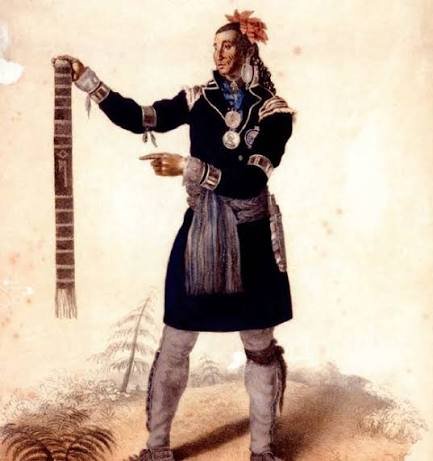 The Iroquois Confederacy dropping a bunch of black wampum is a solemn final signal from the people through the War Chief that internal justice must be enforced; when warnings are exhausted, peace and mercy are set aside and action is authorized.
 in Wampum 59, if a chief does not heed the warnings of the people, then the council of the women or of the men have the duty to return him to the right course of action. If he seriously endangers the people, the war chief drops the Black Wampum, and the men spring to their feet and club the erring chief to death. The right to decide on execution is held by both the general council of the men of the Five Nations and the general council of the women of the Five Nations. If the erring chief grabs the black beads before they hit the floor, then he is given a chance to make amends.
Tree of Great Long Leaves Wampum 60 provides that those who are farseeing have a duty to bring any insights to the people’s attention. Should a great calamity threaten the generations rising and living, then he who is able to climb to the top of the Tree of the Great Long Leaves may do so. Should he see that evil things indeed are approaching, then he shall call to the people of the Five Nations Confederacy assembled beneath the Tree of the Great Long Leaves and say: “A calamity threatens your happiness”. This is the ancient way of warning the people to be ever on the alert to danger and to discuss and do something about it.
The Kaianerehkó:wa Wampum 62 provides for reciting the Kaianerehkó:wa every five years. Now that it is written down, Dekanawida would probably have recommended that the people read it often. There are chiefs who don’t realize when they are violating the law, because they refuse to read it. Once a year, every community would recite the Kaianerehkó:wa for its members to hear. Every five years, the entire confederacy would gather to have a Kaianerehkó:wa recital to eliminate the excuse of being ignorant of the law. “l did not know” is not an acceptable excuse for breaking it.
Temporary Adoptions Wampum 67 allow for temporary adoptions of persons of another clan or of a foreign Indigenous nation by bestowing “a name hung about the neck”.
Holding Confederacy Land Wampums 72 and 73 provide that the confederacy territory is the soil of the Earth from one end of the land to the other and is the property of the people who inhabit it, and that none other may hold it. The nations agreed on boundaries for hunting grounds and territories. The confederacy’s role is to protect these boundary lines and any changes have to be made in the grand council with all nations concurring.
Blood Claims Wampum 76 provides that the rights can only be claimed through family lineage. Otherwise, not knowing all the traditions of the confederacy, someone might go against its Great Peace without realizing it. In the national or grand councils, only the Roiá:ner has a voice, unless an individual is asked to speak. Weapons of War Wampum 91 provides for the right of the warriors to take up the weapons of war to defend their land and people.
All living things in the natural world possesses the “instinct” to protect themselves, their territory and their own kind, especially their young. People’s Right to Meet Wampum 93 provides for the inherent and constitutional right of the people to assemble anytime and at any place within their territory without having to seek permission from any national council. The Kaianerehkó:wa sets the path to follow; no new path can be made, and no one may stray from that path: “Whenever there is an especially important matter, the chiefs of the league must submit the matter to the decision of their people, and the decision of the people shall affect the decision of the league council to confirm the voice of the people”. When the people hold a general council, their decisions are as valid as a grand council decision, provided that they do not violate the constitution. The grand council has to accept the people’s decisions, as the confederacy is the people’s government.
WHAT THE KAIANEREKOWA REPRESENTS IN TERMS OF PHILOSOPHY.
The constitution gives the Rotinonhsión:ni:onwe a strong identity, a philosophy upon which to base our lives, unity with our brethren and a sense of who we are as a people. This has created a momentum to recover control over our destiny. Today, the constitution provides a platform for negotiating political disputes with Canadian and American colonists, as we did in the stand-off in Kanehsatà:ke (Oka), and as we did in the past with the French, English, Dutch and Americans. Using the constitution, we are also able to deal with disputes within our nation and make decisions using its basic principles. It outlines everyone’s role and purpose in the confederacy, as well as a philosophy and structure within which to deal with our environment. Women are an integral part of Kanien’kehá:ka survival and are the backbone of Mohawk society. Both men and women have our roles to fulfill in keeping the nation strong. Duties are divided and complementary. Women, as heads of our families and clans, are said to better understand controversies among people. In war, we would not unnecessarily risk the lives of our people over petty squabbles. The Kanien’kehá:ka men depend on this feminine wisdom to decide whether going to war would provide the greatest good for the ultimate effort. The Rotinonhsión:ni, being a matrilineal society, hand down property through the females. A Mohawk bridegroom is expected to live in his wife’s community and in her home, which was a longhouse with the extended family. Marriages are considered seriously. Children are highly regarded. Children are gifts from creation and are to be treated as such.
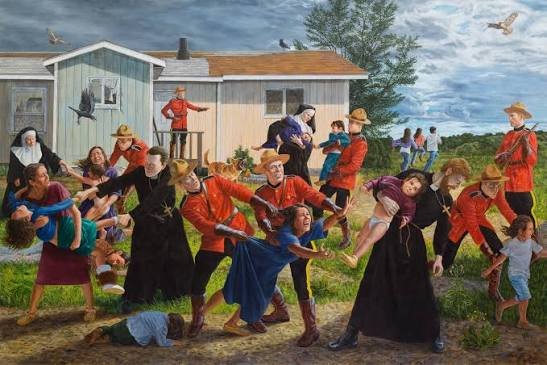
This philosophy unites the Rotinonhsión:ni, which is now a force that Canadian and American authorities have come to respect. Challenged for hundreds of years, the Rotinonhsión:ni have emerged as a cohesive people. We are reaffirming our sovereign nationhood, reclaiming our lands, powers and possessions and making our presence felt nationally and internationally. Outside threats from the colonial states that are squatting on our land have forced the Rotinonhsión:ni to consider our political position. We are falling back on our traditional longhouse philosophy, the treaties, our history and, of course, our constitution, the Kaianerehkó:wa, great peace. Young Kanien’kehá:ka people are studying the Kaianerehkó:wa and relearning the Kanien’kehá:ka language. No doubt, the tried and true philosophy of the past, which has withstood attack and near annihilation, provides direction to the young people. Kanien’kehá:ka activism has shown other Indigenous people that it pays to exercise their rights. The mainstream public is seeing the anccient Indigenous image emerge. Even on the international stage, Kanien’kehá:ka and other Rotinonhsión:ni are asserting themselves, for example, at the United Nations, where we are eloquently presenting our cases. No doubt the philosophy embedded in the ancient Kaianerehkó:wa constitution is a major factor as to why the Rotinonhsión:ni still struggle, resist and exist. Unity of the Rotinonhsión:ni nations is based on the philosophy of the Kaianerehkó:wa. The more unified the clans and communities of the Kanien’kehá:ka nation become, the stronger we become. It is this philosophy that affirms the sovereignty of the Kanien’kehá:ka nation and the Rotinonhsión:ni Confederacy. The Rotinonhsión:ni being geographically located in both the colonies of the United States and Canada must constantly exercise diplomatic acuity in dealing with these states on various matters, such as land claims, programs and services. It is the Kaienere’ko:wa that provides the will and spirit to exercise this identity.
The Americans have always been the ‘cowboys’ and now the Palestinians are paying the same price as we did. Willie Nelson sing, “Don’t let your babies grow up to be cowboys”:
SONG HERE – MAMMAS, DON’T LET YOUR BABIES GROW UP TO BE COWBOYS the one with the lyrics

mohawknationnews.com
kahentinetha2@protonmail.com
Box 991 kahnawake mohawk territory quebecc canada J0L 1B0
 This entry was posted in Uncategorized by Kan1enkehaka. Bookmark the permalink.
No comments:
Post a Comment