Indigenous Peoples and Human Rights
Showing posts with label Dakota Access Pipeline. Show all posts

March 11, 2025

Standing Rock Medics Attacked by Police and Arrested


Medic treats victim of police attack at Standing Rock on Oct. 27, 2016. Photo by Rob Wilson.
Victim of police attack.


https://www.youtube.com/watch?v=KQql9pbwKAQ

While the bizarre court case continues in Mandan, North Dakota, Energy Transfer v Greenpeace, our most viewed articles include this one from the medics at Standing Rock, who were targeted and attacked as the medics were treating water protectors on Oct. 27, 2016 -- a tactic that was used in Palestine when medics were targeted and assassinated during the past two years. At Standing Rock, law enforcement had silencers on their weapons. "Why do they have silencers if they are here for peace," a medic said, who was fired on by law enforcement using shotguns loaded with lead-filled bean bags. According to the Geneva Convention, knowingly firing at a medic wearing clear insignia is a war crime. - Censored News, March 11, 2025

Morton County Sheriff and the Violent Gang of Police Targeted and Arrested Medics while they were Treating Patients

November 18, 2024

Lakota Matt Remle: When Standing Rock's Burials were Bulldozed, They Went After the Banks


Standing Rock 2016: Defending the Water

Lakota Matt Remle: When Standing Rock's Burials were Bulldozed, They Went After the Banks

"They didn't have a permit -- and they still don't have a permit to be operating, that's why we shifted focus to the financial institutions, and launched a very targeted campaign." -- Matt Remle, Hunkpapa Lakota

By Brenda Norrell, Censored News, November 2024
Watch Video by Govinda 

SEATTLE -- Speaking at the Salish Sea Assembly, Matt Remle, Hunkpapa Lakota from Standing Rock, describes how the Dakota Access Pipeline used Standing Rock's map of burial places against them, and brought in attack dogs as the pipeline bulldozed their sacred burial place.

Remle, whose Lakota name is Wakíƞyaƞ Waánataƞ (Charging Thunder,) said it was then that they made the decision to target the banks and financial institutions that funded this pipeline, the Dakota Access Pipeline.

September 14, 2024

Thousands Sign Support for Greenpeace and Red Warrior Society in Pipeline SLAPP


Standing Rock, Sept. 3, 2016. Defense of Standing Rock burial places from the construction of Dakota Access Pipeline, as pipeline brought in dogs to attack water protectors. Video screen capture by Censored News.


Thousands Sign Support for Greenpeace and Red Warrior Society in Pipeline SLAPP

By Brenda Norrell, Censored News, Sept. 13, 2024

Energy Transfer plans to bankrupt Greenpeace USA with its $300 million lawsuit, and rewrite history by diminishing the role of Native people leading the movement to protect the water at Standing Rock from Dakota Access Pipeline. More than 290 organizations, and tens of thousands of individuals, have signed a letter supporting Greenpeace.

The SLAPP lawsuit names Greenpeace, Red Warrior Society and individual water protectors. Water protectors are also being served with third party subpoenas, in a fishing expedition for information. The lawsuit is slated for North Dakota State Court in Morton County in February of 2025 -- eight years after militarized police tore down and ransacked the water protector camps.

May 7, 2024

'In Backlash to Campus Pro-Palestine Protests, Echoes of Standing Rock and the Global Crackdown on Climate Protest' by Drilled


In Backlash to Campus Pro-Palestine Protests, Echoes of Standing Rock and the Global Crackdown on Climate Protest

The use of militarized police and “antiterrorism” laws against activists is not new in the U.S.

by Alleen Brown, Drilled
This story is co-published with the Center for Media and Democracy.

As soon as a single Palestinian activist showed up at an anti-Dakota Access Pipeline camp on the edge of the Standing Rock reservation in 2016, intelligence analysts for the mercenary security firm TigerSwan were on alert."

"El-Zabri, the Palestinian activist surveilled at Standing Rock, was among 79 people arrested this week while protesting at the University of Texas at Austin. “It really felt like the same as Standing Rock, when we were facing the police,” he said. “There was a whole army that looked like it was at war in riot gear. They eventually used tear gas and pepper spray.”

“They're afraid of what we have to say and the people that we can touch,” said Cornell senior Yanenowi Logan, who is Deer Clan from the Seneca Nation and has been negotiating with campus administrators.

"Logan said that by standing up for Gazans, she and other Native organizers are also standing up for themselves. “We want to be able to show them that, hey, we're still here,” she said. “You can try to kill us. You can burn our crops. You can do whatever you want to do, but we're still going to persist.”

Read the article at Drilled
https://drilled.media/news/gaza-standingrock-tigerswan

.

New today: TigerSwan spy files from September 24, 2006 on Red Warrior Camp, American Indian Movement, and aerial photos of camp. Posted by Drilled, with article by Alleen Brown. The documents were released after a court battle after TigerSwan was found to be operating without a license in North Dakota. See more of this file at https://drilled.media/documents/1ed15ccd-a1cf-4f20-aaff-483b4714ab57/f4bb0d85-4da2-413a-83b8-ae1bfa63c01d

March 19, 2024

Indigenous Testify on Dakota Access Pipeline Before Inter-American Commission on Human Rights

Germaine Tremmel, Standing Rock, Lakota testifying from the Oceti Sakowin camp.
Screenshot Censored News.


Lakota leaders testified before the Inter-American Commission on Human Rights in December of 2016.


Indigenous Testify on Dakota Access Pipeline Before Inter-American Commission on Human Rights

Censored News is republishing the testimony before the Inter-American Commission on Human Rights in December 2016, which describes the brutality of law enforcement, and failures of the U.S. government at Standing Rock. The current case in federal court, North Dakota v. U.S., omits the brutality of excessive force by law enforcement, critical injuries, and destruction of the sacred.

By Brenda Norrell, Censored News, December 19, 2016

WASHINGTON -- Lakota leaders testified before the Inter-American Commission on Human Rights, describing the excessive force and brutality of law enforcement during attacks on water protectors defending the water from construction of the Dakota Access Pipeline at Standing Rock in North Dakota. The attacks resulted in critical injuries, the targeting of women, the destruction of cultural sites, and the violation of human rights, and international rights.

"Presently in the United States of America, our people have no civil rights," Cheyenne River Chairman Harold Frazier, Lakota, South Dakota, testified before the commission.

"In 1968, the U.S. passed the Indian Civil Rights Act, it only protects our people from tribal governments."

November 25, 2023

Red Warrior Society 'Solidarity with Palestinians' -- From the Banks of Wounded Knee Creek


All Out For Palestine Teach-In & Art Build, hosted by Ama's Freedom School on November 19. Image credit Lakota Media Project


Red Warrior Society 'Solidarity with Palestinians' -- From the Banks of Wounded Knee Creek

By Red Warrior Society
Censored News

As Lakota people of the Oceti Sakowin we stand in solidarity with the Palestinian people. We know too well the struggle for self-determination and the fight to retain lands that have long been connected to our way of life, language, ceremonies and the blood of our people.

September 23, 2023

Standing Rock: Federal Appeals Court Hears Case of Law Enforcement Brutality at Backwater Bridge


From L to R: Center for Protest Law and Litigation (CPLL) Executive Director Mara Verheyden-Hilliard, Michael Avery with National Police Accountability Project, CPLL Senior Counsel Rachel Lederman, Standing Rock water protector and attorney Wašté Win Young, Co-Counsel Melinda Power, CPLL attorney Amanda Eubanks outside the courthouse in St. Louis.

Standing Rock: Federal Appeals Court Hears Case of Law Enforcement Brutality at Backwater Bridge 

By Brenda Norrell
Copyright Censored News
Sept. 19, 2023

ST LOUIS -- A federal appeals court heard arguments in the class action lawsuit filed for excessive force at Backwater Bridge at Standing Rock by water protectors who suffered critical injuries. The issues argued included whether water protectors were free to leave, whether law enforcement feared for their lives, and whether the use of munitions, bean bags filled with shot, and water sprayed on water protectors in temperatures below freezing, were justified or legal.

Rachel Lederman, lead counsel for water protectors, told the Eighth Circuit Appeals Court's three-member panel of judges, that the district court based its decision in favor of law enforcement are disputed.

“The story defendants have put forth to justify their use of force is hotly disputed."

Lederman an attorney with the Center for Protest Law and Litigation, said that a jury should decide whether it was objectionably reasonable for officers to bombard hundreds of individuals with high-pressure water hoses, impact munitions, explosives, and chemical agents for ten hours, causing serious injuries, for the people that were allegedly causing problems.

May 6, 2022

NCAI Files Amicus Brief in Support of Critically Injured Water Protectors at Standing Rock


Standing Rock Water Protectors Attacked by Law Enforcement. Photo copyright Ryan Vizzions.

The National Congress of American Indians filed a friends of the court brief in federal appeals court, upholding Treaty rights, and the right of free speech, in support of critically injured Water Protectors at Standing Rock.

By Brenda Norrell
Censored News


The National Congress of American Indians filed an amicus brief in federal appeals court in support of Standing Rock Water Protectors who were seriously injured by militarized law enforcement while defending the water from Dakota Access Pipeline.

Upholding Water Protectors' Treaty rights, and right to free speech, NCAI described how the peaceful and prayerful movement was met by serious, life-threatening force by law enforcement, resulting in critical injuries.

NCAI urged the appeals court to uphold Native American rights and said this excessive force should not be allowed to silence Native people exercising their rights.

"If the excessive force used to silence Plaintiffs-Appellants’ protected speech stands, the ability of all NCAI member Tribal Nations to peacefully exercise their First Amendment rights -- without risking injury from life threatening, excessive police force -- will be greatly undermined."

"NCAI therefore has a unique interest in advocating for the affirmance of the constitutional rights of Plaintiffs-Appellants to peacefully speak in support of tribal sovereignty, treaty rights, and the protection of Native American sacred sites and burials.'"

The amicus brief, known as a friend of the court brief, was filed in the Eighth Circuit Court of Appeals, in the case of Vanessa Dundon, et al, versus Morton County Sheriff Kyle Kirchmeier, et all, on April 29, 2022.

NCAI said, "The Native youth at Standing Rock who began the Movement are familiar with the history of violence inflicted on their people, but they began the Movement with hope by taking a peaceful, prayerful 'stand to be the voice for [their] community, for [their] great grandparents, and for Mother Earth.'"

"These Native youth inspired Plaintiffs-Appellants, and thousands of others (Native and non Native) who decided to join them in Cannon Ball, just one mile north of the Standing Rock Sioux Reservation. For six months, they engaged in a peaceful, prayerful protest — all the while demanding that the United States, specifically the Army Corps, uphold the treaty rights of the SRST and refuse to allow a private company, Dakota Access, LLC ('Dakota Access'), to build its pipeline."

Standing Rock 2016. Copyright Ryan Vizzions.


"Appellants and thousands of other peaceful protestors advocated for the SRST’s treaty rights in a clear exercise of their First Amendment rights. In response to this peaceful protest, law enforcement used force."

"The question, of course, is whether that use of force was excessive and whether it violated the rights of Plaintiffs-Appellants.

"It is undisputed that Plaintiffs-Appellees suffered serious bodily harm and injury. Their exercise of their First Amendment rights was, in fact, met with serious force and, in some cases, life-threatening force."

"If the excessive force used to silence Plaintiffs-Appellants’ protected speech stands, the ability of all NCAI member Tribal Nations to peacefully exercise their First Amendment rights—without risking injury from life threatening, excessive police force—will be greatly undermined."

"NCAI therefore has a unique interest in advocating for the affirmance of the constitutional rights of Plaintiffs-Appellants to peacefully speak in support of tribal sovereignty, treaty rights, and the protection of Native American sacred sites and burials.'

'For the following reasons, NCAI respectfully requests that this Court reverse the District Court’s granting of Defendants-Appellees’ Motion for Summary Judgment below."

NCAI told the Appeals Court that the Movement had broad support from Indian Country. In all, 356 separate Tribal Nations sent their flags to fly at the site where the peaceful protestors camped, and nearly 300 Tribal Nations passed resolutions or wrote letters of support for Standing Rock's to protect treaty rights.

"This Movement was a peaceful protest involving nearly all of Indian Country. It was not the radical protest of a fringe group."

NCAI included its prior resolution which proclaimed “that in carrying out this resolution we remain in peace [as] . . . Indian Country’s first concern is for the safety of the peaceful protectors, law enforcement officers, government officials, and workers in Cannon Ball, ND, and any act of violence is unwelcome.”

NCAI said that a joint statement on the Movement from the Department of Justice, the Department of the Army, and the Department of the Interior read: “In recent days, we have seen thousands of demonstrators come together peacefully, with support from scores of sovereign tribal governments, to exercise their First Amendment rights and to voice heartfelt concerns about the environment and historic, sacred sites.”

NCAI stated that it respectfully submits this amicus brief in support of Vanessa Dundon, Crystal Wilson, David Demo, Guy Dullknife, III, Mariah Marie Bruce, and Frank Finan (collectively, “Plaintiffs-Appellants”), and the thousands of other Americans who stood in prayer and objected to the Army Corps’s complete abdication of its treaty and trust duties and responsibilities to protect and preserve the drinking water, sacred sites, and graves of Tribal Nations.

NCAI listed authorities in its brief, including the testimony before the Inter-American Commission on Human Rights in Jamaica in 2019, presented by Seanna Howard, Michelle Cook, Carl Williams and Rachel Lederman: Criminalization of Human Rights Defenders of  Indigenous Peoples Resisting Extractive Industries in the United States, June 24, 2019.

The authorities in NCAI's brief include:

Alleen Brown, Medics Describe How Police Sprayed Standing Rock  Demonstrators with Tear Gas and Water Cannons, THE INTERCEPT (Nov. 21,  2016, 5:52 PM)

Catherine Thorbecke, Officials Defend Use of Alleged ‘Dog Kennel’ Cells in  Dakota Access Pipeline Protest, ABC NEWS (Oct. 31, 2016, 6:32 PM)

Resolution #PHX-16-023, Support for the Standing Rock Sioux to Protect its  Lands, Waters, and Sacred Places, NCAI (Oct. 2016) 

NCAI Resolution Standing Rock


Vanessa Dundon, et al, versus Morton County Sheriff Kyle Kirchmeier, et al lawsuit can be viewed at:

Excerpt from the Dundon lawsuit:


Copyright Brenda Norrell, Censored News.

April 14, 2022

Journalism Takes a Hit -- While a New Brand of Carpetbaggers Emerge


The Intercept: Standing Rock series

Journalism Takes a Hit, While a New Brand of Carpetbaggers Emerge 

Brenda Norrell
Censored News

Journalism took a hit this week.

Alleen Brown, who did the extremely difficult and precise work of exposing TigerSwan and more at Standing Rock, was laid off by The Intercept this week.

It takes a great deal of courage, perseverance, and knowledge to do this type of reporting.

Equally troubling is the fact that Energy Transfer, owner of the Dakota Access Pipeline, is fighting The Intercept in court to halt the release of 16,000 TigerSwan documents that North Dakota already has.

April 2, 2021

Killing the Black Snake in Washington


Killing the Black Snake in Washington

By Brenda Norrell

Censored News

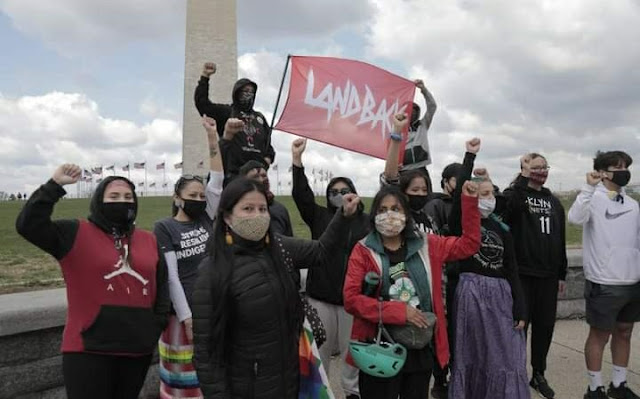
Indigenous youths, marching to the White House on Thursday with a 200-foot black snake called out with clarity to the White House. "If the Biden Harris administration doesn't want this at their home, then they shouldn't bring it to our home," one of the Native youths said.

This just-released video, "Indigenous Youth Ran to the White House," shows Native youths 'Killing the Black Snakes,' Dakota Access Pipeline, and Enbridge Line 3. View the video on Facebook, on the pages of Standing Rock Youth Council and Cheyenne River Grassroots Collective: https://m.facebook.com/StandingRockYouthCouncil/ and https://m.facebook.com/CRGrassrootsCollective/

A news search shows that the media in France, Latin America, Germany, Iran, and Russia provided good coverage of the Native youth actions in DC to shut down pipelines -- while the U.S. mainstream media remains sleeping.

Native youths began the actions in Washington on Thursday by running to the White House and locking down to tripods outside the White House.

With a large crowd joining them, they delivered more than 400,000 petitions to the U.S. Army Corps of Engineers to shut down the Dakota Access and Enbridge Line 3 pipelines, and rallied outside.

Lakota and Dakota youths traveled from Standing Rock and Cheyenne River Nations in North Dakota and South Dakota, and Anishinaabe youths came from Minnesota, to lead the actions.

A news search shows the media in France, Latin America Germany, Iran, and Russia provided coverage of the actions on Thursday. It seems the mainstream U.S. media remains in hiding.

Jen Deerinwater at Truthout provides coverage of Waniya Locke, Dine', Lakota, Nakota, and Anishinaabe, who locked down to a tripod near the White House, at Black Lives Matter Plaza.

Deerinwater also interviewed Danny Grassrope, Lower Brule Lakota from South Dakota, on consent and Indigenous rights. Read more: https://truthout.org/articles/build-back-fossil-free-indigenous-youth-rally-to-demand-biden-stop-pipelines/

La Prensa Latina describes the threat of the Enbridge Line 3 Pipeline. The pipeline under construction would carry crude oil from Alberta, Canada, through Anishinaabe lands in Minnesota.

Meanwhile, in Washington, Native youths ran for the water.

"All pipelines break," Native youths said, as they stood in defense of the water.

"Water is Life, Mni Wiconi," said Native youths, marching with the black snake in the streets of DC.

They resounded the defense of Water Protectors at Standing Rock in North Dakota, defending the Missouri River, and the drinking water for the masses, from Dakota Access Pipeline.

At Cheyenne River in South Dakota, Lakotas continue to monitor the construction area of the Keystone XL pipeline, whose permit was canceled by President Biden. 

"You can't trespass on stolen land," said Jasilyn Charger, Cheyenne River Lakota, in RT's coverage. Charger, and Oscar High Elk, face charges for protecting the land and water in their homeland.

The global coverage of the action of the Native youth in DC, killing the black snake, includes coverage in Tehran, Iran.

While Russia's RT,  and La Prensa Latina, provided immediate coverage -- the U.S. mainstream media seems to be sleeping. Read the coverage in Tehran  by Fars News Agency

There's new video coverage of the Native youths in DC killing the black snake now streaming by Ruptly, the Russian news agency in Berlin, Germany. On LiveTube: https://youtu.be/M0zCPm5SADA

France 24 is covering the Native youths killing the black snake in DC, adding to the global coverage in Latin America, Russia, Germany, and Iran. Here's a view of the coverage:

Photos below courtesy Standing Rock Youth Council
Photos courtesy Standing Rock Youth Council


Read more in the news:

RT

https://www.rt.com/usa/519897-black-snake-pipeline-protest-dc/

La Prensa Latina

https://www.laprensalatina.com/indigenous-groups-rally-against-oil-snakes-threatening-us-environment/


March 30, 2021

Lakota Youths Arrive in DC to Demand Pipeline Shutdowns, Biden Appoints Environmental Justice Council

Standing Rock and Cheyenne River Lakota youths from North Dakota and South Dakota walking in Iowa and making a stand for the water. Photos courtesy Standing Rock Youth Council.


Lakota youths arrive in DC to demand President Biden shut down Dakota Access and Enbridge Line 3 pipelines


By Brenda Norrell
Censored News


Standing Rock and Cheyenne River youths arrived in Washington, DC, to demand that Dakota Access Pipeline and Enbridge Line 3 be shut down, after joining Meskwaki relatives in Iowa to make a stand for the water.

On Sunday, Lakota and Dakota youths walked with Meskwaki relatives in Iowa to support the shutdown of the Dakota Access and Enbridge Line 3 Pipelines threatening safe drinking water for the masses in the heart of the continent.

February 12, 2019

'Shoot and Run' -- New Documents Expose Abusers of Standing Rock Water Protectors. Now DAPL Peeps Want to Hide.


'Shoot and Run' -- New Documents Expose Abusers of Standing Rock Water Protectors. Now DAPL Peeps Want to Hide.

Naming Names -- Exposures Send Perpetrators Running

By Brenda Norrell
Censored News
Photo: Attack on Standing Rock 
Water Protectors, 2016

Newly-released e-mails confirm what Censored News exposed about the federal permits for the Dakota Access Pipeline.
Now the lawmakers, police and military responsible for the permits, attacks and abuse that resulted in critical injuries to many protecting the water -- want to hide.
   -- Sinister Role of Two U.S. Presidents
The permitting process for Dakota Access pipeline began during the Obama administration, in the spring of 2014,  according to U.S. Dept of Energy records that Censored News discovered online and exposed.
That was just a few months before Obama visited Standing Rock in June of 2014.
Later in 2016, when Water Protectors were being shot with rubber bullets, fired on with tear gas, and imprisoned in dog cages with prisoner numbers written on their arms as was done by the Nazis -- Obama refused to halt the abuse.
Cheyenne River Lakota Chairman Harold Frazier urged Obama to halt the abuse, during a meeting in Los Angeles, but Obama refused to stop the abuse and refused to halt the pipeline construction. Instead, Obama went golfing and to a fundraiser dinner. Obama told a news reporter that he was waiting for things "to play out."
When Trump began his bizarre and crazed term, Trump endangered all forms of life and continued the sinister U.S. agenda in 2017, carrying out the genocidal policies of the U.S. government that places oil, profits, and payback to political donors, above human life and justice.
While Obama relied on public relations' spin to avoid detection, Trump didn't bother. Trump's agenda was, and is, destruction, agitation, distraction, confusion and abuse of the protectors.
   -- New Exposures Send Abusers Begging to Hide --
The Intercept and Will Parrish are exposing new information. Freedom of Information requests reveal the big players which enabled Dakota Access Pipeline to continue the abuse.
The Intercept also exposed earlier Heath Harmon of Three Affiliated Tribes, the undercover FBI agent who set up Red Fawn for arrest and imprisonment.
Unicorn Riot, on the frontlines and arrested at Standing Rock, documented the abuse by the United States.
New e-mails show the power of Unicorn Riot videos and make it clear why the media was targeted with arrest at Standing Rock.
Revealing the power of identifying the perpetrators who remain protected by the United States government -- the links for Censored News have been censored and blocked by Twitter since 2016.
The links have been blocked ever since Censored News posted photos and names of the dog handlers, security guards, undercover agents and off-duty police officers who carried out the attack using vicious dogs to attack Standing Rock Water Protectors in September of 2016.
Now, North Dakota is on the run.
North Dakota wants to keep documents and truth secret and hidden from the public.
The Intercept exposes how North Dakota seeks to restrict public records access after Standing Rock:
https://theintercept.com/2019/02/11/north-dakota-public-records-pipeline-protest/

Further, a General has been exposed.
At Huffington Post, read how a General turned oil lobbyist pushed through permits for Dakota Access Pipeline:
https://m.huffpost.com/us/entry/us_5c619dfce4b0eec79b2668de?fbclid=IwAR2ZbbPF9gn3ffZ4tJyiLZ95j0Ks03ab7QaZ45mlowAmQybp6lOLkNF4vws

Documents in Standing Rock Sioux court case, U.S. Army Corps of Engineers
.https://www.nwo.usace.army.mil/Missions/Dam-and-Lake-Projects/Oil-and-Gas-Development/Dakota-Access-Pipeline/

And further, a Louisiana Sheriff is now being ordered to turn over records.
Lake Charles Sheriff Greg Champagne in southern Louisiana knew his area would benefit from the end of Dakota Access pipeline, with the Bayou Bridge pipeline.
Champagne was also President of the National Sheriff's Association in 2016, which lobbied Congress for militarized weapons and vehicles, and brought in Sheriff's Departments from across the nation to attack Standing Rock Water Protectors in 2016. The facts were exposed by DeSmog Blog in 2016.
The court recently ordered the records be turned over:
.https://www.theadvocate.com/baton_rouge/news/crime_police/article_728d508c-0ac9-11e9-9088-2b20b15c9db9.amp.html

  Trump, mainstream media, dancing in abyss
Freedom of Information requests, court documents, live videos and investigative journalists are now heralds of justice, as the United States government plummets and mainstream media joins Trump, dancing in the abyss at the end of puppet strings.
.
U.S. sniper on a hill at Standing Rock

Copyright Brenda Norrell, Censored News

Brenda Norrell, journalist in Indian Country for 36 years, began Censored News in 2006, after being censored and terminated as a longtime staff reporter at Indian Country Today. Norrell began serving as a reporter at Navajo Times, during the 18 years she lived on the Navajo Nation, continuing as a stringer for AP and USA Today. Later, she traveled with the Zapatistas in Mexico and visited with Bolivian President Evo Morales in his mountain homeland. Today, she is blacklisted by mainstream media.

October 16, 2018

BAYOU BRIDGE: Water Protectors Rescued after Boats Intentionally Hit with Wave


Twelve people, including a media crew, were rescued on Monday after Bayou Bridge pipeline resisters boats were intentionally sank

L'eau Est La Vie Camp - No Bayou Bridge
ALERT! (10/15):
Early this morning, while two boats carrying water protectors and media were legally observing a bayou bridge pipeline construction site, an Energy Transfer Partners security boat rapidly passing by intentionally caused a large wave that swamped and eventually sunk our boats!

All passengers, including a documentary film crew, narrowly made it to shore before the boats completely sunk.
All are safe, but some are stranded in the swamp. A local Cajun fisherman has offered to help and is preparing to take one of our boat pilots out to do a rescue extraction.
There is an urgent need to repair or replace our boats! Please share and support our fight.


Read more on the resistance to the end of the black snake pipeline, the Dakota Access Pipeline, on the Louisiana Gulf Coast, in today's article in The Guardian:
https://www.theguardian.com/environment/2018/oct/16/dakota-access-pipeline-bayou-bridge-protest-activism?CMP=share_btn_fb

April 20, 2018

United Nations -- Criminalization of Indigenous Water Protectors


View the Report 

Indigenous Resistance to the Dakota Access Pipeline criminalization of dissent and suppression of protest

Article by Brenda Norrell, Censored News

NEW YORK -- Broadcast live from the U.N. Permanent Forum on Indigenous Issues event, LaDonna Allard of Sacred Stone Camp, describes how the youths at Standing Rock used social media, and ran across the country, and launched the resistance to Dakota Access Pipeline.

LaDonna, among those on the panel, describes the attack on Sept. 3, 2016, and how the water protectors were maced. She stood out in the middle of the attack dogs. "Blood was running from his mouth," she said of one of the attack dogs. "The young men came with their horses, and put their horses between us and the dogs."
She always thought the laws of the United States are just.
At that moment, she realized no, the laws of the U.S. are not just.
"I am really angry.  I watched some really good people get hurt."
The militia groups came, the military came.
They were shooting people, macing people.
Percussion grenades, water cannons.
"I watched very amazing young people stand up in prayer, ceremony and song."
The police engaged in military strategy.
Then, they brought in the military, attacking people, and they began the propaganda.
The newspapers carried the propaganda.
"That's when I realized money buys everyone's souls."
She said there is no law by these corporations.
"You don't have a right to build a pipeline outside my home," she said.
"Someone has to show me America is a just system."
Speaking of her Dakota ancestors, LaDonna said, "We never had a conflict with America, and you came and killed us anyway."
She describes how officials came to take her land.
"How many times do I have to start again in my home."
LaDonna said she knows the history of the land for 10,000 years.
"I have the roots growing right out of my feet."
"I will stand until I die there."
Indigenous Peoples are holding on for the world, she said of the protection for all liing things and Mother Earth.
"We want the world to live."
"There's no more time."
"It is now you must stand up."


Video above by Cultural Survival Michelle Cook (Dine’) speaks about Standing Rock! "We are asking for a Truth and Reconciliation Commission regarding Standing Rock...Media plays a role in the criminalization of Indigenous Peoples because it desensitizes people."

Michelle Cook, Dine' attorney and panelist, was among those who went to stand with LaDonna.

"We are going to keep fighting for justice," Michelle said during her presentation.
Michelle describes how she helped begin the Water Protectors Legal Collective, in an army tent at Standing Rock.
She describes how helicopters circled overhead, and there were children in the camp, with nothing more than feathers and prayers to protect them.
Michelle tells how water protectors are in jail, and some are waiting trial or sentencing.
Since Standing Rock, there have been 58 bills introduced to deny free speech and assembly.
Who pays for it? Energy Transfer Partners gave $15 million to North Dakota.
If we can not find justice in the United States, we need to go to the international justice system, Michelle said.
While at Standing Rock, Michelle received death threats, but the threats only made her more determined.
"We have also been going to the banks," she said, describing the divestment efforts of the financial institutions who invest in Dakota Access Pipeline and fossil fuels.
Now, Michelle asked how water protectors can seek help for post traumatic stress syndrome.
In the report just released, attorneys urge that criminal charges be dropped against water protectors, and there be reparations for victims.
She also describes the role of the media.
"We have to create our own media," she said, adding that the media has been compromised.
"We are threatened with extinction."
Indigenous Peoples are the ones protecting the land.
"That is who I am."
"We realized who we are."
Now, she said, "We need action."
Michelle said she is thankful for what has happened.
"It changed my life for the better."
"We are not going to give up."
"We are going to work harder."
The report, “Indigenous Resistance to the Dakota Access Pipeline: Criminalization of 

Dissent and Suppression of Protest,” makes the following recommendations:

  • Drop all criminal charges against the water protectors
  • Investigate, punish, and provide appropriate reparations for all human rights violations, including the use of excessive force and mass arrests in response to DAPL opposition; OR convene a truth commission with the indigenous representative institutions of the Oceti Šakowiŋ
  • Adopt a regulatory framework to supervise and monitor activities of extractive industries and energy companies, private security firms and other non-state actors to prevent human rights violations in regard to activities that affect indigenous peoples and their lands
  • Provide training to law enforcement and private security on best practices for managing peaceful demonstrations; the right to free expression and assembly; and indigenous peoples rights under international law
  • Implement national measures to protect indigenous human rights defenders in compliance with the UN Declaration on Human Rights Defenders, the UN Declaration on the Rights of Indigenous Peoples and other international standards to ensure the full enjoyment of their rights to free expression and assembly
  • Regulate/restrict transfer of military-grade weapons and equipment to local law enforcement
  • Direct prosecutors to seek proportionate penalties for protestors who violate the law
  • Reject or amend state legislation that violates the right to free assembly

Thursday, April 19, 2018:

https://www.facebook.com/CampOfTheSacredStone/videos/2077628722526155/


Dakota Access Pipeline Resistance and the Criminalization of Indigenous Human Rights Defenders

By Indigenous Peoples Law and Policy, University of Arizona
Event: Thursday, April 19, 2:45–4 PM
United Nations Secretariat Building, New York
(Room S-2725 BR)
IPLP is convening a panel of experts to discuss the criminalization of peaceful protest as part of United Nations Permanent Forum on Indigenous Issues (UNPFII). The event is titled “Dakota Access Pipeline Resistance and the Criminalization of Indigenous Human Rights Defenders,” and takes place April 19, 2:45–4 PM PM at the United Nations Secretariat Building (Room S-2725 BR).
The event will feature leading human rights scholars and activists who will discuss the criminalization of indigenous activists and the need for protection of indigenous human rights defenders worldwide. If you are attending UNPFII, join IPLP for a critical discussion on the criminalization of indigenous human rights defenders worldwide.
The panelists for the event are:
Victoria Tauli-Corpuz (United Nations Special Rapporteur on the Rights of Indigenous Peoples)
Victoria Tauli-Corpuz is an indigenous leader from the Kankanaey Igorot people of the Cordillera Region in the Philippines. She is a social development consultant, indigenous activist, civic leader, human rights expert, public servant, and an advocate of women's rights in the Philippines. She was the former Chair of the UN Permanent Forum on Indigenous Issues (2005-2010). As an indigenous leader she got actively engaged in drafting and adoption of the UN Declaration on the Rights of Indigenous Peoples in 2007. She helped build the indigenous peoples' movement in the Cordillera as a youth activist in the early 1970s. She helped organize indigenous peoples in the community level to fight against the projects of the Marcos Dictatorship such as the Chico River Hydroelectric Dam and the Cellophil Resources Corporation. These communities succeeded in stopping these.
Elifuraha Laltaika (Member, United Nations Permanent Forum on Indigenous Issues)
Elifuraha Laltaika is the executive director of association for law and advocacy for pastoralists (ALAPA) and a law lecturer of Tumaini University Makumira (Arusha, Tanzania). He previously served as a Harvard Law School visiting researcher. He holds a Doctorate in Law from the University of Arizona Indigenous Peoples Law and Policy Program. Elifuraha is an expert member of the United Nations Permanent Forum on Indigenous Issues (UNPFII) and a member of the Tanzanian national Bar association (Tanganyika Law Society). Mr. Laltaika has 10 year’s experience working on indigenous peoples’ issues, including as senior fellow at OHCHR in Geneva. He is currently employed as a Lecturer in Law in Tanzania.
Seanna Howard (Professor, University of Arizona, Indigenous Peoples Law and Policy Program)
Seánna Howard teaches International Human Rights and Indigenous Peoples and the International Human Rights Advocacy Workshop. Professor Howard has been with the Indigenous Peoples Law and Policy Program since 2006, representing indigenous communities on precedent setting cases before the Inter-American and United Nations human rights systems.
Carla Fredericks (Professor, University of Colorado, Boulder School of Law)
Carla Fredericks is Director of the American Indian Law Clinic and Director of the American Indian Law Program (AILP), which serves as the umbrella organization for Colorado Law's academic, practice-focused, and community outreach activities in American Indian law.  She is a graduate of the University of Colorado and Columbia Law School. At Colorado Law, Fredericks leads a year-long clinic in which students have the opportunity to represent American Indian tribes, organizations, and individuals in a variety of matters, designed to ready students for the complexities of general counsel work. Fredericks is also of counsel to Fredericks, Peebles and Morgan LLP, where she focuses on complex and appellate litigation and Native American affairs, representing Indian tribes and organizations in a variety of litigation and policy matters.
LaDonna Brave Bull Allard (Sacred Stone Camp Founder)
LaDonna Brave Bull Allard is a mother, Lakota historian, land-owner along the Dakota Access Pipeline route, and the founder of Sacred Stone Camp, the first prayerful resistance camp opened as part of the movement to halt the Dakota Access Pipeline near the Standing Rock Indian Reservation in North Dakota. By December 2016, more than 10,000 Indigenous people and environmental activists were camping in the area on and around LaDonna’s home. She has been a major catalyst and leader in the Standing Rock movement, which has become the perhaps the largest ever intertribal alliance on the American continent, with over 200 Indigenous nations represented. With most Standing Rock defenders now departed from her land - LaDonna remains as a ceaseless voice for her people, the Earth and the water - sharing her story and calls to action at platforms around the world as she continues to advocate for justice. Allard is an enrolled member of, and former historical preservation officer for, the Standing Rock Sioux Tribe. Her people are Inhunktonwan from the Jamestown Valley, Hunkpapa and Blackfoot.
Michelle Cook (SJD Candidate, IPLP)
Michelle Cook is an indigenous human rights lawyer and SJD candidate at Arizona Law’s Indigenous Peoples Law and Policy (IPLP) Program. She is writing her dissertation on international law, indigenous people’s human rights, gender, sexuality, and indigenous transnationalism. She is a founding member of the Water Protector Legal Collective, the on-the-ground legal team which provides legal services to those arrested at the Standing Rock encampment.
Kanyinke Sena (Member, African Commission on Human and Peoples’ Rights)
Kanjinke currently serves as Member of the Working Group on Indigenous Populations/Communities in Africa (Working Group). A member of the Ogiek indigenous community of Kenya, Kanyinke is a long-time advocate for inclusionary approaches to conservation policy and indigenous peoples’ rights in Africa. He currently serves as a Professor of Law at Egerton University in Kenya. Prior to his role as Member of the Working Group, Kanyinke served as chair of the United Nations Permanent Forum on Indigenous Issues from 2013–14.