Indigenous Peoples and Human Rights

December 3, 2012

Mohawk Nation News 'Palest'Indians, Indigenous Victory'


MNN: THE PALEST’INDIANS, INDIGENOUS VICTORY


THE PALEST’INDIANS: INDIGENOUS VICTORY
MNN. DEC. 1, 1012. 
Mohawk Nation News
http://www.mohawknationnews.com

French translantion by Christine Prat

On November 22, 2012, 138 countries voted for Palestine to be recognized as a UN state. They can now use UN International Agencies, sign treaties and bring charges against war criminals. They ended the corporate bankers’ imperial war against Indigenous peoples. Colonizers Canada, US and Israel voted against the bid. They warned there will be repercussions. Boycotts, no aid, shunning us, crossing the street when they see us coming and maybe trying to continue to bully us.

Israel was created by the Balfour Declaration of November 2, 1917. Lord Balfour, the British Foreign Secretary and former Prime Minister, sent a letter to Baron Rothschild, the leader of the Zionist movement and the Rothschild international banking empire. The British promised to help the Zionists create “a national home for the Jewish people” in Palestine. The US entered the war and two weeks later the first boatload of armed Zionist immigrants landed on the shores of Palestine to destroy the people and steal everything.
In 1923 Levi General, the Deskaheh, was sent to Geneva Switzerland by the Haudenosaunee [Iroquois Confederacy], to get membership in the League of Nations. He reminded the Europeans of their obligations under the Guswentha, Two Row Wampum, the only agreement allowing foreigners to live here in peace. The newcomers violated it, making their occupation illegal.
Iran, Estonia, the Netherlands, Panama, Ireland and others supported us. British and American threats against them and Deskaheh forced him to return home. The League then made indigenous peoples worldwide into ‘domestic concerns’. We had no right to seek redress for human rights abuses and theft from anyone other than our oppressors. They tried to permanently victimize and annihilate us.
Deskaheh’s efforts angered Canada. In 1924 the RCMP forcibly removed the traditional Haudenosaunee government, and created the Indian Advancement Act, apartheid and the concentration camps called “reservations”. The Canadian government set up ‘band councils’ to rule us. They designated that “a person is anyone other than an Indian’.
Deskaheh was warned to never return to Canada or he would be killed. He was murdered in Tonawanda New York in 1925.
Bankers are now panicking. They monetized everything and created money to control the world. The shareholders of the corporations of Canada and US profit from war, theft of Indigenous land and resources and enslaving us. These corporations own the Canadian and American masses. Birth certificates, drivers licenses, social insurance numbers, social security, a bank account, running a business, travel or any benefit needs the ‘mark of the beast’, which is the stamp of the bankers.
The bankers send their agents into a country, destroy it and steal their natural resources. Whoever protests gets bombed, starved and economic sanctions, which is war. This time the heavily armed high tech Israeli army could not defeat poor weaponless Palest’Indians. They did not wait for someone to free them. They freed themselves.
They set the precedent. Soon the beast will not be in charge. Canada, US and Israel now have to deal directly with us, the owners of the land and resources.
The UN is another bankers corporation. It will crumble from within. The Indigenous will never be subservient to the bankers again. The imperial corporations will be beggars rather than the brutal lying thugs they’ve always been.
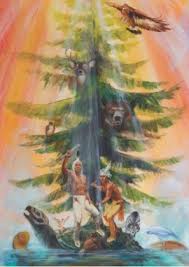
After the women everywhere stop the conflict in their communities, they will begin to implement the Great Law of Peace. Then the men will carry out the law. It’s over for the corporate bankers. They have to stand down or leave. We, the real natural people, are going to assert ourselves.
We insist on justice first, to join the International Court, file complaints against banker/corporatist war criminals and their agents, dismantle illegal settlements and settlers, sue the colonizers, return of our possessions and sovereign control of our air space, land, waters.
Canada’s Prime Minister Stephen Harper and his sidekick John Baird rushed to the UN and showed us who they work for, the same banker who owns Israel and them.
When the power of love overcomes the love of power, the world will know peace. [Jimi Hendrix].
MNN Mohawk Nation News kahentinetha2@yahoo.com For more news, books, workshops, to donate and sign up for MNN newsletters, go to www.mohawknationnews.com More stories at MNN Archives. Address: Box 991, Kahnawake [Quebec, Canada] J0L 1B0


December 2, 2012

Gary Farmer: Empowering authentic Native media

Ofelia Rivas, founder O'odham Solidarity Project for justice
at the US/Mexico border, with Arista LaRusso, Navajo doctoral
student in Indigenous Studies from Sand Springs, Ariz,
and Gary Farmer in Tucson on Dec. 1, 2012.
Photo Brenda Norrell.
Gary Farmer speaks out in Tucson on the fear and oppression of authentic Native voices

'Native people don't have any access to any form of media that reflects them. I think its quite significant in terms of our own self esteem and why we have such a high rate of suicide.' --Gary Farmer

By Brenda Norrell
Censored News
http://bsnorrell.blogspot.com/2012/12/gary-farmer-empowering-authentic-native.html

TUCSON -- Native actor and blues man Gary Farmer was welcomed to Tucson, the ancestral territory of the O'odham, by Ofelia Rivas, who sang a traditional O'odham blessing for Gary Farmer and the Troublemakers, and Pomo film director Tim Ramos.
Between the screenings of Ramos' new film California Indian and Depp and Farmer's Dead Man, Gary spoke of the lack of free press in Indian country and the potential for empowerment through media.
Gary said the United States and Native governments are failing to recognize the importance of Native Americans and their vital place in the media. He described the lack of free press within Indian communities, and the lack of access to electronic media in the US and Canada, during the Native Eyes Film Showcase at the Loft Cinema.
During questions from the audience, Gary said there is a lack of vision by Native leadership to bring about change.
"Native people don't have any access to any form of media that reflects them. I think its quite significant in terms of our own self esteem and why we have such a high rate of suicide."
Describing his life long efforts in radio and television, he said, "I find radio is the more honest form."
"Radio is a way to re-language the people," he said, adding that small radio stations provide for Native languages, and urban radio stations have a great deal of information to share, like AIDS education.
Referring to APTN, Gary said the television network has made a great deal of difference in Canada, in socializing non-Native people to Native issues and stories.
However, he said there's been very little interest in authentic Native media in the US.
"We haven't been able to spark any interest in the US."
Silencing Native voices in the US
Describing the ongoing censorship and manipulation of the press in Indian communities, Gary explained that corruption -- and fear of the truth -- is at the core.
"The Native governments are structured like the American government, which is naturally corrupt. Then, they don't want media, because it is on their case, that's how media is looked at right, rather than socializing and education."
Gary, who was the well loved Philbert in the classic Powwow Highway, was asked if he sees himself more as an activist or actor.
"I've gone back and forth my whole life, but I go to ensuring that Native people have a voice in my own community. I've worked hard to do that here in the United States as well, but I've had no success."
Gary joined Tim Ramos, Pomo producer/writer and actor in the new film California Indian, which screened, along with Dead Man.
Gary pointed out that Native films could be distributed in an alternative distribution system in Indian country, but there is a lack of theaters in Native communities.
"If everyone had a movie theater, we really could have an impact."
Media as a means of empowerment
While casinos continue to expand in Indian country, Native talent is not being widely promoted. Gary said even the National Congress of American Indians in the US has not supported Native talent.
"I tried to get the National Congress of American Indians to pass even a 25 percent commitment to Native talent, to develop Native American talent in the casinos, you know best efforts, but I can't even get that through."
"There's very little support, I just think they're afraid of artists, because we speak out."
Now living in Santa Fe, Gary said in New Mexico young people are suppressed and prevented from opening up, especially on the subject of teenage pregnancy. New Mexico youths have been shut down who attempt to organize and deal with teenage pregnancy at their own level.
"A lot of young people don't have a voice. It is all about empowerment, but there's got to be trust."
Native media in US: Bad first examples
Describing the failed media in the US, he said, "It is because there's so much bad first example, because of the way things have worked out here in the United States, in terms of media and its power in terms of influence, it is profound."
When asked whether he is Canadian, Gary said he is neither Canadian or US. "They are both young and foolish countries." Gary said he is Cayuga. He is Haudenosaunee.
During the evening of blues and films, Gary and filmmaker Tim Ramos were asked for advice for struggling Native filmmakers. Ramos encouraged filmmakers to keep pushing and believing in their dreams.
"No matter what happens, you've got to stick to it, just keep pushing, and your film will get seen."
Although some say there's no audience for it, Ramos said at the Loft in Tucson, look around there is an audience.
Gary urged Natives to work for the protection of Mother Earth, and follow the lead of Indigenous and the governments in South America, who are upholding the rights of nature. He also urged Native governments to return to that way of life. As for the New York Times, he said this should be there editorial policy: Mother Earth first.
Gary also spoke of the Kit Carson era, Navajos forced on the Longest Walk, and how genocide reduced the Dine' to 2,000 people. Now, there are 350,000 Navajos. Because of this genocide there is now a new genetic disease. XP, a rare and fatal genetic disease that causes skin cancer from any exposure to sunlight, is revealed in the new film Sun Kissed . Describing it as a "beautiful film," he said is showed recently on PBS.
Dispelling the myth that Sundance and Cannes are screening this type of cutting edge filmmaking about Native people, Gary said, "You only get those at alternative film festivals. You're not going to see that at Sundance or Cannes."
Dead Man and Johnny Depp
During an evening of incredible blues with Gary Farmer and the Troublemakers, and the screening of the new film California Indian, Gary also introduced the film 'Dead Man,' which Gary, as the medicine man Nobody, starred in with Johnny Depp.
Gary said Dead Man was never released in the US, but won the European Best Foreign Film Award, which Gary and others accepted in Berlin. He joke about spending his time searching for the best weinersnitchel in East Berlin.
As for Depp, Gary said they share a lot of love, but he never saw Depp after the film. He said it was sort of like Depp married his wife or something, just didn't see him again.
"We have this distant love, haven't seen him since," Gary said, adding that Depp is a great "human person."
"He's a great guy." Gary said he was glad the Comanche sort of adopted Depp.
When asked about his own experiences in film with Indian stereotypes, Gary said, "Well they're not ever going to hire me to be Geronimo. You've always got to be a starving Indian, I'm never going to get that work."
With joking aside, Gary talked of the onslaught of gold mining and materialism. He said it was good that some Native people still have their ceremonies.
Born on the Six Nations Reserve in Ontario, and raised in Buffalo, New York, Gary later found that being on stage was a way to tell stories. "I realized I had power, especially on the stage."
"I'm still working at it."
Receiving laughter and applause, Gary received special thanks from the audience for his support of those resisting the injustice at the US/Mexico border, and those protecting Mother Earth.
Gary sang, "We're all equal, no matter what color you are. We got to look to the south man, we gotta help that out. Three quarters of the world starving to death, man, come on. We gotta make a change."
--

Brenda Norrell has been a news reporter in Indian country for 30 years, beginning with Navajo Times during the 18 years she lived on the Navajo Nation. After serving as a longtime staff reporter for Indian Country Today, she was censored, then terminated, and began Censored News as a result. Now in its seventh year with more than 1.7 million views, Censored News is published without advertising or sponsors.

To repost this article in full, contact brendanorrell@gmail.com Feel free to share the link.
Copyright Brenda Norrell, Censored News.
 

Gary Farmer: The blues and the power of media and theater


Gary Farmer: The power of media and theater

By Brenda Norrell
Censored News
http://www.bsnorrell.blogspot.com

TUCSON -- Onstage at the Loft Cinema, Gary Farmer has a story to tell. Its not just that his blues band, Gary Farmer and the Troublemakers, is the hottest Native blues band out there, it is the collection of stories that Gary has to tell.
Gary speaks of the power of the media, and the power of theater. Weaving songs and memories during the evening he makes it clear that he is neither Canadian, nor US, he is Cayuga. He is Haudenosaunee. He makes another fact clear: Most Native governments are like the US government -- corrupt -- and the last thing they want is freedom of the press.
Native people want to tell their own stories, and the media, particularly radio, is a powerful means of doing this. Onstage, in theater Gary found a platform that worked for him, particularly the rituals of theater.
During tonight's incredible program, Gary joined Pomo filmmaker Timothy Ramos at the screening of California Indian, which features Pomo of Clear Lake, Calif.
Gary also introduced the film 'Dead Man,' which Gary starred in with Johnny Depp. Dead Man was never released in the US, but won the European Best Foreign Film Award, which Gary accepted in Berlin.

Gary Farmer, on left, and Stanlie Kee, Navajo, on right,
incredible blues in Tucson tonight. Photo Brenda Norrell
As for Depp, Gary said they share a lot of love, but he never saw Depp after the film. He said it was sort of like he married his wife or something, just didn't see him again.
"We have this distant love, haven't seen him since," Gary said. "He's a great guy." Gary said he was glad the Comanche sort of adopted him.
When asked about Indian stereotypes, he said, "Well they're not ever going to hire me to be Geronimo. You've always got to be a starving Indian, I'm never going to get that work."
With joking aside, Gary talked of materialism, and said it was good that some still have their ceremonies.
Born on the Six Nations Reserve in Ontario, and raised in Buffalo, New York, Gary later found that being on stage was a way to tell stories. "I realized I had power, especially on the stage."
"I'm still working at it."
Receiving laughter and applause, Gary received special thanks from the audience for his support of those resisting at the border, and those protecting Mother Earth.
Gary sang, "We're all equal, no matter what color you are. We got to look to the south man, we gotta help that out. Three quarters of the world starving to death, man, come on. We gotta make a change."

Read more: 
Gary Farmer empowering authentic Native media
http://bsnorrell.blogspot.com/2012/12/gary-farmer-empowering-authentic-native.html
Navajos' Hot Blues Man Stanlie Kee with Gary Farmer
http://bsnorrell.blogspot.com/2012/12/navajos-hot-blues-man-stanlie-kee-with.html

Watch for video clips and stories this week in Censored News, sharing the words of Gary Farmer, California Indian director Timothy Ramos, Pomo, and the Troublemakers hot blues guitar player Stanlie Kee, Navajo, from Gallup, N.M.
The Perfect Mix, Native Eyes Film Showcase
California Indian
In Person: Writer/Director Tim Ramos and star Gary Farmer
Nick Thomas (Tim Ramos), a Pomo Indian and a successful Los Angeles radio host, is forced back to the reservation to help his brother Chi (Gil Birmingham), and tribal leader Rich Knight (Gary Farmer, Smoke Signals) lead the Tule Lake Rancheria out of danger from a seedy casino investor (Mark Boone Jr.), ultimately claiming sovereignty of their Native American rights. The struggles inherent on reservations today are depicted in this day-in-the-life drama based on true characters and events. (Dir. by Tim Ramos, produced by Chris Eyre, 90 mins., Rated R)
Gary Farmer and the Troublemakers, direct from Santa Fe.
Dead Man
Film Introduction by Gary Farmer
On the run after murdering a man, accountant William Blake (Johnny Depp) encounters a strange Indian named “Nobody” (Gary Farmer) who prepares him for his journey into the spiritual world. (Dir. by Jim Jarmusch, 121 mins., Rated R)


December 1, 2012

BOLIVIA DEFENDS MOTHER EARTH FROM THE THREAT OF CARBON MARKETS

Photo by Michelle Cook, Navajo, at the Conference
for the Protection of Mother Earth and Rights of Nature 2010
BOLIVIA'S PROPOSAL: STRENGTHENING MARKETS NOT BASED FOREST MANAGEMENT

In Qatar, at the UN COP 18, Bolivia continues fight for Mother Earth

By Plurinational State of Bolivia
Censored News
http://www.bsnorrell.blogspot.com

Espanol
http://bsnorrell.blogspot.com/p/bolivia-defiende-la-madre-tierra-de-la.html

During the 18th Conference of the Parties of the United Nations Framework Convention on Climate Change in Doha, Qatar, the Bolivian delegation reaffirmed its rejection of the use and expansion of the carbon market as a tool to reduce emissions that cause climate change in the world and presented a proposal with alternative tools in carbon markets.

With President Evo Morales, in the mountains of Bolivia,
at soccer game and feast, during Mother Earth Conference
2010 Photo Brenda Norrell Censored News
The Plurinational State of Bolivia proposed the implementation of a new mechanism to prevent deforestation and avoid the emission of millions of tons of greenhouse gases into the atmosphere, which will be funded through the Green Fund of the Convention, by public funds from developed countries, historical causes of the problem, in line with the commitments made by these countries for a decade with no results to date.
The mechanism proposed by Bolivia, different and critical of REDD represents are real and consistent with the principles of the Convention, notably with the principles of equity, historical responsibility and climate debt. This proposal seeks to achieve real reductions and not speculation about trends, supplemented by actual reduction actions within industrialized countries, thus avoiding transfer their responsibilities to developing countries.

BOLIVIA PRESENTED THE NON-MARKET BASED JOINT MITIGATION AND ADAPTATION MECHANISM FOR THE INTEGRAL AND SUSTAINABLE MANAGEMENT OF FORESTS

Doha, December 1 Bolivian delegation in Doha

The struggle to curb forest carbon markets continues in Doha. Bolivia has raised in the sessions of the Working Group on "Reducing Emissions from Deforestation and Forest Degradation" the need to take seriously into account the document of Rio + 20 "The future we want" in which it is stated that there are different approaches to achieve sustainable development and the need for developing holistic and integrated approaches taking into account harmony with nature.

Bolivia is proposing at Doha the recognition by the Convention of a "Joint Mitigation and Adaptation Mechanism for the Integral and Sustainable Management of Forests" as a non-market approach to promote reduction of emissions in the context of deforestation and forest degradation, giving continuity to the agreements reached at COP17 in Durban 2011, when a decision for the development of non-market based approaches was achieved.

The Bolivian proposal is oriented to establish a mechanism to promote reduction of deforestation and forest degradation in the context of the sustainable management of forests which is based in the following foundations: the non-commercialization of the environmental functions of forests, the recognition of the multiple and holistic functions of forests, and the strengthening of local forest governance. Instead of promoting ex post payments once reduction of carbon stocks are achieved, the Bolivian proposal calls for ex ante long-term finance not only to achieve mitigation goals but also adaptation needs in order to help local communities and local population to facilitate forest conservation and the transition to better land use through the development of more sustainable production system (linking agriculture and forestry).

Also, Bolivia has submitted to the Secretariat a proposal to incorporate the consideration of the Joint Mitigation and Adaptation Mechanism in the working group of "various approaches to promote mitigation", calling also for the halt in the implementation of market mechanisms in climate change. Bolivia has suggested that any approach or mechanism oriented to promote mitigation should take into account the following principles: principles of equity and Common but Differentiated Responsibilities of the Convention; sustainable development in harmony and balance with Mother Earth, including ethical responsibility, and change of unsustainable patterns of consumption and production; non-commodification and non-financialization of the environmentally functions of Mother Earth; and conceptual congruity with the basic science of climate change. Since only non-market based approaches are able to meet such principles, those should be promoted as the solution to cope climate change.


Mas en Espanol
More in Spanish
http://bsnorrell.blogspot.com/p/bolivia-defiende-la-madre-tierra-de-la.html

Ola Cassadore Davis passes to Spirit World

Ola Cassadore Davis
Photo by Robin Silver
OLA CASSADORE DAVIS 1924-2012
Censored News

SAN CARLOS, Ariz. -- Ola Cassadore Davis 89, passed into the spirit world November 25, 2012. Survived by her husband, Michael, one sister, two sons, four daughters and 14 grandchildren. Ola was truly one of the great warriors of our time fighting for the rights of her Apache Nation to protect Mount Graham and for the defense of all Indigenous Peoples'sacred places. She traveled in America and in Europe to confront threats to her native sovereignty, taking her message to the United Nations and to the Vatican. Ola was a true leader who fought for her people and the integrity of their traditions. She helped us all look to the Mountain and make a place in our hearts for all such places. She uplifted many people young and old and inspired us to fight alongside her, and her contributions made a great difference in the world many prayers. Funeral Service at 10:00 a.m., Saturday, December 1, 2012 in San Carlos, Arizona.
In the Arizona Daily Star Obituaries, Friday 11-30-2012
http://www.legacy.com/obituaries/tucson/obituary.aspx?n=ola-cassadore-davis&pid=161333267#fbLoggedOut
The wake was held Friday, in Peridot, at the Cassadore family house.
Ola's work: The Apache Survival Coalition
https://www.google.com/search?q=apache+survival+coalition&rlz=1C1AVSJ_enUS458US458&aq=f&oq=apache+survival+coalition&aqs=chrome.0.57j0.20426&sugexp=chrome,mod=9&sourceid=chrome&ie=UTF-8
Messages and condolences can be sent to the family at this address:
skywill33@gmail.com