Indigenous Peoples and Human Rights

February 17, 2015

Dan Bacher Photos: March for Real Climate Leadership


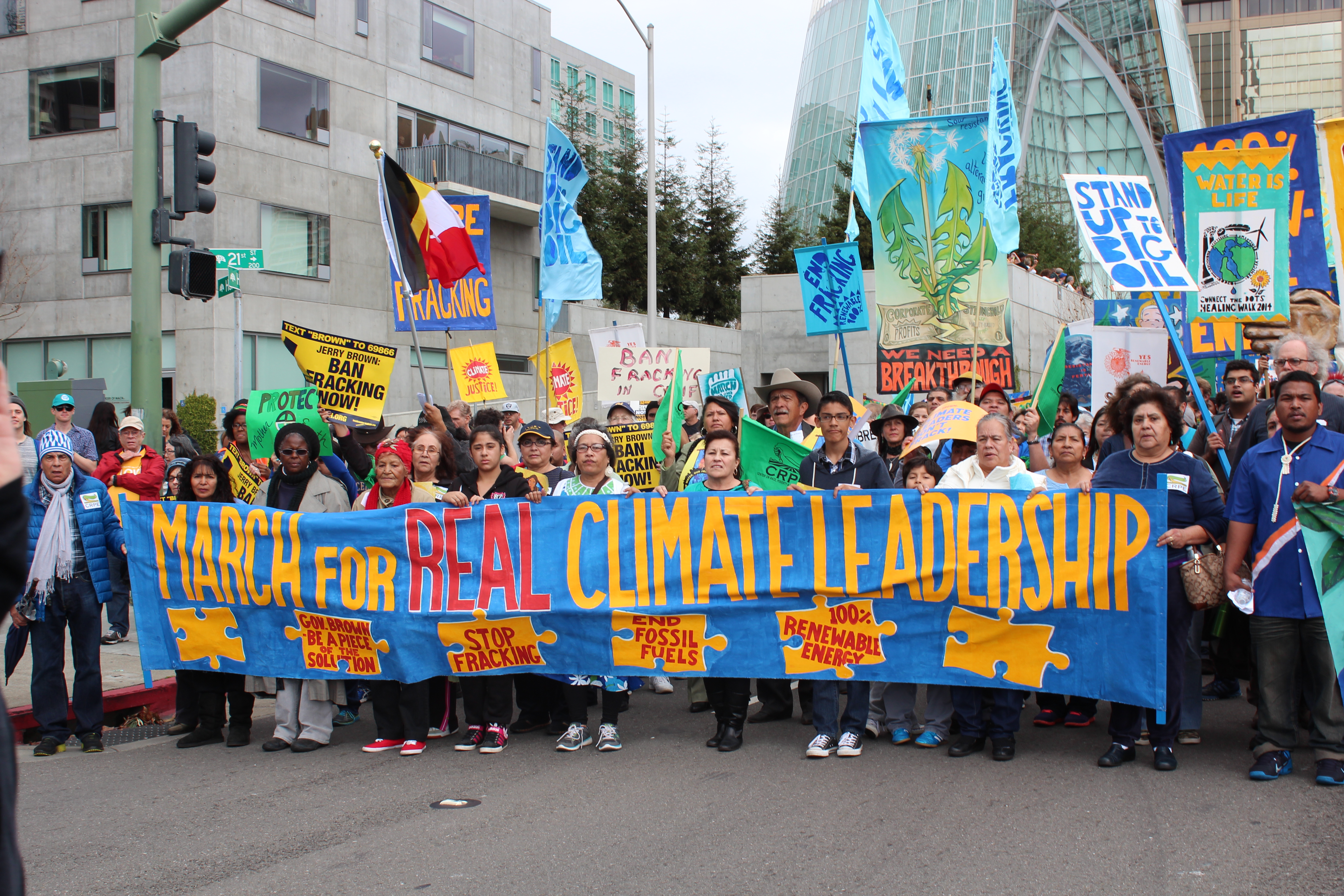
Photo of the March for Real Climate Leadership banner at the front of the march by Dan Bacher.
Largest Anti-Fracking March in U.S. History Photo Essay

by Dan Bacher 
Censored News


Over 8,000 Californians, including a diverse group of Native Americans, Pacific Islanders, Latinos, African Americans, Asians, labor union activists, doctors, nurses, clergy, conservationists, environmental justice advocates, students and others, marched through downtown Oakland on Saturday, February 7 in the largest anti-fracking protest in U.S. history. 

People from all walks of life came from throughout California that day in the "March for Real Climate Leadership" to call on Governor Jerry Brown to stop fracking and other extreme energy extraction in the state, stand up to big oil and move California beyond fossil fuels to 100% renewable energy. 

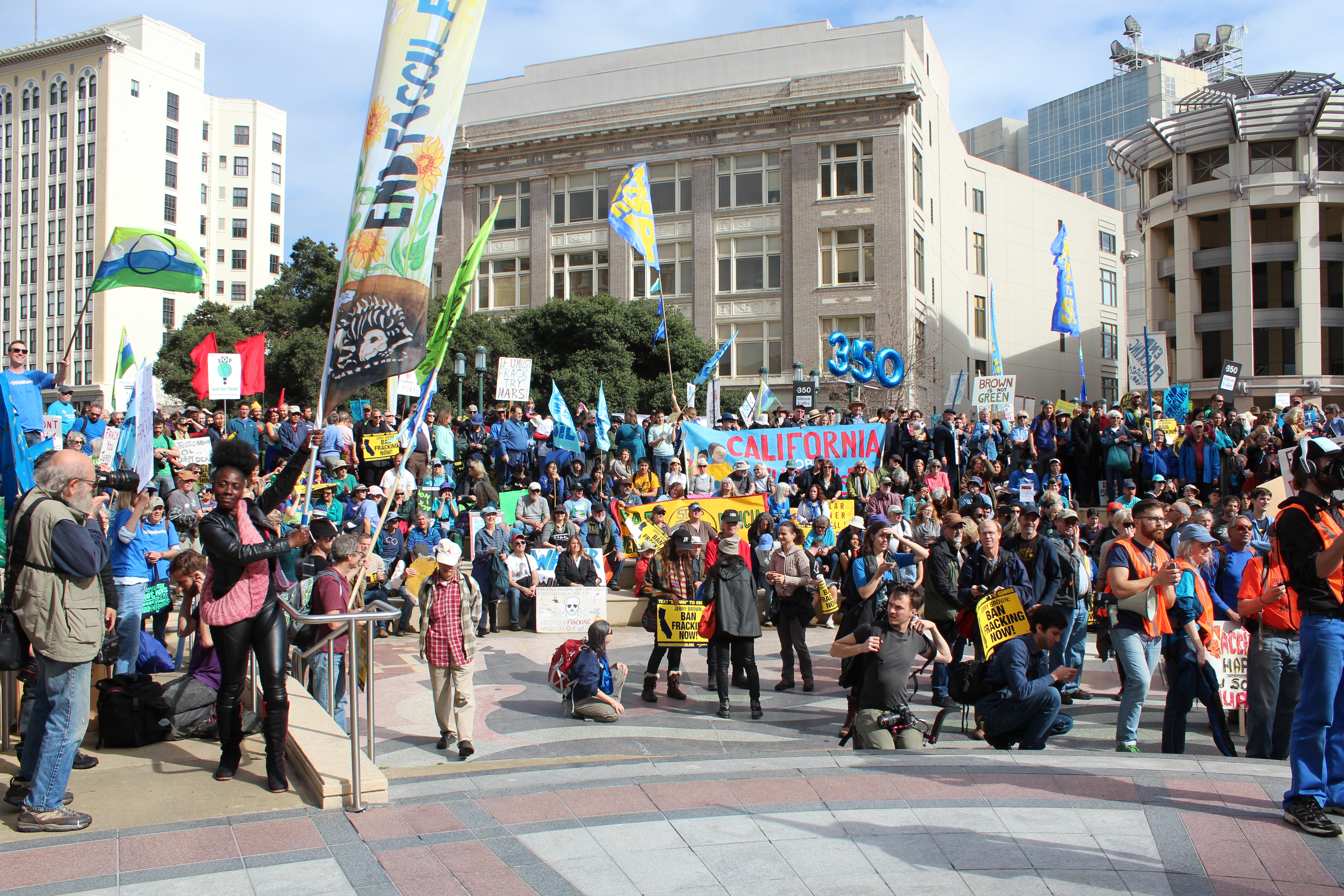
The event began at 11:15 a.m. with a press conference at Frank Ogawa Plaza amphitheater stage at 14th St & Broadway in Oakland, followed at noon by a kick-off rally at the stage. Around 12:30 p.m. the march departed the plaza and headed north on Broadway, east on Grand, then south along Lake Merritt to the Amphitheater. 

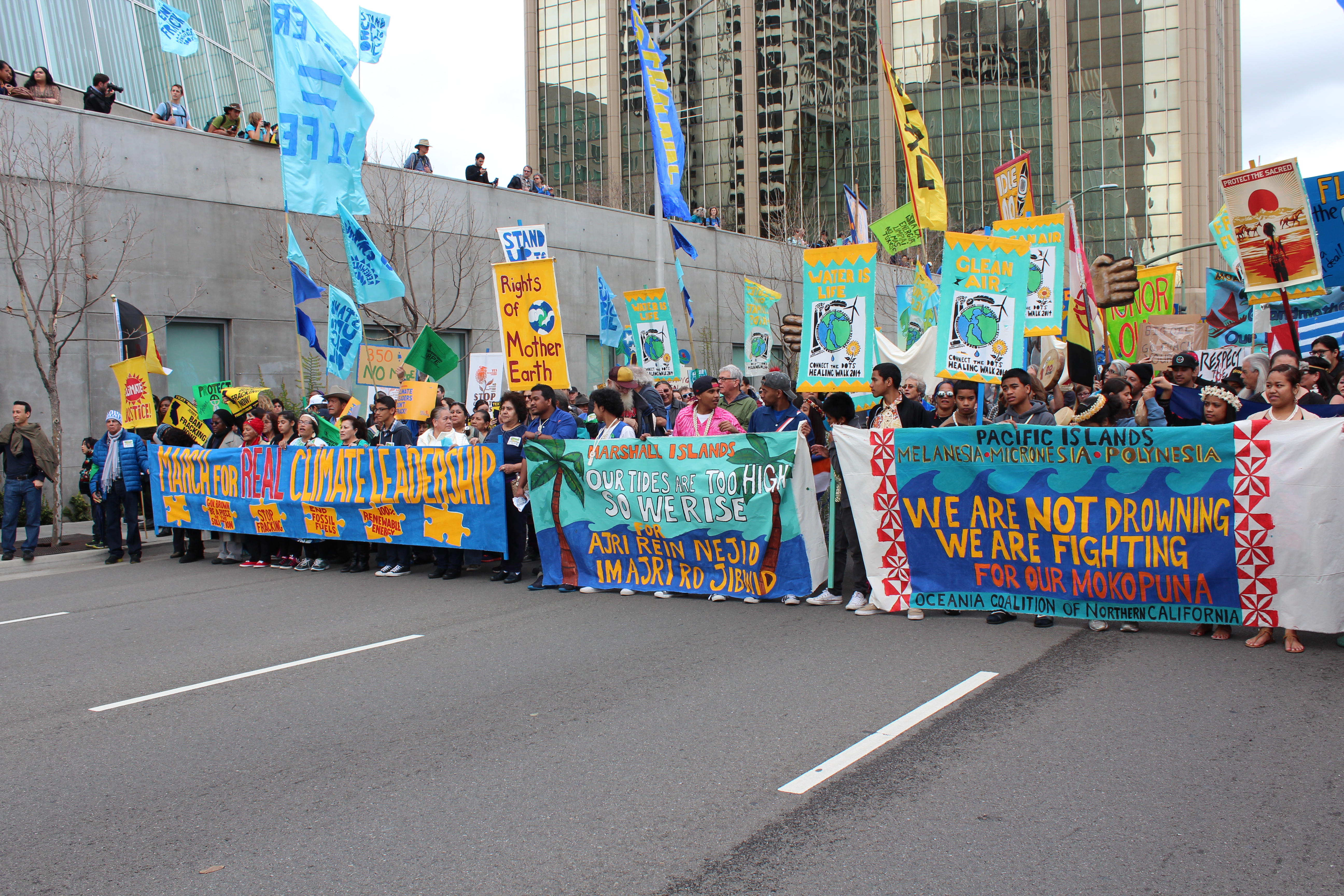
The march was led by a big Native American and Pacific Islander contingent holding blue and gold and other colorful signs and banners. A group of Delta advocates, including Barbara Barrigan-Parrilla and Stina Va, marched with their banners calling for the Governor, the same one who is supporting the expansion of fracking in California, to stop the giant twin tunnels proposed under the Bay Delta Conservation Plan. 

After the march arrived at Lake Merritt, the rally began with a brief speech by Penny Opal Plant of Idle No More, followed by a chant by Native Hawaiian sisters, a prayer, poetry and a wide array of speakers focusing on the environmental and health impacts of fracking on communities throughout the state. 

The event also featured a flotilla on Lake Merritt with a 25-foot banner rising from the lake; marching bands; a bicycle contingent/bike-powered sound system; and marchers wearing costumes representing animals threated by extinction due to climate change. 

After the rally, the event organizers held an after-party at La Pena Cultural Center at 3105 Shattuck Ave in Berkeley featuring reggae vocalist Bobby Tenna and the Skench Band. 

According to organizers, the nationwide movement against fracking and extreme energy extraction gained "tremendous momentum" in December, when, persuaded by years of organized public pressure and crystal-clear evidence that fracking is a serious public health risk, New York Governor Andrew Cuomo announced a statewide ban on fracking. As pressure mounts on Gov. Brown to follow suit, protesters from across California directed even more attention his way with the March for Real Climate Leadership. 

Just two days after the protesters marched through the streets of Oakland, documents released by state regulators revealed that thousands of oil and gas wells and hundreds of illegally operating oil industry waste-disposal wells are injecting fluids into aquifers in violation of state law and the federal Safe Drinking Water Act. 

“Gov. Jerry Brown must immediately ban fracking and halt the use of illegal injection wells in California,” said Adam Scow, California director of Food and Water Watch, on behalf of Californians Against Fracking. “This fiasco shows that the state simply cannot handle the massive toxic wastewater problem produced by fracking and oil and gas development. It shows that the state has not complied with the minimum protections required by federal law. All unsafe and illegal injection needs to stop immediately.” 

The documents were released at a time when California's fish, waterways and environment are in an unprecedented state of crisis. The Delta smelt, the indicator species that demonstrates the health of the Bay-Delta Estuary, is near extinction, American River steelhead are in collapse and Central Valley salmon are imperiled, due to abysmal management by the Brown and Obama administration's of the state's rivers and reservoirs during a record drought. 

To make matters worse, as fracking is polluting aquifers throughout the state, Governor Jerry Brown is rushing the construction of the Bay Delta Conservation Plan (BDCP) to build the peripheral tunnels, the most environmentally devastating public works project in California history. The construction of the massive tunnels under the Delta would hasten the extinction of Central Valley Chinook salmon, Delta and longfin smelt, green sturgeon and a host of other species, as well as imperil the salmon and steelhead populations on the Trinity and Klamath rivers. 

It essential to understand that the expansion of fracking in California, the twin tunnels, the federal plan to raise Shasta Dam and the draining of northern California reservoirs during a record drought are all part of a larger plan, the "Brown Water Plan," as Caleen Sisk, Chief and Spiritual Leader of the Winnemem Wintu Tribe describes it, to privatize the public trust, water and natural resources in California. Fracking is part of a larger neo-liberal strategy to plunder California and the planet. 

For radio coverage of Saturday's march, go to: http://fsrn.org/2015/02/californians-call-for-statewide-fracking-ban/ For more information is available, go to: marchforclimateleadership.org.

§San Benito County activists
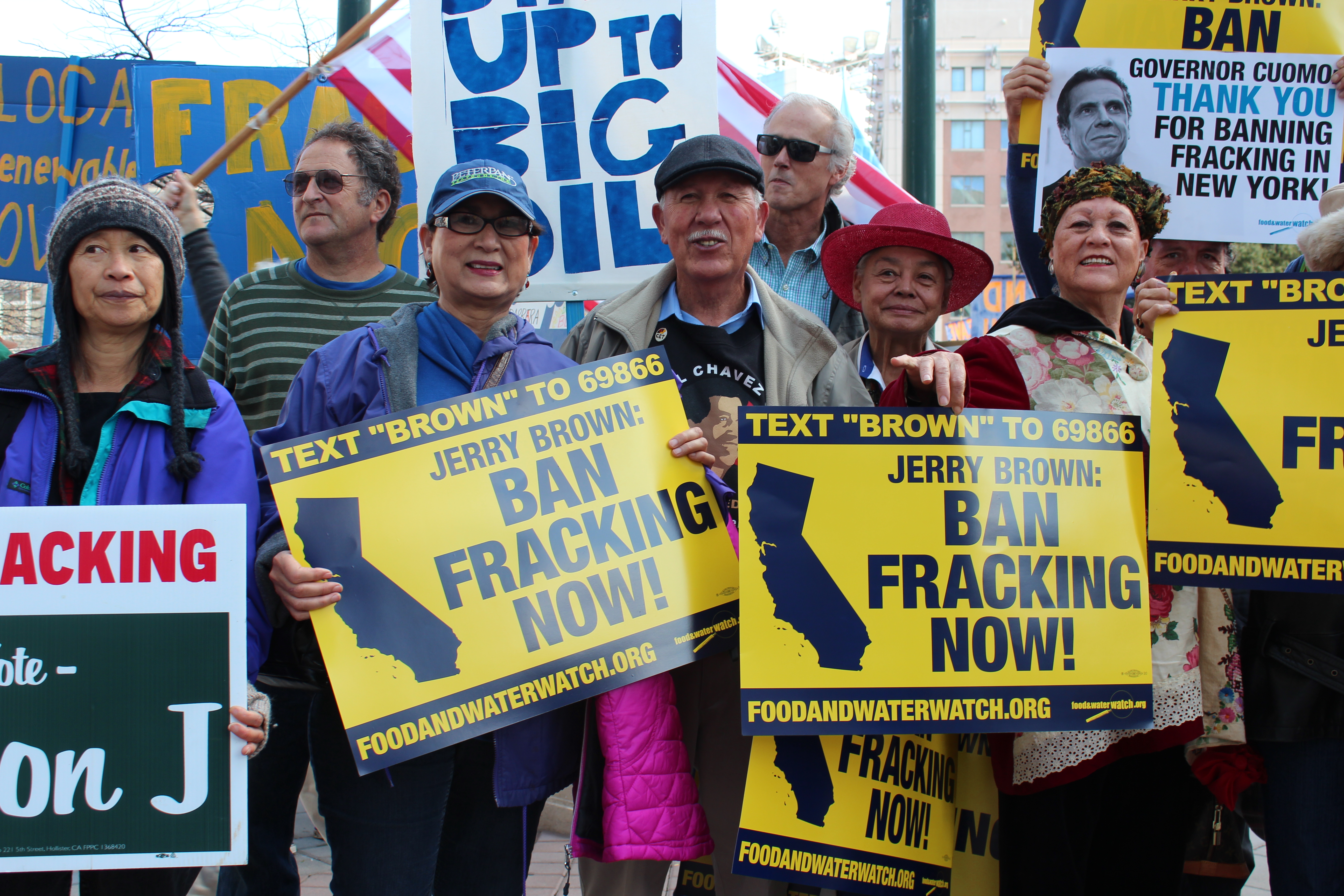
by Dan Bacher Friday Feb 13th, 2015 12:03 PM


Anti-fracking activists from San Benito County, including Danny Morales, and his sister, to his left, Margaret Morales Rebecchi, joined the march on February 7. Photo by Dan Bacher.
§Pre-march rally
by Dan Bacher Friday Feb 13th, 2015 12:03 PM


After a press conference, the rally organizers held a rally in the plaza. Photo by Dan Bacher.
§Front of March
by Dan Bacher Friday Feb 13th, 2015 12:03 PM


A large Native American and Pacific Islander contingent led the march. Photo by Dan Bacher.

§March against fracking
by Dan Bacher Friday Feb 13th, 2015 12:03 PM


Over 8,000 people marched to stop Brown's plan to expand fracking in California. Photo by Dan Bacher.
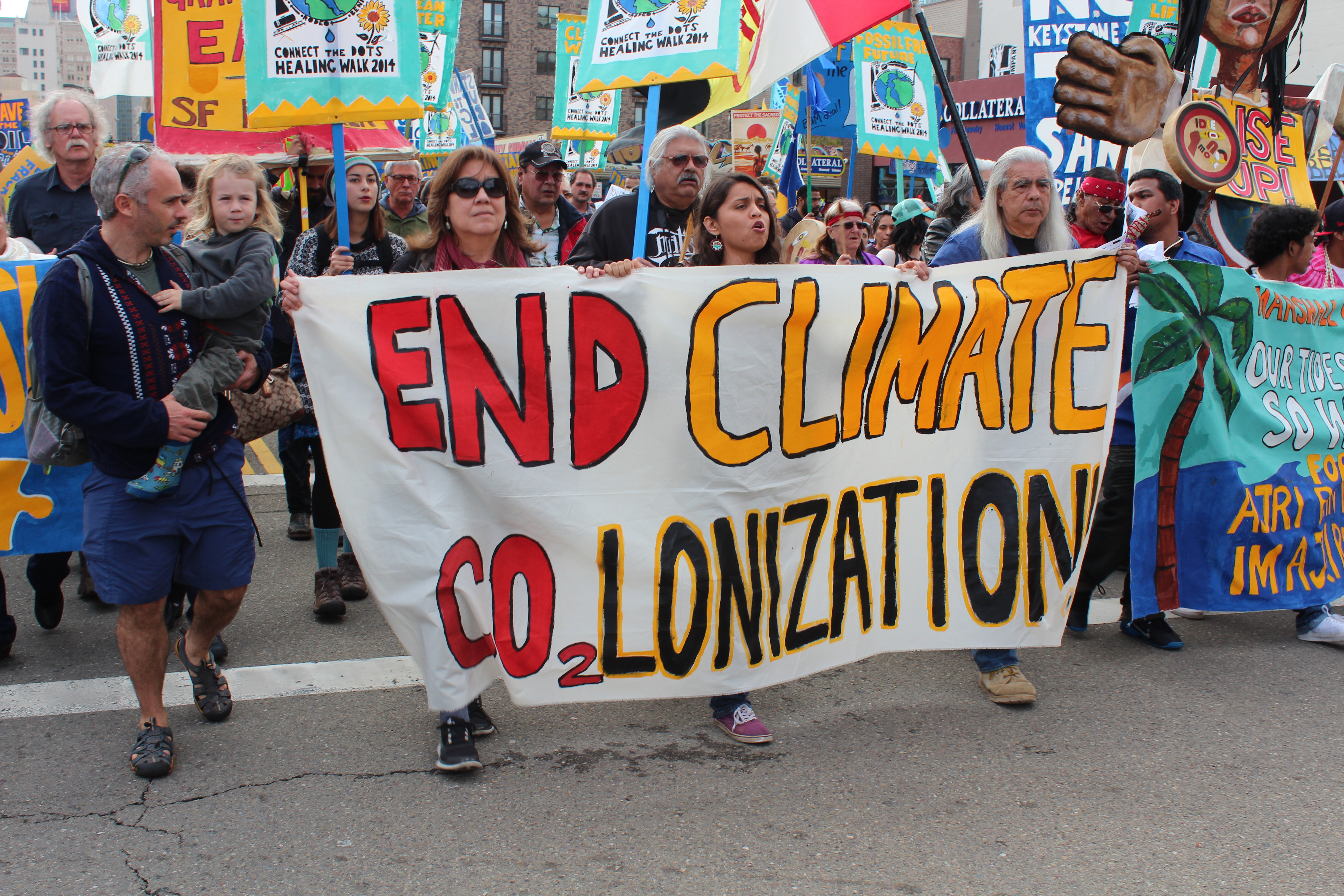
§End Climate Colonization
by Dan Bacher Friday Feb 13th, 2015 12:03 PM


The End Climate Colonization banner at the march. Photo by Dan Bacher.
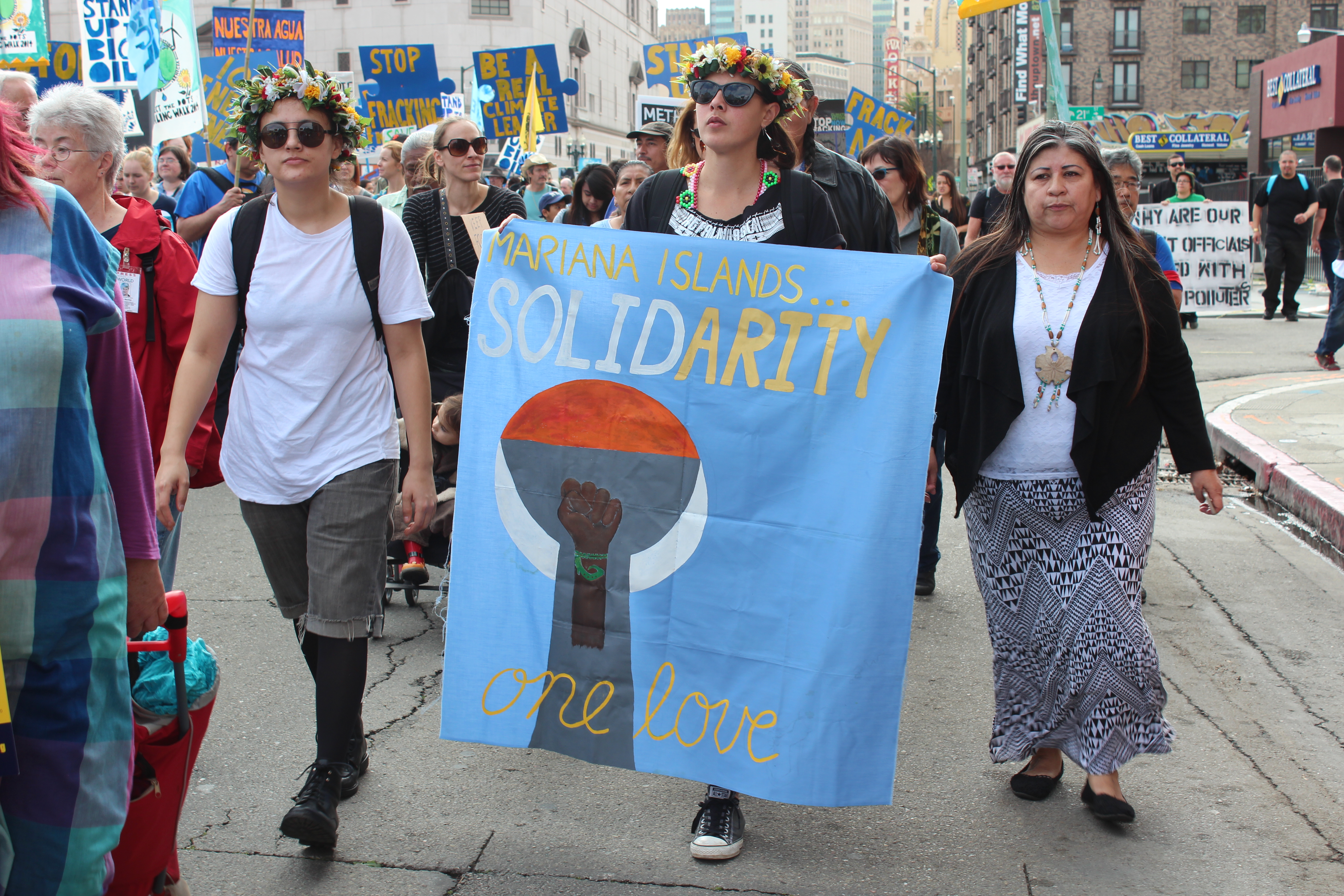
§Mariana Islands Solidarity
by Dan Bacher Friday Feb 13th, 2015 12:03 PM


Solidarity with the Mariana Islands! Photo by Dan Bacher.
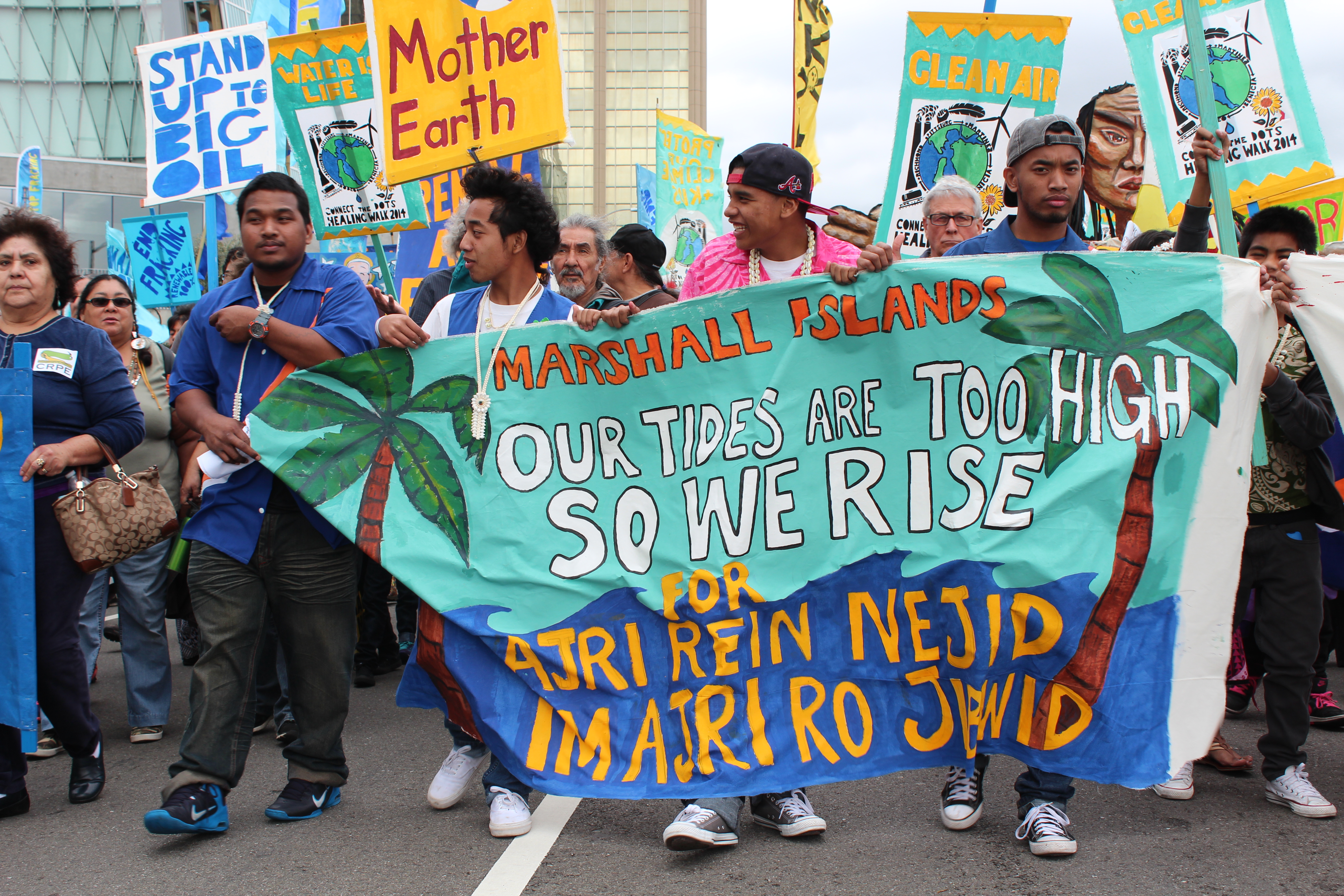
§Marshall Islands
by Dan Bacher Friday Feb 13th, 2015 12:03 PM


Marshall Islanders proclaim, "Our Tides Are Too High, So We Rise." Photo by Dan Bacher.

§Pacific Islanders
by Dan Bacher Friday Feb 13th, 2015 12:03 PM


A group of Pacific Islanders in the March for Real Climate Leadership. Photo by Dan Bacher.
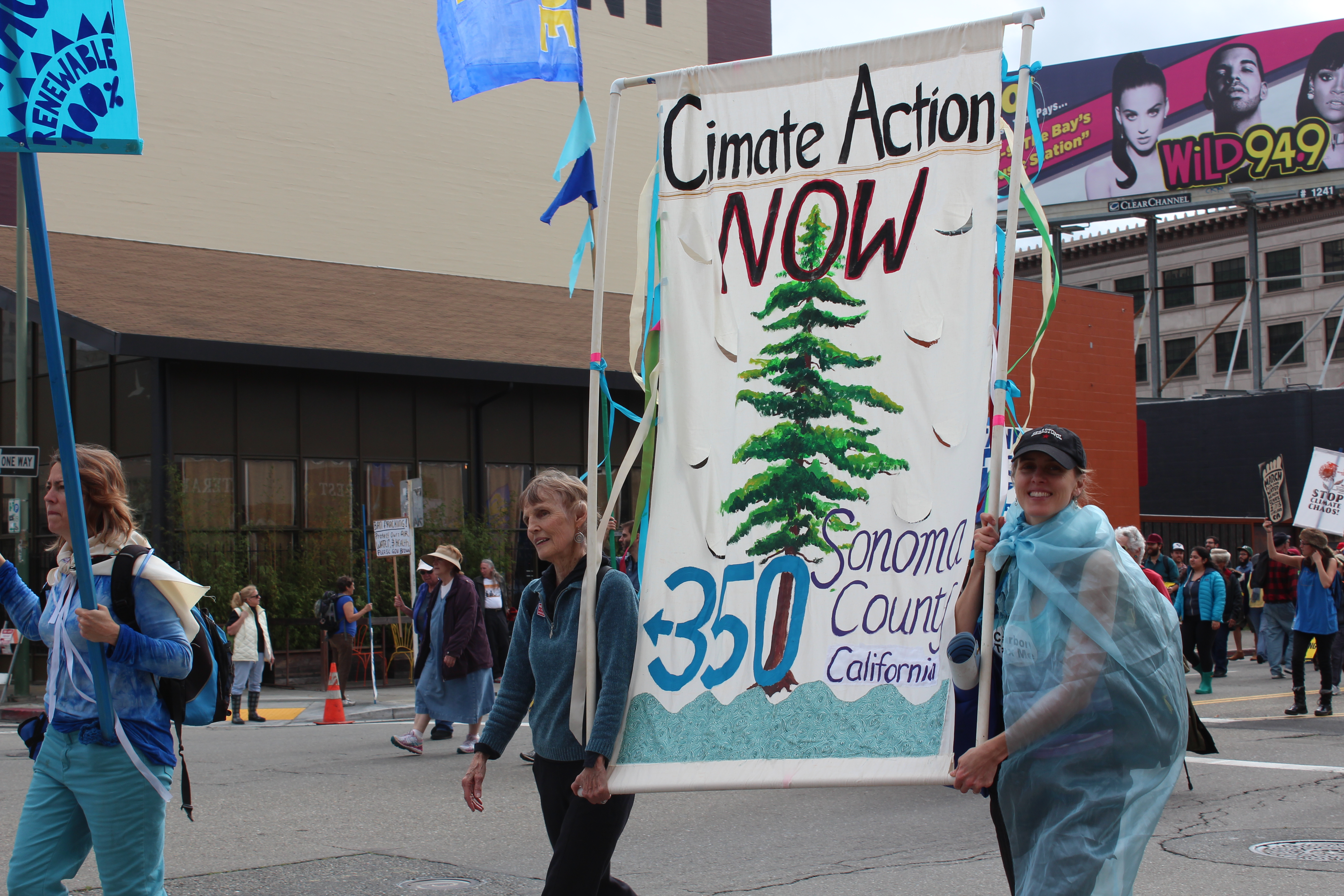
§350.org
by Dan Bacher Friday Feb 13th, 2015 12:03 PM


350.org from Sonoma County in the march. Photo by Dan Bacher.
§Treaty Council
by Dan Bacher Friday Feb 13th, 2015 12:03 PM


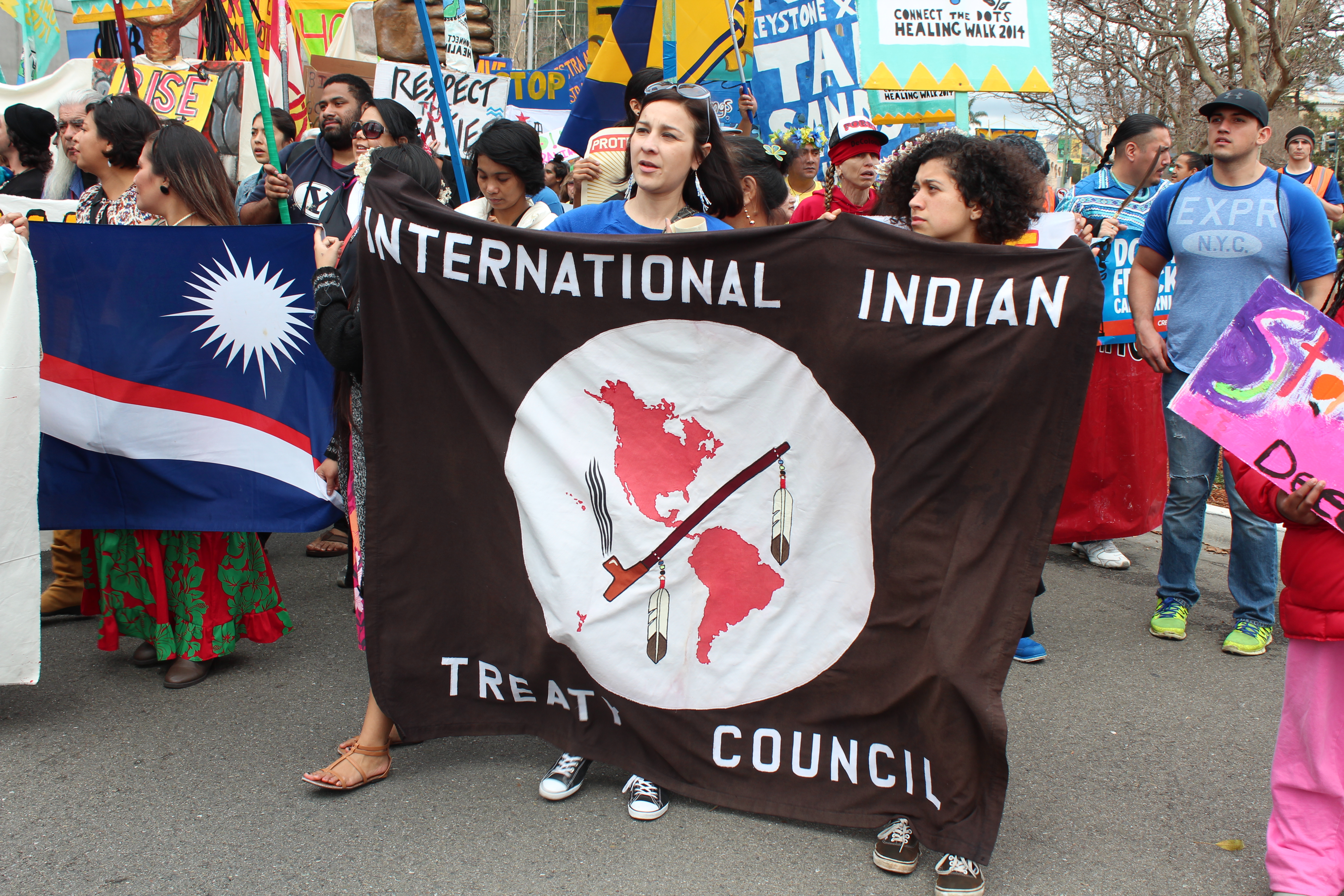
The International Treaty Council marches against fracking. Photo by Dan Bacher.
§Ohlone Land
by Dan Bacher Friday Feb 13th, 2015 12:03 PM


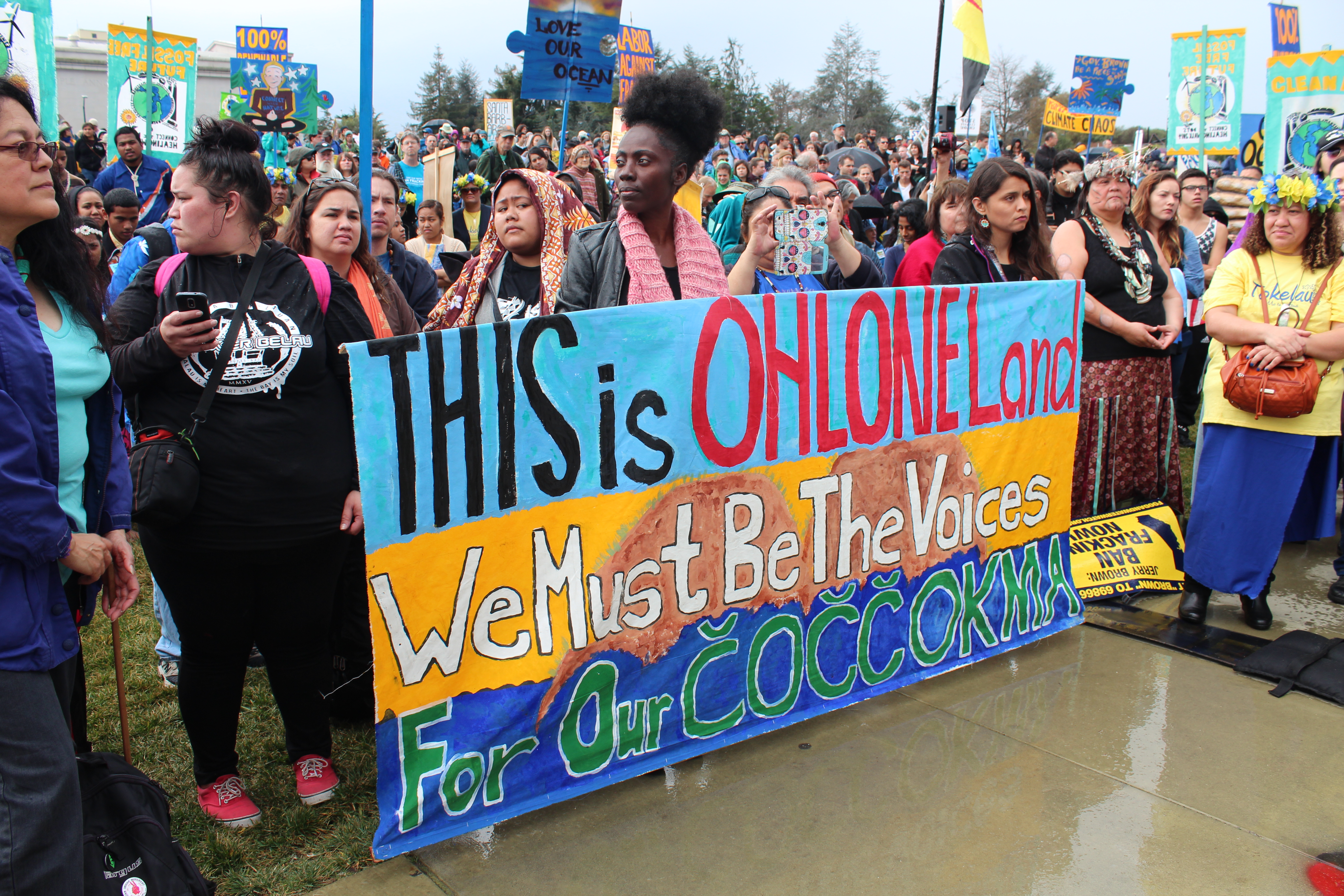
The Ohlone remind people that they are on Ohlone Land. Photo by Dan Bacher.
§March near Merritt
by Dan Bacher Friday Feb 13th, 2015 12:03 PM


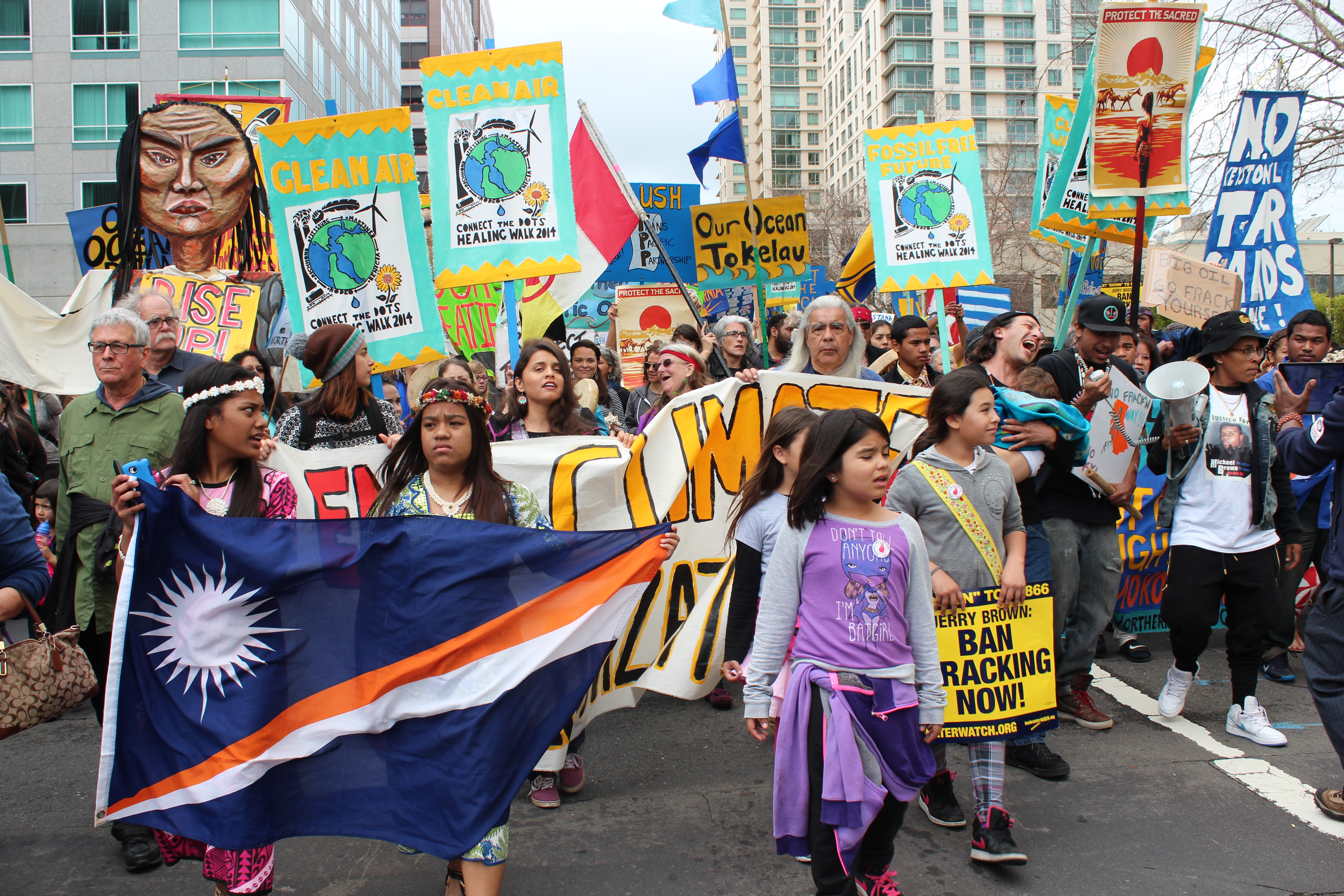
The march gets near Lake Merritt. Photo by Dan Bacher.
§Penny Opal Plant
by Dan Bacher Friday Feb 13th, 2015 12:03 PM


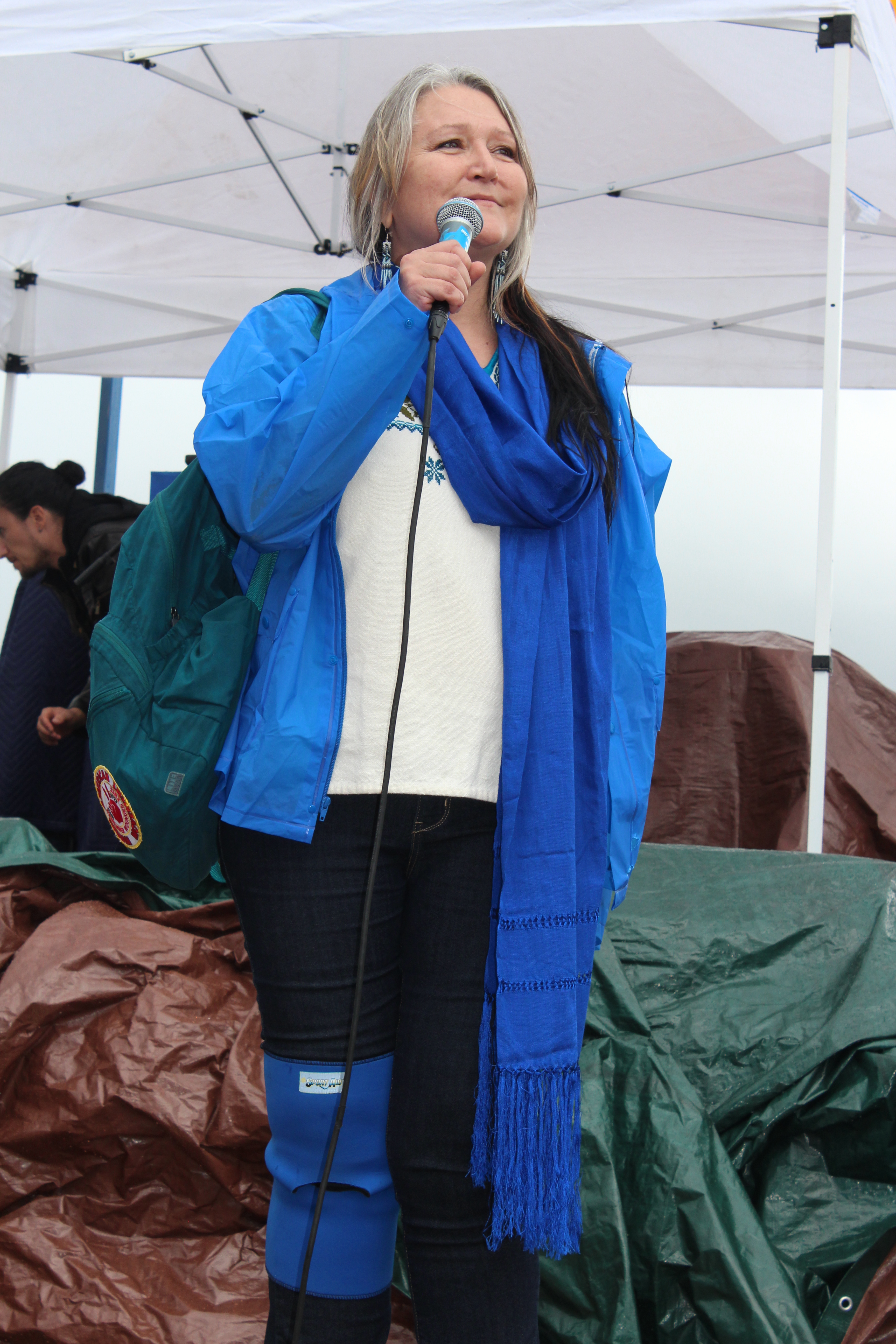
Penny Opal Plant of Idle No More at the rally. Photo by Dan Bacher.
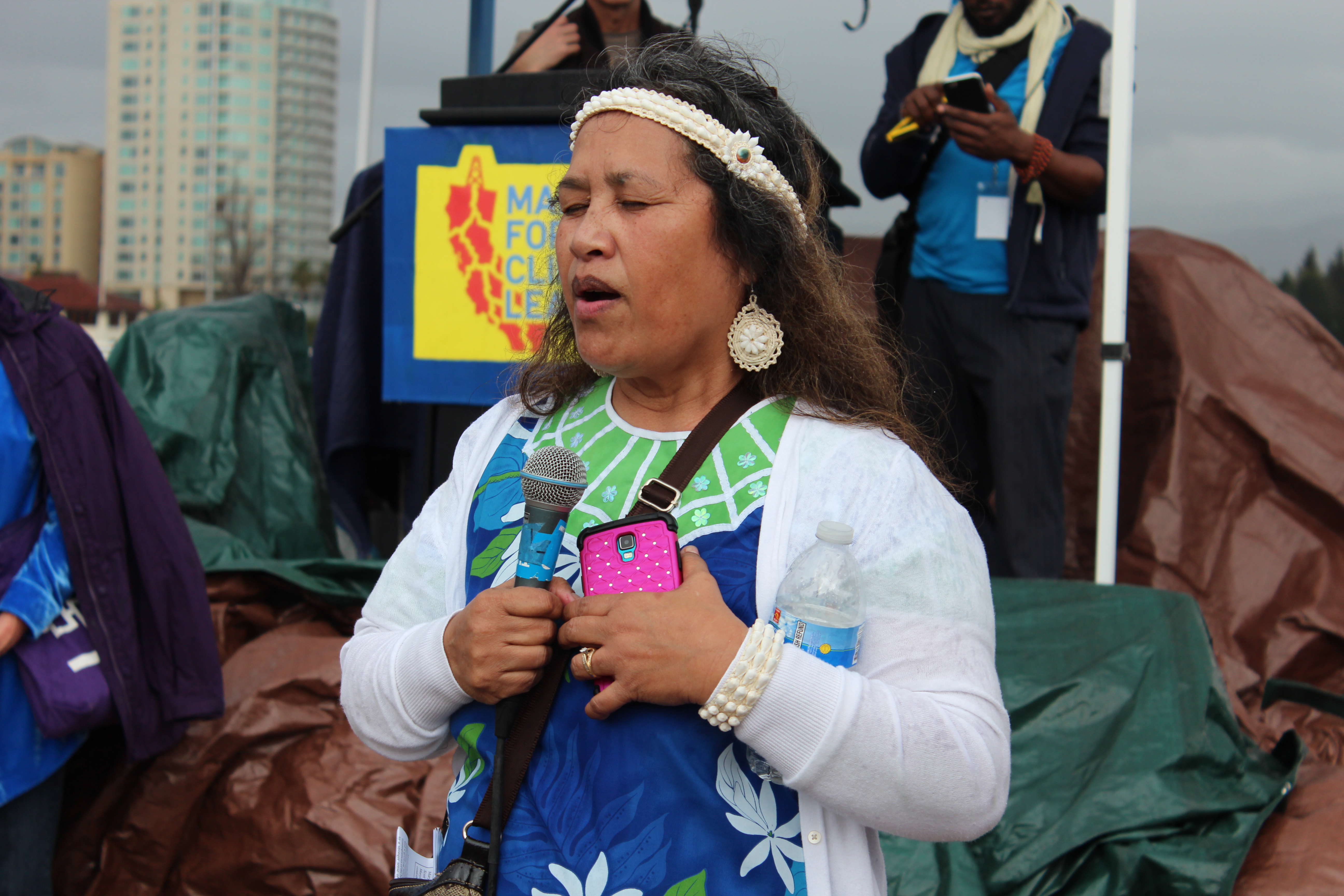
§Prayer by Rena Abon-Burch
by Dan Bacher Friday Feb 13th, 2015 12:03 PM


The rally began with a prayer. Photo by Dan Bacher.
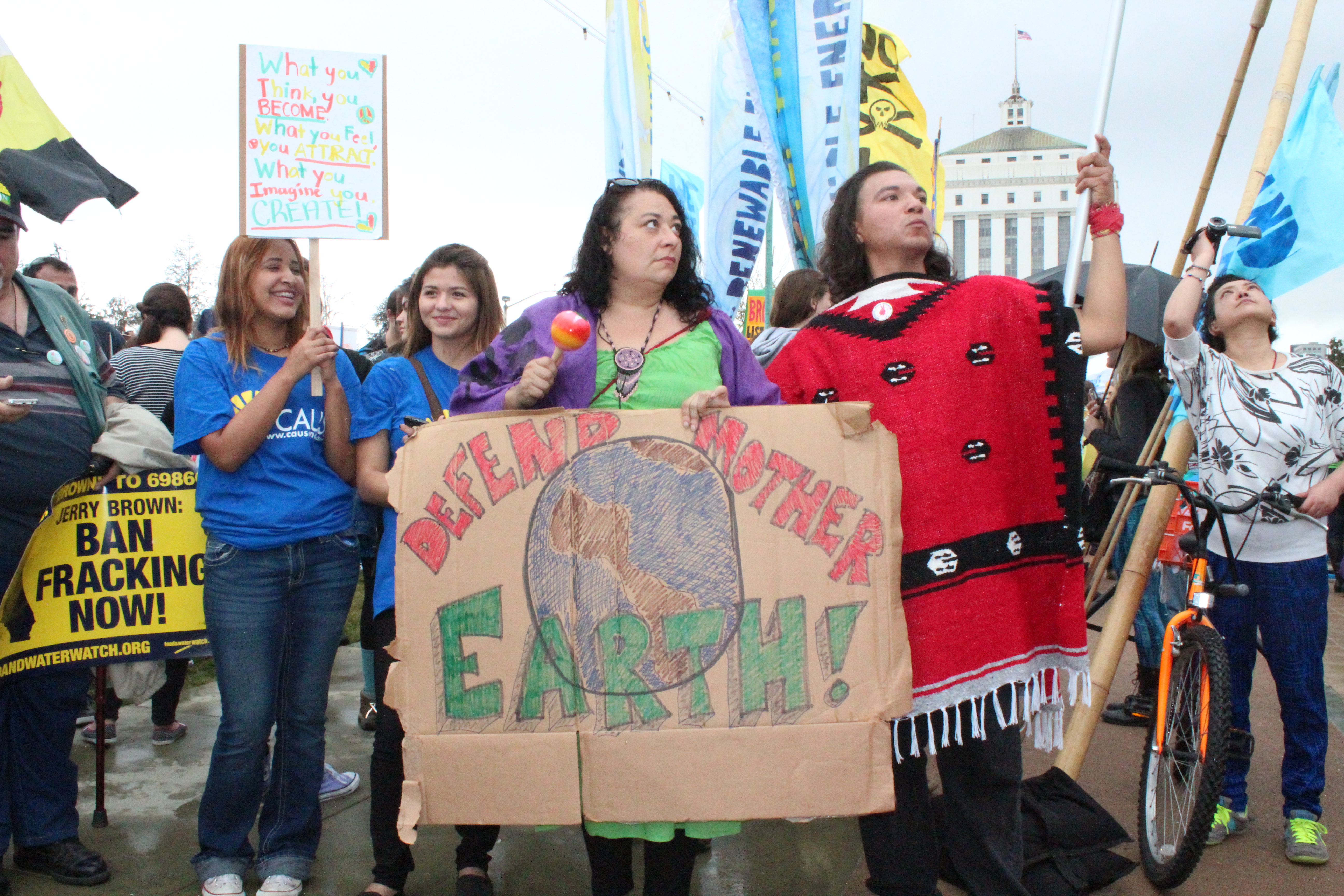
§Defend Mother Earth
by Dan Bacher Friday Feb 13th, 2015 12:03 PM


Defend Mother Earth banner at the rally at Lake Merritt. Photo by Dan Bacher.
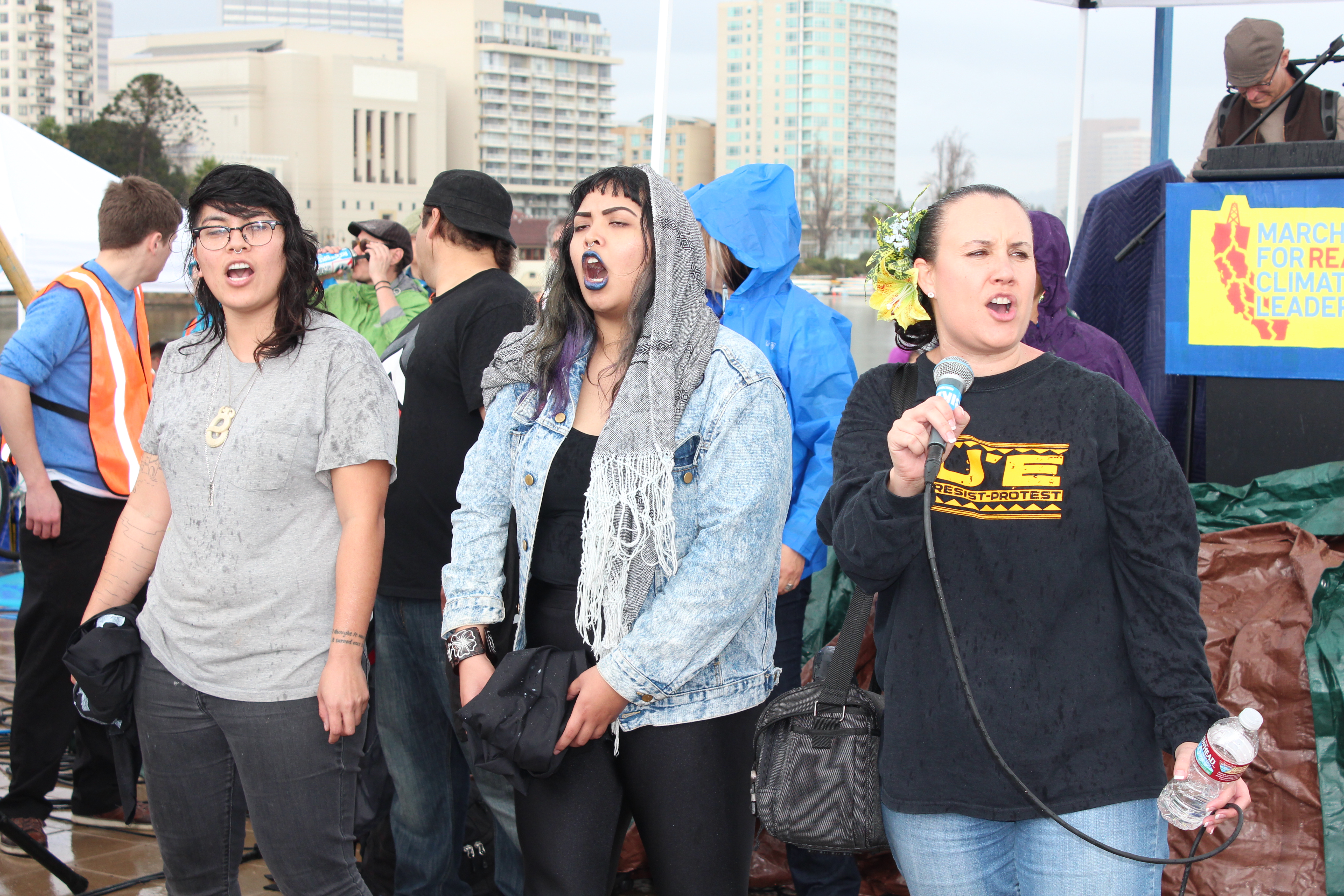
§Kanaka Maoli Chant
by Dan Bacher Friday Feb 13th, 2015 12:03 PM


Kanaka Maoli (Native Hawaiian) sisters chanting at the Climate Leadership Rally. Photo by Dan Bacher.
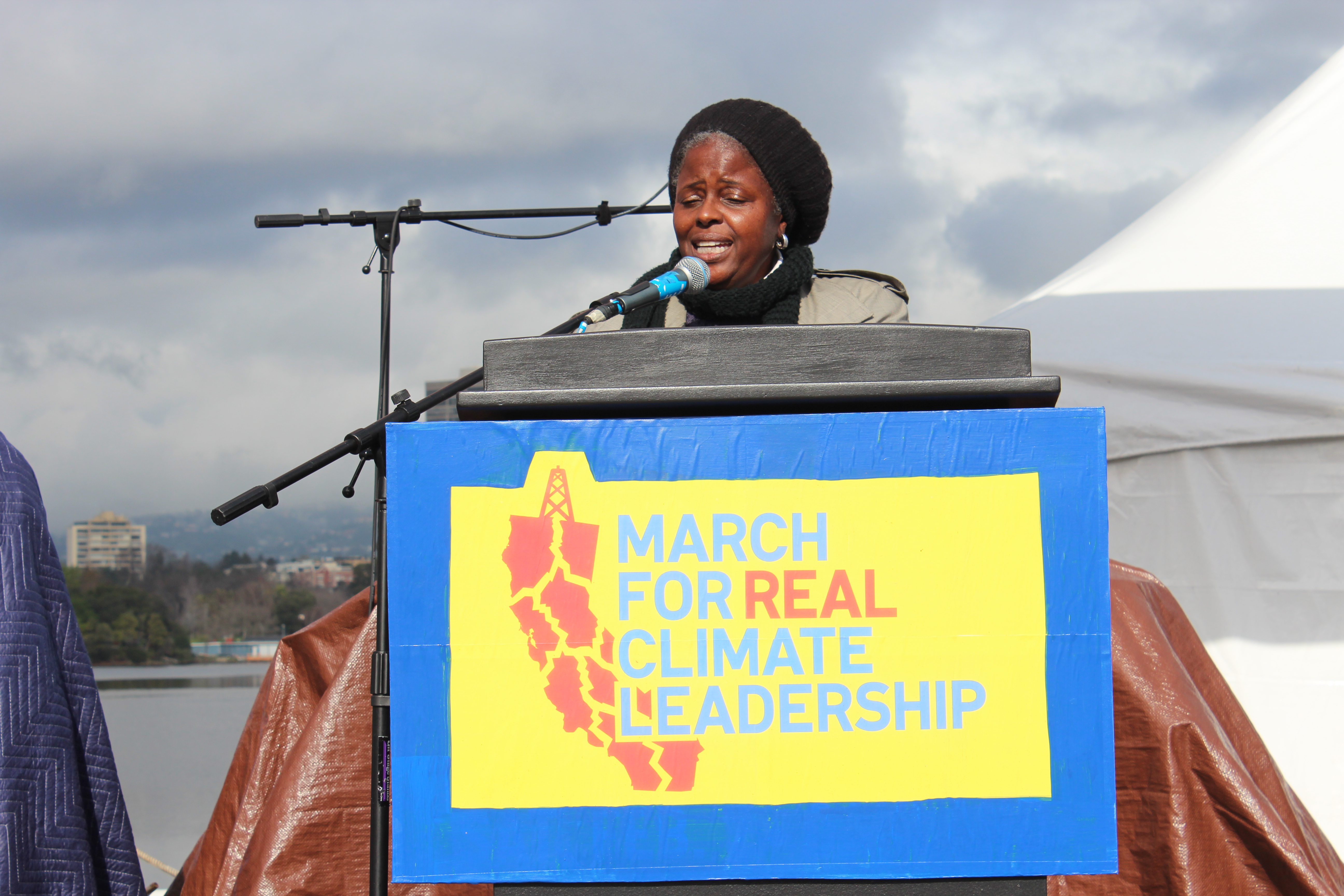
§Carson Represents
by Dan Bacher Friday Feb 13th, 2015 12:03 PM


The struggle against Big Oil in Carson continues. Photo by Dan Bacher.
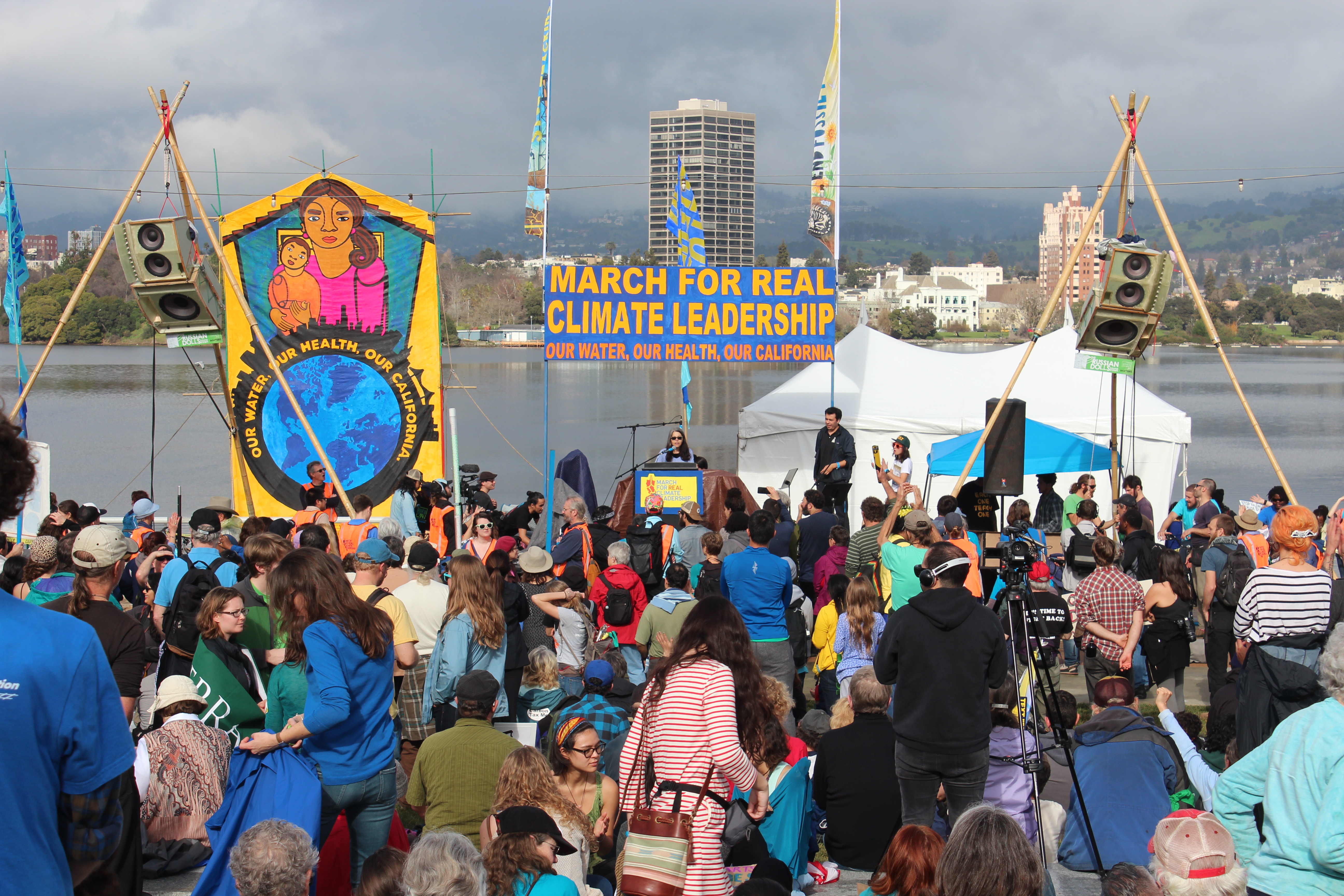
§Rally at Lake Merritt
by Dan Bacher Friday Feb 13th, 2015 12:03 PM


A view of the rally at Lake Merritt. Photo by Dan Bacher.
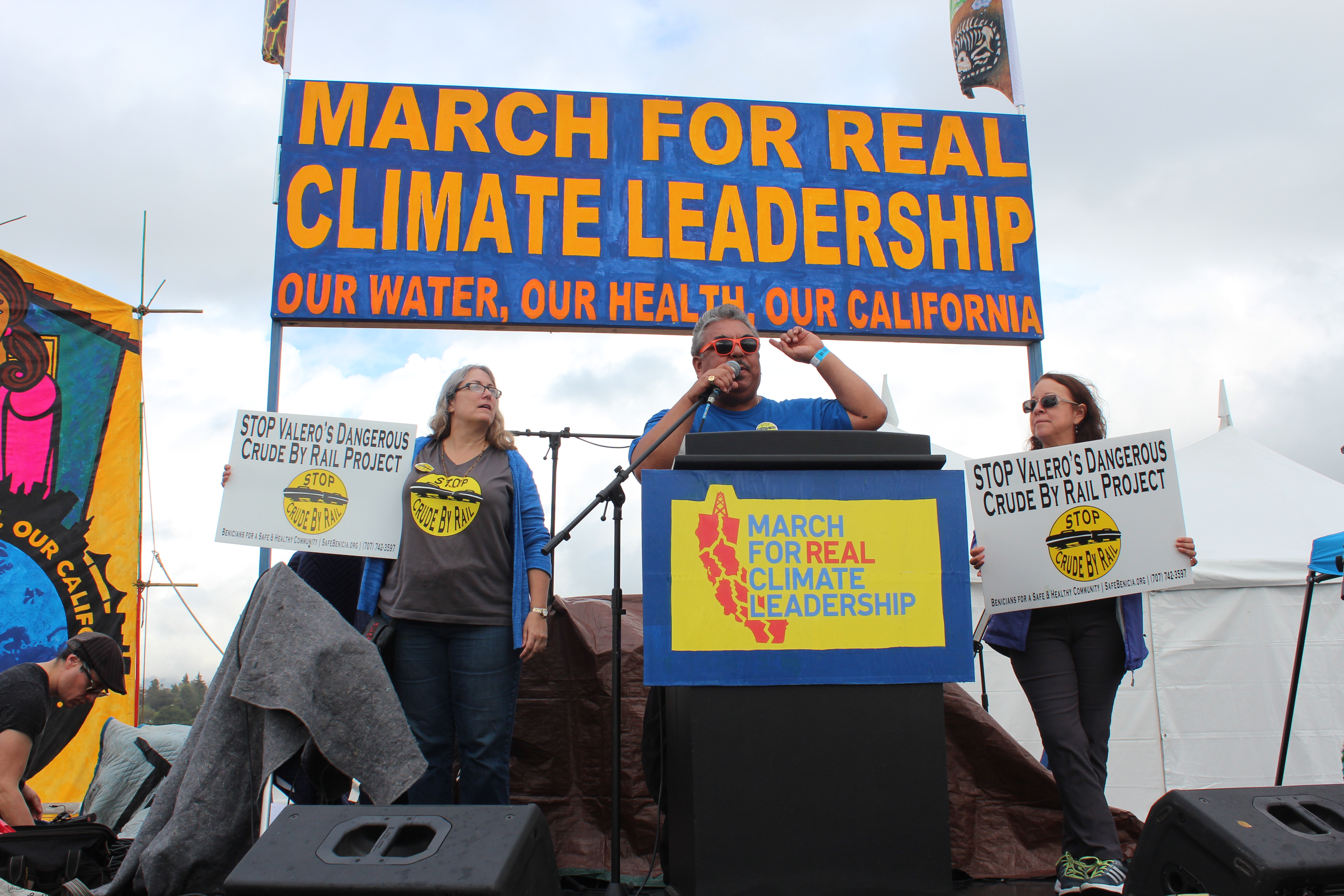
§Richmond Residents
by Dan Bacher Friday Feb 13th, 2015 12:03 PM


Richmond residents, including Andres Soto (center), discuss their successful campaign to defeat the Chevron candidates in the 2014 City Council election. Photo by Dan Bacher.

'Crying Earth Rise Up' Lakotas battle contaminated water and uranium mines


Crying Earth Rise Up Examines the Human Cost of Contaminated Water 
& the Fight to Prevent the Expansion of Uranium Mines
Distributed by the National Educational Telecommunications Association on April 4


         By Vision Maker Media
         Censored News
 
Elisha Yellow Thunder (Oglala Lakota) waits with her daughter, Laila, during a dialysis session.
Photo by Suree Towfighnia. 
Lincoln, Neb: Crying Earth Rise Up, a one-hour documentary premiering this April on Public Television, is a community-engagement project addressing the impact that modern uranium extraction has on the land, water, and communities. 

Produced and directed by Suree Towfighnia of Prairie Dust Films with consulting producer Debra White Plume (Oglala Lakota), the name of the documentary comes from a belief of the Lakota that Mother Earth needs to be cared for through good stewardship of the land and caring for its natural resources.
The project follows Elisha Yellow Thunder (Oglala Lakota), a young mother and geology student. Elisha is fully aware of the contamination dangers posed by the uranium mines to the vast and precious Ogallala Aquifer. During Elisha's first pregnancy, she drank contaminated water. Today, her nine-year-old daughter, Laila, continues to suffer from serious, life-threatening birth defects and medical abnormalities. Elisha is determined to identify the source of the contamination in an effort to protect her water supply, as well as that of her Lakota people.
Debra White Plume is a grandmother and tireless leader in the fight to protect her people's water and land from corporate polluters. Debra is the lead plaintiff in a case challenging uranium mining on Lakota treaty territory and speaks out about the issue from her own community on the Pine Ridge Reservation to the steps of the White House in Washington, D.C.
The narrative arc of the film follow's Elisha and Debra's parallel search for answers to the questions, "Why are there high levels of radiation in our drinking water? And, how can we protect our families and community against this threat?" They are supported by members of the tribe, environmental activists, and a host of others who have filed a case to prevent the mine's expansion in the region. Balancing the story are local residents and the mine company itself, who claim that the town would fold if the mine were shut down.
As this struggle looms over the Great Plains, Crying Earth Rise Up stands in defiance to contemporary uranium mining assertions of minimal impact on land and water. When nations discuss "green and clean" alternative energy, uranium and nuclear are often touted, however, the discussion never includes the long-term impact of mining.
"We live in a world where 40% of our energy comes from nuclear sources, so uranium mining impacts all of us. Flipping a switch powered by nuclear energy makes you wonder where that uranium comes from," explained Suree Towfighnia.
The practice of in situ leach mining (ISL) involves combining groundwater with a leaching solution, then injecting the solution through plastic pipes into uranium reserves located below or within the water table. The uranium in the groundwater is pumped to the surface to be drawn out and dried into yellowcake. After this process, some of the leaching water becomes radioactive sludge and must be stored at a uranium tailings facility for disposal. The remaining groundwater is then treated by cleaning it through reverse osmosis and re-injected back into the aquifer.
"With 70% of the world's uranium resources being located in the lands of Indigenous people, this topic is especially relevant and pressing to Native communities. Crying Earth Rise Up aims to increase awareness about the timely and critical need to protect water," said co-producer Courtney Hermann.
Bruce Ellison states in the documentary, "Until companies can prove that mining is safe, they shouldn't be allowed to operate in our communities."
Crying Earth Rise Up--which received major funding from the Corporation for Public Broadcasting (CPB) and Vision Maker Media--is an offering of the National Educational Telecommunications Association (NETA). This documentary will be available to Public Television stations nationwide on Saturday, April 4, 2015, at 12:30 p.m. Eastern. This program is suggested for scheduling for Earth Month in April. For viewing information in your area, please visit www.visionmakermedia.org/watch.
About Vision Maker Media
Vision Maker Media shares Native stories with the world that represent the cultures, experiences, and values of American Indians and Alaska Natives. Founded in 1977, Vision Maker Media, a nonprofit 501(c)(3) which receives major funding from the Corporation for Public Broadcasting, nurtures creativity for development of new projects, partnerships, and funding. Vision Maker Media is the premier source for quality Native American and Pacific Islander educational and home videos. All aspects of our programs encourage the involvement of young people to learn more about careers in the media--to be the next generation of storytellers. Located at the University of Nebraska-Lincoln, we offer student employment and internships. For more information, visit www.visionmakermedia.org.

About the National Educational Telecommunications Association (NETA)
NETA is a professional association that serves Public Television licensees and educational entities in all 50 states, the U.S. Virgin Islands, and Puerto Rico. Since 1967, our reason for existing is to connect Public Television people and ideas, by providing quality programming, educational resources, professional development, management support, and national representation. For more information, visit www.netaonline.org.
Additional Information Regarding Crying Earth Rise Up:
 
Run time: 56:46
Credits: A Prairie Dust Films Documentary.
Crying Earth Rise Up is a co-production of Prairie Dust Films and Vision Maker Media.
Funding: 
Major funding provided by the Corporation for Public Broadcasting and Vision Maker Media. Additional funding provided by Seventh Generation Fund, Honor the Earth/Headwaters Foundation for Justice, and the Indigenous Environmental Network/Western Mining Action Network (WMAN).
Listen to Suree Towfighnia and Debra White Plume's Producer Profile:
Film Pages:
Official Film Website: http://www.cryingearthriseup.com
Film Facebook Page: https://www.facebook.com/cryingearthriseup
Prairie Dust Films Website: http://www.prairiedustfilms.com
Vision Maker Media: http://www.visionmaker.org/films/crying-earth-rise
DVD Distributor:  Vision Maker Media
 1800 N 33rd Street
  Lincoln, NE 68503
  1-877-868-2250


Crew Bios:
 
SUREE TOWFIGHNIA, DIRECTOR/PRODUCER 
Suree Towfighnia is a director, producer, director of photography, and documentary educator from Chicago, Ill. She directed Standing Silent Nation (www.standingsilentnationfilm.com), a feature that chronicles a Native American family's struggle for economic empowerment by growing industrial hemp on their sovereign Reservation lands. A co-production with Vision Maker Media, it was broadcast on POV and garnered many awards in competitions and festivals. More recently, it has been the centerpiece of outreach and community engagement pushing for legislative change. Her thesis documentary, Tampico, about a low-income Latina street performer, won the Studs Terkel Award for Community Media. As an educator, Suree works in youth media and teaches master classes in documentary making for universities, non-profits, and internationally at EICTV in Cuba. She began the Lakota Media Project (LMP) in 2003 to train Lakota girls and women dedicated to telling their own documentary stories. Suree has been dedicated to working on social justice documentaries and community engagement since 1997. 
 
COURTNEY HERMANN, CO-PRODUCER  
Courtney Hermann is an award-winning independent documentary filmmaker and educator from Portland, Ore. Her most recent independent films include Exotic World and the Burlesque Revival (2012) and Standing Silent Nation (2007). Exotic World and the Burlesque Revival (2012) enjoyed a World Premiere in summer 2012 at dOCUMENTA13, in Kassel, Germany, and is currently in film festival and DVD distribution. Standing Silent Nation (2007), which aired nationally on PBS's Emmy®-Award winning documentary series, POV, was favorably reviewed by The New York Times, and won the Audience Award at several film festivals, including the Sedona International Film Festival. The film was featured daily at the Smithsonian Institution's Museum of the American Indian in Washington, D.C. in July 2008. 
 
DEBRA WHITE PLUME (OGLALA LAKOTA), CONSULTING PRODUCER/WRITER
Debra was born and raised on the Pine Ridge Reservation in southwestern South Dakota. She has been involved in Lakota cultural preservation and revitalization work her entire adult life, including work to protect Treaty Rights and Human Rights. She has been an active community organizer around such issues for 40 years, from the grassroots level to the United Nations, where she participated in the drafting of the Declaration on the Rights of Indigenous Peoples and the Permanent Forum for Indigenous Peoples and Issues. She lives along the banks of Wounded Knee Creek with Alex, her husband of 30 years, where they raise horses and provide stewardship to the small buffalo herd kept for spiritual and cultural purposes. Debra earned undergraduate degrees from the Oglala Lakota College on the Pine Ridge Reservation. 
 
SHARON KARP, EDITOR
Sharon Karp has edited documentaries for over 40 years, beginning with the original Kartemquin collective. Among her award-winning films are the Emmy®-nominated Silent Pioneers, Chicago Film Festival Silver Hugo Winner; The Chicago Maternity Center Story; and Return of Navajo Boy, a Sundance Film Festival official selection. Her most recent projects include Standing Silent Nation, a Pare Lorenz nominee; The Innocent, winner of the Crystal Heart Award for documentary feature, about people wrongly sentenced to death; and Burnt Oranges, winner of the Cine Golden Eagle Award, about state terrorism in Argentina during the 1970s. Sharon is the owner of Media Monster in Chicago, Ill., which provides full-service production and editing services.
 
ROSEBUD WHITE PLUME (OGLALA LAKOTA)
Since 2002, Rosebud White Plume has studied documentary film theory, technique and production under the tutelage of Prairie Dust Films. As a mother of six, Rosebud is inspired to use media to preserve her way of life through documenting stories and issues that present alternatives to the limited representations of her people by mainstream media. Lakota Media Project (LMP) is Rosebud's outlet for creative energy and professional development.


 REUBEN CRUZ (PEE POSH/MARICOPA/QUECHAN)
Reuben is a father/musician/poet/organizer/humanist from the Gila River Nation near Phoenix, Ariz. He documents stories of love and circumstance gathered from the places he's seen or lived. As an emcee (Che Christ), he uses his storytelling skills to bring messages of social justice and respect for all peoples through positive hip-hop music. Reuben teaches writing workshops with youth in urban centers and in Native communities. He collaborates on events that use film, art and music to celebrate contemporary activist movements. As a member of Prairie Dust Films, Reuben works as story consultant, writer, sound recordist, artist, and post-production assistant on feature documentaries.
 
LAKOTA MEDIA PROJECT (LMP)
An initiative of Owe Aku and Prairie Dust Films, the LMP began in 2003 to mentor Lakota youth and women on documentary filmmaking. LMP creates projects that complement social justice and activism work happening on the Pine Ridge Reservation. The work of LMP on different issues benefits the Tribal Nations' population and beyond, through the distribution of educational materials about Native issues from a Native perspective with a Native voice. Although LMP suffered a devastating loss when they lost almost all their equipment, footage, and archives in a house fire in 2007, the stories exist in the minds of participants and their activism continues. Little by little the work goes on. The Lakota Media Project is collaborating on Crying Earth Rise Up. They work on production, editing, and music. 

February 16, 2015

Washington Police Shooting Ignites a Cross-Border Controversy

Human Rights News

Washington Police Shooting Ingites a Cross-Border Controversy

by Fronteta NorteSur
Censored News
English and Dutch
February 16, 2015

The fatal shooting of an unarmed Mexican migrant by police in Washington state has stirred renewed attention south of the border on the use of deadly force by U.S. law enforcement agencies. The February 10 shooting of Antonio Zambrano Montes by police in Pasco, Washington, is getting prominent coverage in both the print and electronic media in Mexico.

The Zambrano killing, which was captured on video and widely transmitted in cyberspace, has also drawn the involvement of all three levels of the Mexican government. President Enrique Pena Nieto, the Secretariat of Foreign Relations (SRE) and the Michoacan state government all condemned the shooting, while the official National Human Rights Commission urged the SRE to provide financial support, attention and guidance to Zambrano's family. In a statement, the SRE not only criticized Zamrano's violent death, but also called attention to "incidents in which disproportionate force is used, even more so when it results in the loss of civilians."

An apple industry worker, Zambrano was shot and killed by Pasco police officers after he was reported throwing rocks at cars. According to police accounts, the 35-year-old man also threw rocks at officers before he was killed. Some eyewitnesses, however, said Zambrano had his hands up when he was shot. Zambrano's mother, Acapita Montes Rivera, was granted a U.S. humanitarian visa this past weekend so she could travel from the family home in Michoacan to recover her son's remains in Washington state.  Montes said her travel and legal expenses were covered by the municipal government of Aquila, Michoacan. "He is my son, and he was always a good boy," Montes was quoted. "He never forgot about us and always helped us out." Antonio Zambrano's body was expected to be shipped back to Mexico this week.

In another communique, the SRE reiterated its disposition to provide all the necessary support to the slain man's family. On Sunday, February 15, Eduardo Baca, Mexican consul in Seattle, met with Zambrano's relatives. In rapid fashion, Zambrano's family took the initial steps in an expected  $25 million lawsuit against the City of Pasco for Antonio's death. Cited by the Mexican press, Washington state media were credited for reporting that one of the officers involved in the deadly confrontation, Ryan Flanagan, was accused of excessive force and racism by a 30-year-old Latina woman in 2009, but escaped further consequences when a $100,000 settlement was reached with the complaintant.

Similar to Albuquerque, Ferguson and many other U.S. communities, the Zambrano shooting  sparked mass protests against police violence.

On Valentine's Day 2015, hundreds of demonstrators led by Zambrano's family marched in Pasco chanting "Justice for Antonio." Felix Vargas, chair of Pasco's Consejo Latino, demanded a federal investigation of the shooting. Prior to the march, Vargas said he was "very perturbed" by an encounter that did not justify "even a single shot." On Facebook, activists are publicizing a Seattle rally for Zambrano and against police brutality set for Westlake Park on Wednesday, February 18.

Four people have been killed by Pasco police since last summer. About half of the estimated 68,000 inhabitants of the city are Latinos. Don Blasdel, the local county coroner, took the unusual step of ordering a public inquest into Zambrano's death. The inquest, Blasdel said, would ensure an independent and transparent investigation.

"I don't want the situation to end up as another Ferguson," the Franklin County official said.

In Mexico, Zambrano's death recast the spotlight on the broader treatment of migrants by U.S. law enforcement officials.

According to the SRE, 74 Mexican nationals have been killed by the  Border Patrol and other U.S. law enforcement agencies since 2006. Of the 74 deaths, 26 of them occurred at the hands of the Border Patrol,  with the remaining 48 attributed to altercations with municipal, county and state police forces.
More than half the cases, or 47, produced no consequences for the involved agencies, while 9 yielded some reparations of damages for family members. In addition to death by firearm, the fatalities were caused by electric shocks, drowining and crushing injury by a horse, according to the SRE.

In 2014, the Border Patrol instituted new policies that put some restrictions on its agents from employing gunfire during rock-throwing incidents.

Reina Torres, general director of the SRE's department dedicated to the protection of Mexicans abroad, expressed optimism that the Zambrano killing would produce accoutability.

"In the case of Antonio, we are confident there could be difference," Torres told the Mexican daily El Universal. "There are a lot of witnesses and a video that is very clear."

Torres vowed the Mexican government will pursue legal follow-ups on all the outstanding cases involving police violence against Mexican nationals in the U.S. Michoacan state lawmaker Noe Bernadino said the local legislature would pass a resolution during its next session requesting that the federal congress demand greater respect for the civil rights of Mexican nationals in the U.S.

In the bigger scheme of things, Zambrano's death has further propelled allegations of excessive use of force by U.S. police agencies into an increasingly thorny issue on the world stage.


Sources: Cnnenespanol, February 16, 2015. La Jornada, February 15 and 16, 2015. Articles by Fernando Camacho, Gabriela Martinez, Antonio Heras, Juan Carlos Flores, Ciro Perez Silva, and editorial staff. La Jornada (Michoacan edition), February 16, 2015. Article by Francisco Torres.
SeattlePI.com, February 15, 2015. Associated Press, February 15, 2015. El Diario de Juarez/El Universal, February 14, 2015. Proceso/Apro, February 13 and 14, 2015. Articles by Mathieu Tourliere and editorial staff. Lapolaka.com, February 14, 2015. Milenio, February 14, 2015.


Frontera NorteSur: on-line, U.S.-Mexico border news
Center for Latin American and Border Studies
New Mexico State University
Las Cruces, New Mexico

For a free electronic subscription
email: fnsnews@nmsu.edu

Dutch translation by Alice Holemans, NAIS, thank you!


Home » Nieuws » * SCHIETPARTIJ DOOR POLITIE VAN WASHINGTON WAKKERT GRENSOVERSCHRIJDENDE CONTROVERSIE WEER AAN.
* SCHIETPARTIJ DOOR POLITIE VAN DE STAAT WASHINGTON WAKKERT GRENSOVERSCHRIJDENDE CONTROVERSIE WEER AAN.
Human Rights News
Door Frontera Norte Sur
Bron: Censored News: www.bsnorrell.blogspot.com
Vertaald door NAIS: www.denaisgazet.be
Het doodschieten van een ongewapende Mexicaanse migrant door de politie van Washington, heeft ten zuiden van de grens de aandacht over het uitoefenen van dodelijk geweld door US ordehandhavers terug aangewakkerd.
Het neerschieten van Antonio Zambrano Montes, door de politie in Pasco,op 10 februari, krijgt aandacht in zowel de geschreven pers als in de elektronische media in Mexico.

De Zambrano moord, die opgenomen werd op video en wijd verspreid werd in cyberspace, heeft ook de betrokkenheid van de drie niveau’ s van de Mexicaanse regering belicht.
President Enrique Pena Nieto, het Secretariat of Foreign Affairs (SRE) en de Michoacan staatsoverheid, hebben allen de schietpartij veroordeeld, terwijl de officiële National Human Rights Commission aandrong bij de SRE, om financiële steun en begeleiding aan de familie van Zambrano te verschaffen.
In een verklaring gaf de SRE niet enkel kritiek op Zambrano’ s gewelddadige dood, maar vestigde ze ook de aandacht op “incidenten” waarin ongepast geweld wordt gebruikt,en zeker wanneer deze resulteren in de dood van burgers.

Zambrano, een arbeider in de appel industrie werd gedood door de politie van Pasco nadat er een melding binnengekomen was dat hij auto’s met stenen bekogelde.
Volgens de politie zou de 35 jarige man stenen gegooid hebben naar de agenten voor hij gedood werd.
Echter, ooggetuigen verklaarden dat Zambrano de handen in de lucht hield toen hij werd neergeschoten.
Acapita Montes Rivera, de moeder van Zambrano heeft een US ‘humanitarian visa’ gekregen zodat zij vrij kon reizen vanuit Michoacan naar de staat Washington, om de overblijfselen van haar zoon thuis te brengen.
Montes zei dat haar reis en andere kosten gedekt worden door de gemeentelijke overheid van Aquila, Michoacan.
“Hij is mijn zoon, en hij is steeds een goede jongen geweest. Hij is ons nooit vergeten en heeft ons altijd geholpen” aldus Acapita Montes Rivera.
Men verwacht dat Antonio Zambrano’s lichaam nog deze week terug zal gebracht worden naar Mexico.
In een ander communiqué herhaald de SRE het verzoek om wettelijke steun aan de familie van de gedode man.
Eduardo Baca, Mexicaans consul in Seattle heeft op zondag, 15 februari een ontmoeting gehad met de verwanten van Zambrano.

De familie van Zambrano nam reeds de nodige stappen voor een rechtszaak tegen de City van Pasco. De eis voor schadevergoeding zou $ 25 miljoen zijn.
Geciteerd door de Mexicaanse pers, heeft de media van de staat Washington de aanzet gegeven met hun verslaggeving dat Ryan Flanagan, een van de agenten die bij de dodelijke confrontatie betrokken was, in 2009 door een 30 jarige Latino vrouw beschuldigd werd van extreem geweld en racisme, maar die aan een veroordeling ontsnapte toen met de aanklager een overeenkomst van $ 100.000 gesloten werd.

Vergelijkbaar met Albuquerque, Ferguson en vele andere US gemeenschappen, wakkerde het doodschieten van Zambrano massa demonstraties tegen de politie aan.

Op Sint Valentine, stapten honderden demonstranten, geleid door de familie van Zambrano, in Pasco terwijl ze scandeerden: ”Recht voor Antonio.”
Felix Vargas, voorzitter van ‘Pasco’s Consejo Latina,’ eiste een federaal onderzoek.
Voor de mars zei Vargas dat hij “zeer verontrust” was door een treffen dat “zelfs geen enkel schot” kon rechtvaardigen.
Op Facebook publiceren activisten een rally voor Zambrano in Seattle en tegen politiegeweld op Woensdag 18 februari in Westlake Park.

Sinds de zomer zijn vier mensen gedood door de Pasco politie. Bijna de helft van de geschatte 68.000 inwoners van de stad zijn Latino’s.
Don Blasdel, de lokale lijkschouwer heeft de ongebruikelijke stap gezet om een openbaar onderzoek naar Zambrano’s dood te bevelen.
“Het onderzoek moet onafhankelijk en transparant zijn. Ik wil niet dat toestand eindigt in een ander Ferguson,” aldus Blasdel.

In Mexico zet Zambrano’s dood het spotlicht weer op de wijdere behandeling van migranten door US ordehandhavers.
Volgens het SRE, werden sinds 2006 74 Mexicaanse onderdanen gedood door de grenspolitie en andere US ordehandhavers.
Van die 74 vonden 26 onder hen de dood door de handen van de grens patrouille, de overige 48 kwamen om in conflict met gemeentelijke, provincie en staatspolitie.
Voor meer dan de helft, zo’n 47, werden er geen vervolgingen ingesteld, terwijl voor slechts 9 een vorm van schadevergoeding aan de families van de overlevenden toegekend werd.
Behalve door vuurwapens vonden vele de dood door elektrische schokken, verdrinking en verpletterd door paarden, volgens de SRE.

In 2014 voerde de grenspatrouilles een ander beleid dat het gebruik van vuurwapens tijdens incidenten waarbij stenen gegooid werden beperkte.

Reina Torres, programmadirecteur van het SRE departement dat zich toelegt op de bescherming van Mexicanen in het buitenland, zegt dat ze optimistisch is over het feit dat de Zambrano moord vervolgd zal worden.
“In het geval van Antonio zijn we er zeker van dat een verschil zal gemaakt worden.” Vertelde Torres aan de Mexican Daily El Universal. “Er waren veel getuigen en een video die aan duidelijkheid niets te wensen overlaat.”
Torres zegt dat de Mexicaanse overheid er alles aan zal doen om al de lopende zaken in verband met politiegeweld tegen Mexicaanse onderdanen in de US zal op te volgen.

Noe Bernadino, een wetgever van Michoacan zei dat de lokale legislatuur op de volgende zitting een resolutie zal indienen waarin van het federaal congres een groter respect geëist wordt voor de burgerrechten van Mexicaanse onderdanen in de VS.

Sources: Cnnenespanol, February 16, 2015. La Jornada, February 15 and 16, 2015. Articles by Fernando Camacho, Gabriela Martinez, Antonio Heras, Juan Carlos Flores, Ciro Perez Silva, and editorial staff. La Jornada (Michoacan edition), February 16, 2015. Article by Francisco Torres.
SeattlePI.com, February 15, 2015. Associated Press, February 15, 2015. El Diario de Juarez/El Universal, February 14, 2015. Proceso/Apro, February 13 and 14, 2015. Articles by Mathieu Tourliere and editorial staff. Lapolaka.com, February 14, 2015. Milenio, February 14, 2015.
 Frontera NorteSur: on-line, U.S.-Mexico border news
Center for Latin American and Border Studies
New Mexico State University
Las Cruces, New Mexico

For a free electronic subscription