Indigenous Peoples and Human Rights

November 20, 2017

Criminalizing Protests, North Dakota Leads the Way, New Tracking Reveals


.

President Trump and the states have enacted new laws that target Earth Defenders, while protecting the profits of destructive industries

By Brenda Norrell
Censored News

North Dakota leads in enacting the most laws to criminalize protests, according to the tracking of laws by the International Center for Not-for-Profit Law. North Dakota has enacted more laws to criminalize protests than any other state.
However, other states are passing, or in the process of passing, laws that criminalize the wearing of masks at protests, and other laws that remove penalties for drivers running over protesters.
The laws enacted by North Dakota include the executive order of Feb. 15, 2017, ordering the evacuation of Oceti Sakowin, giving water protectors only one week to leave.
North Dakota also enacted laws criminalizing the wearing of masks. Further, North Dakota passed two other laws, expanding the scope for trespass and heightening penalties for riot offenses.
South Dakota enacted a law on March 14, 2017, which expands the governor's power to restrict certain protests. This law expands the governor’s authority to curtail protest activities on public lands and restricts protests that interfere with highway traffic.
Oklahoma heightened penalties for protesters who trespass onto private property.
Washington State still has a bill pending that would heighten penalties for those who conceal their identities during protests.
Although Colorado attempted to protect the oil and gas industry from protests with a new law, it failed.
Trump's order, Obama's military at Standing Rock
In August, President Trump issued an executive order giving riot gear and other military equipment to local law enforcement. Executive order 13809 "reinstates a program that transfers surplus military equipment to police departments across the country."
However, riot gear and other military equipment was routinely used against peaceful water protectors at Standing Rock in 2016, during the Obama administration, as shown in the photo below.
The new report states:
The “Presidential Executive Order on Restoring State, Tribal, and Local Law Enforcement's Access to Life-Saving Equipment and Resources” reinstates a program that transfers surplus military equipment to police departments across the country. President Obama had scaled back the 1990s-era program in 2015, following the heavily armed police response to protests against the killing of black men in Ferguson, Missouri and elsewhere. With Executive Order 13809, President Trump restored the program, and police departments will again receive free weaponized vehicles, certain large-caliber ammunition, riot gear, and other military equipment – which may once again be used when responding to protests. 
Militarized police at Standing Rock during the Obama administration in 2016. Photo by Rob Wilson.


Read the full report
http://www.icnl.org/usprotestlawtracker/


Article copyright Brenda Norrell, Censored News
November 18, 2017

'Reflections of Dennis Banks,' by Earl Tulley, Dineh

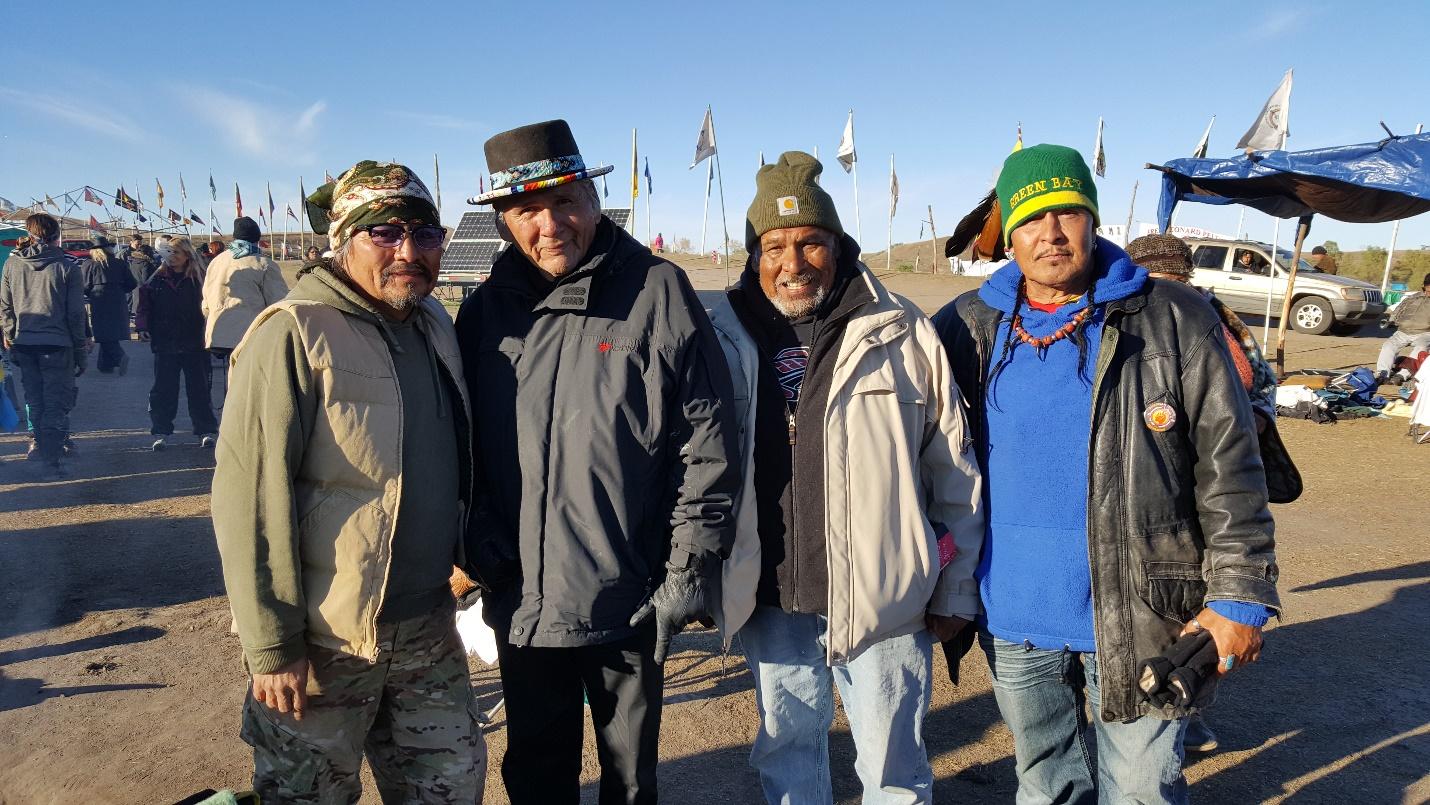
E:\2017-01-16 Cell Phone Pics 1-16-17\Cell Phone Pics 1-16-17 334.jpg
Reflections of Dennis Banks
By Earl Tulley, Dineh
Censored News
On November 2, my daughter and I started our journey to Leech Lake, Minnesota a 3,200-mile (50 hour) round trip. Our journey provided a lot of time to reflect on and definition of a person with many labels and/or stereotypes with the name Nowa Cumig, which means “in the center of the universe.”
We traveled with weather elements; wind, rain snow, and sunshine from dawn to dusk and into the night. There was much wildlife greeting us, those of the night and day, perhaps blessing our trail or sending their condolence to Nowa Cumig.  
While traveling we maintained contact with relatives who were on the same journey and destination to bid farewell to the Anishinaabe elder. We arrived, after 26 hours to Battle Point Community Center at Federal Dam on Leech Lake Reserve.
When we arrived, his family was hosting a wake, as some tribes believe a soul remains with the body for four days after passing. Relatives and friends kept vigil and comforted family, by offering condolences, and sharing stories, both funny and poignant about their experiences with Nowa Cumig, and the many reasons why he affected their journey's.  Most recently a friend shared a story of being in the hospital, with his feet exposed, and upon entering his room Dennis wiggle his toes to the nursery rhyme of one little, two little three little Indian’s.
Our relation with Dennis Banks as a friend, father, grandfather and an elder offered us much wisdom with the following being the one that moved me the most:  "Men shall be held responsible for every tear shed by our women."  When we spoke, our passionate conversations revolved around our children, grandchildren, maintaining family ties, sustaining tribal culture, our communities and the greater need to speak out against drugs and domestic violence.
Dennis believed that life should be fun - and lived - always evoking humor and laughter into his conversations and interactions with others.  One of his requests was when it was his time for passing - that remembering should be happy and not somber, to put the word FUN in funeral.
Towards the end of his journey here on earth, he became reflective and more at peace - offering stories of what is important - family, friends, and being of service to the Earth.  
He was a man who was very rooted and anchored his soul in spirituality and encouraged those that were within his voice to also do so, and protect our family, communities and Mother Earth.  
Nowa Cumig's final written statement: “It is very clear to me now that I have reached a high hill of my old age, and that then numbers really don’t mean that much, unless you’re counting pennies. But at 80, I have come to understand that old friends are the ones we need to cover our back and to offer a hand of friendship for life. I hope the next 80 will be a lot smoother than the first. See you in the clouds.”
Am honored to have known Nowa Cumig.   

E:\2017-01-16 Cell Phone Pics 1-16-17\Cell Phone Pics 1-16-17 334.jpg
September 2016 Standing Rock, North Dakota
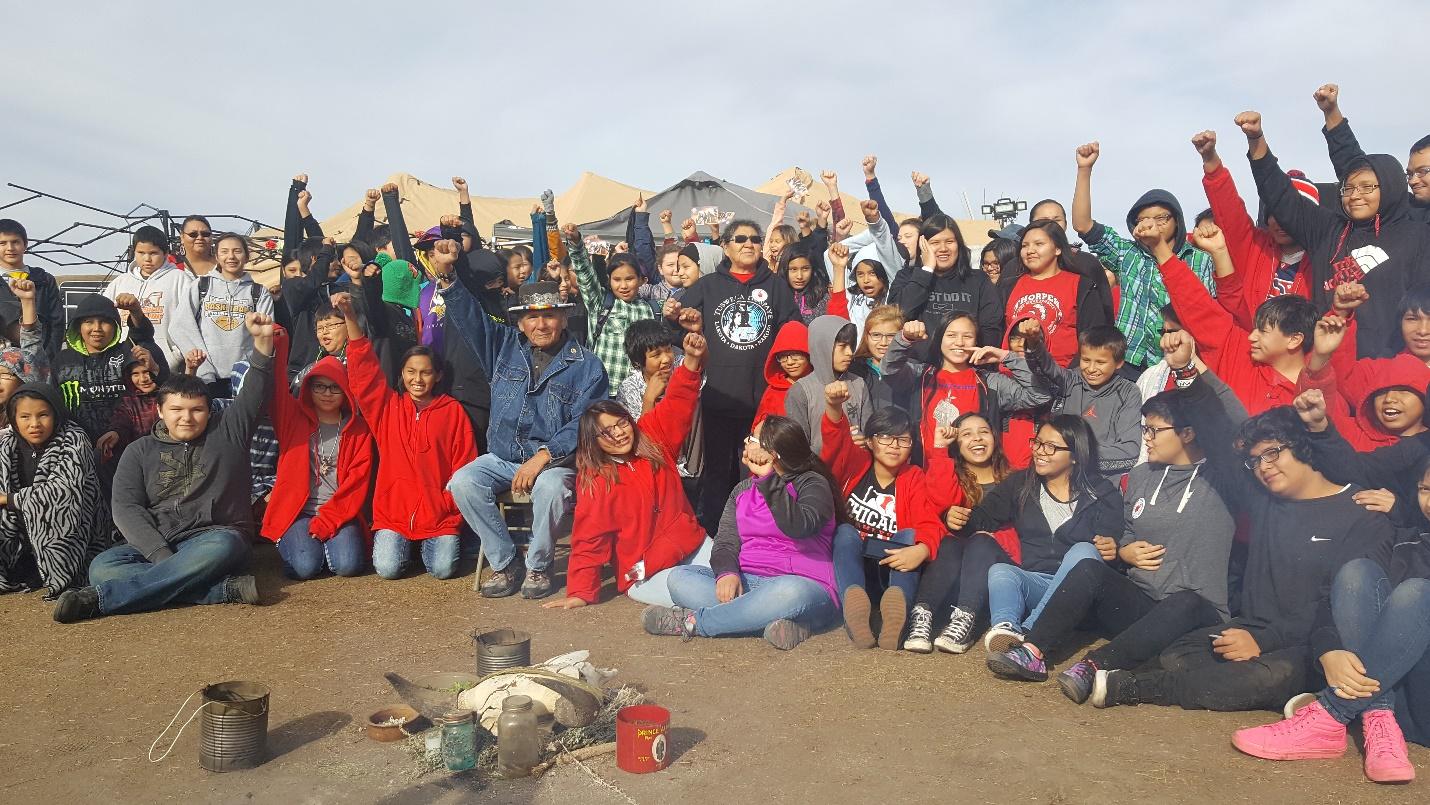
E:\2017-01-16 Cell Phone Pics 1-16-17\Cell Phone Pics 1-16-17 121.jpg

September 2016 Standing Rock, North Dakota

November 17, 2017

Akimel O'odham Andrew Pedro -- 'Indigenous Anarchists, White Anarchists'

Photo by Christine Prat

INDIGENOUS ANARCHISTS, WHITE ANARCHISTS

Andrew Pedro, Akimel O'odham
Talk transcribed by Christine Prat 
October 22017

Revolutionaries and Anarchists, the people who identify themselves as Anarchists, are still very colonial. Especially here, because a lot of them don't realize what they are saying and how it affects Indigenous people. A lot of it comes from not having cultural, spiritual, religious values, and it is not really up to me, no matter how you want to word it, we have a different view. For myself, as I identify as an Anarchist, Anarchism is a surface layer of what our traditional way of life really means to us. Because to me, Anarchism is the idea of being free from all those forms of oppression, and it is how we lived long ago. To my understanding, as O'odham people, we were free to travel in our territory. We had Tohono O'odham, Akimel O'odham, Hia C-ed O'odham, but it wasn't really a border, it would not say that we were not allowed to go to certain areas to do what we had to do, it was just having respect for the people who already lived there. To me, a lot of White Anarchists, those of Latino descent also, those types of Anarchists and other people in Phoenix, and in a lot of Arizona, don't really recognize that. We are still here, we do still hold these cultural and spiritual values, but to them, it gets in the way. They predominantly look at it as not being atheist. I have no problems with being an atheist, but that's their choice, and, being O'odham, we don't force our beliefs on anybody, we don't make people have to understand, because those are things just for us, for the O'odham people themselves. Like certain places where we go to, certain ceremonies that take place, of which we don't even tell other tribes, because those are for us, for the O'odham people. And I am sure the same goes for other tribes as well.
The O'odham people always were very inclusive to other people. Some say it's how we got here to these days, being very friendly to other people, to Christianity itself, to the White people, to the Spanish. That kindness existed and put us in the situation we are in right now. I believe it's because of that strong belief and strong cultural values that we had. It's the reason why we are still living today.
There were times when the O'odham people revolted against the Church and burnt down all the churches. Things like that have happened. Nobody really remembers, and Anarchism being almost totally atheistic, and their beliefs and values lying within it, they view any type of religion as being oppressive. But it's not really the case. For one, Indigenous and Anarchism are very new ideas. For us, we are Indigenous people, and I think those who identify as Anarchists as well, on the political side of it, recognize that indigeneity always comes first.
For myself, Anarchism is the top level, the top layer, the surface level of what himdag means to me, because those things overlap. Our ideas and how we do things overlap in different cultures, in different ways. The way I feel, O'odham society, how it was explained to me, the times before and how it is now in the world, all is similar to what Anarchism wants to be, but it's not really there yet. Especially within the way Anarchism works, those spaces they are going to which don’t allow religious items and things like that. They don't really want to have talks about what it means to certain people. In many ways, there is a loss. There is a loss because they don't really belong to here in the first place. They don't have that connection to the land, they don't have that connection to these things.
My best hope for White Anarchists, specially in Arizona, is that they understand there is a way they can help with indigenous issues, but it doesn't mean it has to be in a spiritual sense. They don't have to understand the sacredness of what Moadag Do'ag means to us. There is capitalism, go fight against that, go fight against what you know. They don't have to understand and think of what it means to us, because those teachings are for us, they are for a certain group of people. It's not the same as what is being inclusive or pushing people away.
It has been hundreds of years, some say thousands of years, it is long standing ideas and cultural ways that we have followed, that we still follow. While the people, the ancestors, whatever you want to call them, of those White people, those White Anarchists, probably don't even stem from Arizona in the first place, a couple of generations ago. But us, we have always been here, so we have those connections and a deeper understanding of what it means, of what this desert means to us. All these plants life, all these animals, that means to us. They don't have that, which leaves them at a loss, because they don't understand those things. A lot of indigenous issues – colonialism is one of the roots driving those White Anarchists to fight against in the first place. Capitalism is a main root, colonialism is a main root, and if you're not really fighting both, then what are you doing? You're not really helping anybody, you're gonna be colonial about it, and won't think about Indigenous people. I don't want a White Savior to come and help save the day, and I am not going to stand there and hold a White Anarchist's hand to lead them along the way the whole time. They just need to have an understanding of the fact that some things are for them, and some things are not, and that's ok. A lot of time, White Anarchists get defeated, when we tell them: now we are not going to participate because we have lives, we have a whole other world to deal with. The Reservation itself is another world. It's not as fast, things don't get done like they do out here, it's different cultural values that apply. Even if people are not necessarily cultural, they cannot have those understandings that are all different in there. The way we process things in our head and how the city people do it…
So, it's kind of hard to really have meaningful conversations with a lot of White Anarchists, because they are kind of stuck in their world, like "I am right", and it's a kind of colonial mentality, then. These people don't know what they are talking about, they don't live out here, but yet, this is our land!
In the past, let's say 5 years, we had quite a few problems with a new Anarchist group that had come up, they kind of came out of "Occupy". They are still very liberal in the way they organize, and they organize with a lot of liberal groups in Phoenix. I guess it's not really understood, maybe even to them, maybe they are not sure of what Anarchism means to them. Which causes more problems, if you don't know what you're doing, why you're doing it. Even some of the Antifa groups, now, start doing the same thing, which is not very inclusive for Indigenous people. They feel uncomfortable because it's seen in a very White way. There was a group that is not really around now, but who were identifying as an Anarchist group, "fight capitalism", "fight this", but they were just words. The biggest capitalist project in Arizona is the 202, the Sun Corridor, and nobody knows what you're talking about, when you try to talk to them. That's part of the reason why. They should be taking upon themselves to learn what is happening in the area that they inhabit. And knowing that there is a connection with Indigenous people, but knowing… our connection is not fully necessary to understand that something is sacred and a lifelong understanding, it's something that takes your entire life, it's not something we can just explain to somebody, in a video or in an email, those are things that take our entire life and full understanding of what really happens. For them, we say they won't understand, just because of who they are, they are White people, they are Latino people, but they're not gonna understand it the way we do.
Those things are affecting them differently than us, because we have those strong belief that we'll be ok in the end. Even 20 years down the line, I hope this won't happen, but 20 years down the line, if these freeways are here, there are people that will still be alive and practicing our culture and making them pay, somehow. With Anarchists it's not really like that. I very often see White Anarchism as very short-term victories, it is stuck in believing that they can hold the space, but what is "holding the space" in occupied land? Having an Infoshop somewhere, if you don't recognize Indigenous people, that's colonial to me. That's just a part of the problem. I think you're being an Anarchist if you're being anti-capitalist in any sense, antifascist and so on, if you don't have an anti-colonial stand, then you're just as bad as everybody else.


Walk for the Salmon with the Cahto Nation -- Photos by Bad Bear


.

Photos by Western Shoshone Carl Bad Bear Sampson, The Walk for the Salmon, Seattle to San Francisco 2017

Walkers will join the Cahto community for the walk south toward Alcatraz tomorrow, Saturday, Nov. 18.

Thank you for sharing with Censored News!

Photos copyright Carl Sampson