Indigenous Peoples and Human Rights

March 16, 2011

RESISTANCE FILM 'Noho Hewa: The Wrongful Occupation of Hawai'i'

NOHO HEWA: The Wrongful Occupation of Hawai’i
Censored News
.
Censored News congratulates Native Hawaiian filmmaker Anne Keala Kelly for her documentary, NOHO HEWA: The Wrongful Occupation of Hawai'i, exposing the United States' illegal occupation, colonization and ethnic cleansing on this island homeland of Native Hawaiians.
The film captured Best Documentary Award at the Hawaii International Film Festival, 2008 and is the winner of the Special Jury Prize at the Festival International du Film Documentaire de Oceanien, Tahiti, 2010.

Joleen Oshiro of the Honolulu Star-Bulletin said, "It conveys knowledge that resonates in the heart as well as the mind."
Albert Wendt, Maori artist and author of Sons for the Return Home, also praised the film. “NOHO HEWA is a brilliant, incisive, and complex exposé of colonialism (American and other) and its devastating effects on Kanaka Maoli, the indigenous people of Hawaii, and their land," Wendt said.
"After you see this film you will never again believe the lies and myths perpetuated about Hawaii by successive American governments, non-Hawaiian historians, writers, filmmakers, the tourism industry, and others.”

'Noho Hewa' is the first Native Hawaiian produced film of the 21st century to document the Hawaiian resistance to the U.S. occupation of their country. Produced and directed by independent journalist and filmmaker, Anne Keala Kelly, it looks at desecration of sacred sites and burials, and how the U.S. policies, via the military, the GMO industry and tourism use desecration as a colonial tool of ethnic cleansing.
Keala's work focuses on Hawaiian political and cultural issues, indigenous peoples and the environment. In 2008, she co-produced “The Other Hawai’i,” for Al Jazeera English’s “Inside USA,” and she was a Ted Scripps Environmental Journalism Fellow at the University of Colorado, Boulder in 2006 - 2007. Keala has filed stories from her home in Hawai’i, as well as Kathmandu and Geneva, and her articles, editorials and essays have been published in the Honolulu Advertiser, The Nation, American Indian Quarterly, the Honolulu Weekly and other journals. She has produced features and documentaries for the Pacifica Network’s Free Speech Radio News and NPR’s The Environment Report.
Go to http://www.nohohewa.com/ to purchase a copy of the DVD and support the film’s distribution. In Hawaiian language, the word HEWA means wrong, in the world of film and media, NOHO HEWA tells the truth about what is happening to the Hawaiian people and their homeland.

If you would like to arrange a public screening for your community or campus please send inquiries to nohohewa@ gmail.com
Filmmaker Anne Keala Kelly has kindly offered to donate 10 percent of sales to Censored News, if you mention you read about it here. Thank you.
March 15, 2011

Smithsonian's racist collection of Indian skulls


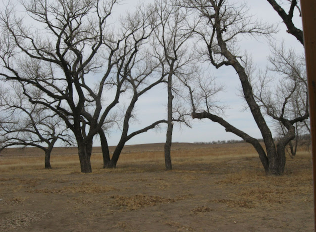
Trees at Sand Creek Massacre. Photo by Brenda Norrell

The history of the Smithsonian Institution, like the history taught in US classrooms, is largely one of deception and fiction


By Brenda Norrell
Censored News

The Smithsonian's dark history includes the collection of American Indian brains for a racist experiment that claimed to reveal the relationship between race and intelligence. Brains were collected for bounty.

One of the massacres where this sinister collection of brains was carried out was at Sand Creek in Colorado, a brutal massacre where fleeing Cheyenne and Arapaho women and children were murdered in 1864. The following article is republished, so the facts will not be forgotten, with a special thank you to Pawnee professor James Riding In who provided much of the information.

After the publication of this article, I wrote the Smithsonian and asked if it was true that more than 10,000 Indian skulls remained at the Smithsonian. There was no response. --Brenda Norrell

Smithsonian harbored Ishi's brain 
by Brenda Norrell
March 19, 1999

The Smithsonian Institution admits, after a probe and nearly a century of secrecy, that it housed the brain of Ishi, a Yahi Indian who walked into Oroville, Calif., in 1911. But the admission comes only after American Indians demanded a befitting burial and the University of California researchers probed the whereabouts of Ishi's remains, that the Smithsonian admits that Ishi's brain was in a warehouse at the National Museum of Natural History.

Pointing to scientific racism, James Riding In, Pawnee professor at Arizona State University, said American Indian skulls at the Smithsonian are part of the U.S. Army's research intended to show that whites were superior based on the size of their skulls. 

March 14, 2011

Arizona approves uranium mining permits in Grand Canyon 2011

Sacred place of prayer for the well-being of the world approved for uranium mining in Arizona -- as disaster reveals danger of nuclear power in JapanArticle and photo by Brenda Norrell
Censored News
http://www.bsnorrell.blogspot.com/

Arizona issues uranium mining permits to Canadian company to endanger water supply in Southwest SUPAI TERRITORY (Grand Canyon) -- When the Supai opposed uranium mining here -- which Arizona just approved last week -- Supai said it is a place for prayer for the well-being of the world. Now in Japan, the truth of the danger of nuclear power is revealed.
Gathered at sacred Red Butte in the Grand Canyon to oppose uranium mining here in 2009, Supai said this is a sacred place where they go to offer prayers for the protection of the earth.
Speaking of the Supai responsibility to protect the land, water, and air here from the poisons of mining, Supai Waters said, "If we do let this happen, we would be the murderers of the world. We cannot let that happen."
Supai Waters said that protection of the Grand Canyon also affects the weather patterns and climate of the earth.
"My people have lived in the canyon since time immemorial. The canyons contain power points and vortexes. If there is tampering or pillaging, the earth will not be the same. There are places where we guard. These sacred places have to do with the weather, the wind, the sun, the celestial movements. That is why we are here protecting it," Supai Waters said.
Matthew Putesoy, vice chairman of the Havasupai Nation, said the Grand Canyon is a national treasure, inviting 5 million people every year to explore and be inspired by its beauty. "To the Havasuw 'Baaja, who have lived in the region for many hundreds of years, it is sacred. As the 'guardians of the Grand Canyon,' we strenuously object to mining for uranium here. It is a threat to the health of our environment and tribe, our tourism-based economy, and our religion."
American Indian Nations joined local residents to oppose this threat to their water and air.
However, Arizona regulators caved in to the pressure from the corporation -- Denison Mines based in Toronto, Canada -- and the coopted US government.
"Ignoring widespread public opposition, the Arizona Department of Environmental Quality today issued three air- and one aquifer-pollution permits for three uranium mines located on public lands within Grand Canyon National Park’s immediate watershed," said the Center for Biological Diversity, Sierra Club and Grand Canyon Trust. Read more: http://censored-news.blogspot.com/2011/03/arizona-issues-uranium-mine-permits-for.html
The press statement was issued on March 10, 2011. The earthquake and tsunami hit Japan on March 11.
The Havasupai territory in the Grand Canyon is targeted by this new uranium mining from Denison Mines based in Toronto, Canada. At the same time, Navajo communities and the aquifer that provides their drinking water are threatened by new uranium mining along the borders of their lands in New Mexico. Already, the same area of Church Rock, N.M., was the site of one of the United States worst radioactive spills.
Between Albuquerque and Grants, where Navajos and Pueblos live, there are even more new uranium mining permits by the state of New Mexico: http://www.cibolabeacon.com/articles/2011/03/04/news/doc4d70271827536314023640.txt
Japan’s earthquake shifted balance of the planetAP reports that last week's devastating earthquake and tsunami in Japan has actually moved the island closer to the United States and shifted the planet's axis.
"The quake caused a rift 15 miles below the sea floor that stretched 186 miles long and 93 miles wide, according to the AP. The areas closest to the epicenter of the quake jumped a full 13 feet closer to the United States, geophysicist Ross Stein at the United States Geological Survey told The New York Times."
http://news.yahoo.com/s/yblog_thelookout/20110314/ts_yblog_thelookout/japans-earthquake-shifted-balance-of-the-planet

Listen to Supai at Earthcycles. Supai, other Native Americans and local residents speak out against this uranium mining at the summit in July of 2009. Recorded live by Earthcycles and Censored News. Scroll down the list for 93 audio recordings from the summit at Red Butte:
http://www.earthcycles.net/nts/
There will also be a benefit concert to Stop Uranium Mining at the Grand Canyon on March 26th in Flagstaff at the Orpheum Theater.From: http://www.stopuraniummining.org/ Facebook: www.facebook.com/stopuraniummining

Subcomandante Marcos letter Jan/Feb. 2011

Subcomandante Marcos letter Jan/Feb 2011