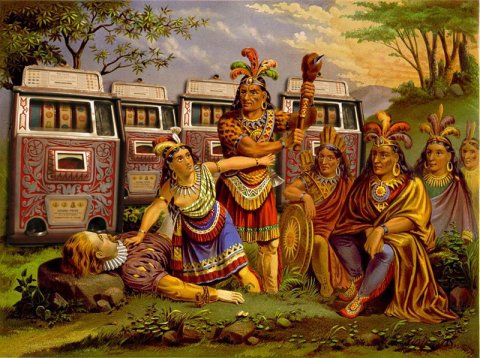
Indigenous Peoples and Human Rights

August 11, 2015

Hopi's Owl and Panther Project for Refugee Children Celebrates 20th Anniversary


The Hopi Foundation's Owl and Panther Project for refugee children of torture, violence and displacement, includes children and youths from Iraq, Bhutan, Nepal, Somalia, Ethiopia, and the Congo
By Brenda Norrell
Censored News
The Hopi Foundation's Owl and Panther Program is celebrating its 20th Anniversary, with a second showing of the artwork and sharing of poetry of refugee children at Tucson Museum of Art.
The following article is published in memory of Amy Shubitz, and her work with the Hopi Owl and Panther Program, which allows child victims of torture and displacement to have a creative voice. The Sanctuary Movement gave birth to this program. Before she passed, Amy stood in the church, Southside in Tucson, and turned to me, remembering the thousands of Indigenous Peoples who escaped torture and death in Central America and South America in the 70s and 80s, who passed through this church and were given sanctuary here. It was a powerful moment, one I will never forget. 
The Owl and Panther artwork was first on exhibit in 2013 at the Tucson Museum of Art. Below is the article I wrote of the heart moving exhibit. 
Also, in the news today, Arizona Wildcat has an article on the current exhibit in 2015. http://www.wildcat.arizona.edu/article/2015/08/museum-as-sanctuary-voices-displaced
Museum as Sanctuary: Giving Voice to Tucson's Refugees
By Brenda Norrell
July 17, 2013
Someone is dying on the border today. It is 108 degrees beneath the sun and hotter to the west of here. Here, in the Sonoran Desert, there is always a need for sanctuary, for refuge.
Just north of the border , the Tucson Museum of Art opened a new exhibit, “Museum as Sanctuary: Giving Voice to Tucson’s Refugees.” It is collaboration between the Tucson Museum and the Hopi Foundation’s Owl and Panther Program, where art is medicine for refugee children healing from the trauma of torture and exile.
On the museum walls, the real story of this border, and borders around the world, comes alive in the vivid color of the paintings and the haunting self portraits of refugees. It is dramatic self expression that is in itself a voice for refugees who find solace here. The exhibit is the result of a three year project of the museum and the Hopi Foundation. It is not a single voice, but the voices of 31 individuals.
Epiphanie has painted the Ethiopian flag. Another’s father is in political exile from Chile. There is a painting of a woman fleeing from her burning village. One painting is black, except for the stars in the sky, and shares the dark feelings of the painter.
Still, however, there is also the field of dreams.
Mohammad has painted “Soccer Man.”
Bhagat says, “I plan on being a world famous soccer player.”
In another self portrait, a young woman is blindfolded. Wendy is from Guatemala. “Escaping machine guns, bullets, hunger, running from place to place. Seeing people get killed and sleeping with my shoes on. That was my childhood.”
Nada’s husband was disappeared in Iraq. Sarah, from the Congo, says her favorite animal is the cheetah because it can run faster than the others. These expressions
are the original energies of refugees from all parts of the earth, from a mining town in the Atakama Desert in Chile to Ethiopia, Nepal , Bhutan and other countries.
In a collaborative poem from the children of Owl and Panther, there is a description of a “square mile of heaven,” which includes peanut butter cookies, vegetable curry, mesquite and coming together to solve problems without hurting anyone.
In the handcrafts, there is a magnificent bird fashioned from paper towel and toilet paper rolls, painted with brilliant colors. “It is old from 1,000 years ago. I’ve seen this bird in Iraq,” are the descriptive words.
Anish writes of the story of the Owl and Panther, adapted from a Cherokee legend, which gives the program its name.
“They must look into the dark with the wisdom and vigilant eyes of the owl and panther. The great medicine comes to those who are watchful.”
In the Owl and Panther legend, the plants and animals were asked to stay awake for seven days and nights. Those that were able to do, were given great gifts. On the museum walls, the program shares the teaching that children must stay alert, like the cedar, spruce and pine that stay green all winter. They must look into the darkness with the wisdom and vigilance of the owl and panther, who were given the gift of seeing in the dark night.
Here there is the field of dreams, but in border regions around the world, refugees and migrants fill cells and in the US, they fill private prisons for profit. On the border of Guatemala and Mexico, women, sick and hungry, who have walked across continents are imprisoned with their children in migrant prisons.
Tucson is a place of sanctuary, because here there are people who are awake. On the US Mexico border, there are those that walk in this heat, in this death inducing heat, and search for the bodies along the border. Tohono O’odham human rights activists are among the few who respond to the pleas of families in Mexico or Central America. They walk in this sun, cheating death, and search for the living and dead in the Sonoran Desert. The migrants have often survived the beatings and torture of robbers and kidnappers while walking through Mexico.
In this militarized zone of the border, life is precious, all life, including life beyond these borders. In 2007, protests in Tucson focused on US torture and the role of the US Army Intelligence Center at Fort Huachuca, southeast of Tucson.
The tortures in Abu Ghraib and Guantanamo reveal the same torture techniques that were used in Central America by the Latin military leaders trained by the US at the School of the Americas in Fort Benning, Georgia. The result was the rape, mutilation, disappearance and murder of masses of Indigenous Peoples in Central America in the 1980s.

The School of Americas torture manuals, confirmed publically in 1996, were produced at Fort Huachuca. More recently, soldiers trained at the Fort Huachuca U.S. Army Intelligence Training Center, have gone on to torture at Abu-Ghraib in Iraq and Guantanamo.
Here in Tucson, torture comes full circle.
During the Fort Huachuca protest, the Hopi Foundation Center for the Prevention and Resolution of Violence, which serves refugees and victims of torture, offered a presentation of poetry from its Owl and Panther Program. The Owl and Panther Program began in 1995 with creative writing, giving young victims of torture and exile an opportunity to express themselves through poetry.

Vicki Hernandez, among the youths, said, "You can't just torture a little bit."

"Torture in any form is a crime against humanity."
Years earlier, in December of 2000, Amy Shubitz, director of the Hopi Foundation's Center for the Prevention and Resolution of Violence, insisted that I not miss the poetry readings of the children of the refugees in the Owl and Panther Program. Amy said the project serves torture victims and perpetrators arriving from around the world. She said it grew out of the Sanctuary Movement, which provided shelter to those fleeing persecution, primarily in Central and South America.
At one of these gatherings, speaker Federico Anaya Gallardo, a human rights attorney from Mexico City working closely with the Zapatistas, told the children in
the program, “Take care of the pain. Humans are not animals, not coyotes. We are more like bees or wolves, we cannot live if we are not together."
Frederico shared the story of Eleanor Roosevelt's initiation of the Declaration of Human Rights, as the world was recovering from the horror of the Holocaust.
"We struggle so no one can take our accomplishments away from us," he told the children. "Human rights are for everyone, even those who do not respect them. We respect the rights of our enemies. The difference between a good person and a bad person is the good person works also for the rights of the bad.
"The first rule of human rights is not to remain silent. All witnesses have the duty to say what we saw."
Amy walked with me through a small adobe church and said that more than 10,000 Indigenous Peoples had passed through this church fleeing torture. Amy asked me to tell this story, her story, and I agreed.
Shortly after that, Amy became ill and died in 2003. She never reached old age and the time when we hoped to write this story. When she passed, Marge Pellegrino wrote, “Refugees from Mali, Mauritania, Sudan and Uganda cry with those from Guatemala, Salvador and Honduras, part of the more than 10,600 Amy helped usher through Tucson in the 1980s when they escaped the death squads in Central America.”
Today, in the art of Amy’s beloved Owl and Panther Project, are the words of Tek on the walls of the Tucson Museum of Art.
Love to mix color and show the beauty of the desert,” says Tek. Tek’s colors are wild color, vibrant colors.
Wrapped in these images are the Sonoran Desert itself, the blood red color of the cactus fruit, deep red of the earth, the blue of the water and sky, and the green of the pungent chaparral. There is the yellow of the sun, with its dualities of life giver and life taker.
Now, at the end of the day, the sun has ended its machete blows. The monsoon rain clouds have gathered, providing some shade and promise. With those dark monsoon clouds comes the threat of deadly torrents rushing across the top of the dry baked earth, torrents of rain in the arroyos that carry away people and cars,
mangled with trees and cows.
Meanwhile, on the Tucson Museum wall, a butterfly necklace hangs on the self-portrait of a young woman with long dark hair.
“The butterfly necklace represents happiness and beauty of the worlds,” she writes.
Amy would have liked that.
Poem: Collaboration of Owl and Panther, March 2012
A square mile of heaven,
just what I needed,
windy and loud,
my tummy full of
peanut butter cookies,
going for seconds
of vegetable curry,
the smell of mesquite,
people working together
solving problems together
without fighting,
having fun
lots of little hands,
yowls of laughter,
floating on the wind,
talking our way
through border patrol,
snoring in the van
on the way back home,
a day in that
square mile of heaven,
just what we needed.


The Tucson Museum of Art hosted the exhibition of works created by the Museum as Sanctuary participants entitled Museum as Sanctuary: Giving Voice to Tucson’s Refugees. This exhibition is an opportunity to display works of art—and stories—that highlight culture, community, and identity.
The Museum as Sanctuary Program is a unique partnership with The Hopi Foundation’s Owl & Panther Project and the Tucson Museum of Art. The Hopi Foundation’s Owl & Panther Project works with refugee families in the Tucson area who have been impacted by torture, trauma or traumatic dislocation.  At TMA individuals have focused on the benefits of creative expression through art-making and in-gallery activities.  Participants of the program come from countries all around the world such as Iraq, Bhutan, Nepal, Somalia, Ethiopia, and the Congo to name a few.


Utah Climate Defenders Shut Down Tar Sands Mine

Warriors uniting to defend Sacred Water by halting the expansion of tar sands in so-called "utah".
Direct Autonomous Media

The Unitah county sherrif's department gropes at a protester on a tripod, after refusing to comply with their request for a female officer. The boys club laughed at their request and proceeded to terrorize the land defender on film. Photo: Direct Autonomous Media


Land defenders strike back against mining industry for
Colorado River poisoning.

By Direct Autonomous Media and Tarsands Blockade

BOOK CLIFFS OF UTAH -- Land defenders strike back against mining industry for Colorado River poisoning.
Several dozen climate justice land defenders will enforce a shut down at the US Oil Sands tar sands mine today in the Book Cliffs of Utah. The action comes just days after a century-old mine poured millions of gallons of toxic sludge into waterways that sustain 40 million Americans.
“Thousands of mines like open wounds tell the story of a century of exploitation, destruction and violence–against the people of this land and the land and water themselves,” said Melanie Martin of Peaceful Uprising, on behalf of the crowd. “US Oil Sands continues that sick tradition by squandering precious water in a thirsty region and saddling future generations with a toxic legacy there is no way to clean up.”
For live updates and more pictures of this ongoing blockade, check out Peaceful Uprising and their website:


Mohawk Nation News 'Kahnawake's Joke Norton'

KAHNAWAKE’S JOKE NORTON

mnnlogo1

Please post & distribute. Nia:wen.
MNN. Aug. 10, 2015. After meeting with Donald Trump, Joe “One-armed-Bandit” Norton, of the Mohawk Council of Kahnawake Inc. told us, “Everything’s got to change”. He lost two referenda to put his casino in our community. The Donald and Joe decided to put it in the St. Lawrence River off Kahnawake.
Joe, the INDIANS found out!
Now his partner is running for President of the US. It looks like the Donald is behind the false face running Kahnawake, and eventually all of the Rotinoshonni communities in Canada and US.
Joe helps himself to our sovereignty and money to make himself and his outside friends into billionaires [Mohawk Internet Technology]. His name JOSEPH NORTON and his title are both owned outright by the corporation known as the CROWN.
He’s helping Canada steal everything we have: the economy that depends on our resources, justice to keep us out of the way, social issues to distract us, health care to keep us sick, foreign affair to lie to the world about us, defense to design deadly “INDIAN Details” to control us, governance to keep the bankers happy, our energy to sell to the highest bidder, environment to ruin our land, pipelines to carry away stolen oil and gas, military to protect their international partners and terrorism to try to scare us if we resist. Joe and other band councils are front men of this diabolical plan.
Door man Joe, "Seh:kon and good luck!"
Door man Joe: “Seh:kon Sir and good luck!”
Joe never mentions the kaianerehkowa, the Great Peace, in any public statements. “Joke  Norton” is trying to municipalize us, as per Canada’s 1924 business plan. He is implementing the final step in the genocide called CANADA. On October 14, 1998, he signed ten deadly agreements with Quebec to undermine us: to cover fiscal matters on consumer goods and services; tobacco, fuel and alcoholic beverages; transportation and user fees; economic development; administration of justice; registration of births, marriages and deaths; child care; police services; combat sports; and liquor permits. Joe signs with Quebec.
Joe puts a dollar value on everything. He pretends to represent us. Historically, in all Mohawk communities only 5% take part in the imposed European election system.
Chiefs: "$100 for me and $1 for you!"
Chiefs: “$99 for me and $1 for the rest of the people! Just like our  mentors!”

In 1979 he got someone to put forward a fake resolution to return Kahnawake to a traditional ”form” of government, not the real traditional government. He is trying to bring in “an extraordinary new process”! [What does that mean?]
Joe knows that every living thing on ono’ware:geh is ours, rocks, water, minerals, trees, oil gas and so on. Admiralty courts cannot make a declaration on this. Canada is not a country and has no constitution. Joe wants a nation-to-nation relationship with Quebec, which is a colony. He wants us to “cohabitate and share our resources with the colonial settlers, for the sake of our health, education and justice”.
Only 2 INDIANS working here.
Joe is the viper in the grass. He says the world wants to do business with us [him], to be like Trump, to earn funds in private enterprise to pay our bills. Macleans magazine declared him to be the most influential INDIAN owned by the corporation of Canada. Joe wants to be like the crooks that taught him about capitalism. He falsely assumes that we all want to be just like them.
Joe Norton’s dictatorial laws for Kahnawake are outside of the Admiralty rules he has signed up for. As Alice Cooper reminds us of the danger among us, “I wanna kiss you, but I want it too much (too much) I wanna taste you, but your lips are venomous poison. One look could kill (could kill), My pain, your thrill”.
MNN Mohawk Nation News kahentinetha@mohawknationnews.com more news, books, workshops, to donate and sign up for MNN newsletters, go towww.mohawknationnews.com  More stories at MNN Archives.  Address:  Box 991, Kahnawake [Quebec, Canada]J0L 1B0 Thahoketoteh@mohawknationnews.com

Navajo President: EPA will be accountable for toxic river spill


President Russell Begaye and Jonathan Nez hiking up to the Gold King Mine where the initial reported release from U.S. EPA was 1 million gallons and was confirmed yesterday, that number is over 3 million gallons and may never be known the actual amount of release.
President Begaye announces U.S. EPA will be 
accountable for toxic spill

Statement by Navajo President Russell Begaye
Censored News
Also see: Breaking news articles at Google News on spill
English with French translation

WINDOW ROCK, Ariz.—Navajo Nation President Russell Begaye announced that he intends to take legal action against the U.S. Environmental Protection Agency for the massive release of mine waste into the Animas River near Silverton, Colorado.
President Begaye made this announcement Saturday evening at the Shiprock Chapter House, which was packed to capacity with concerned community members living along the San Juan River.
“They are not going to get away with this,” President Begaye said of the destructive impact to natural habitats and ecosystems that traditional Navajo culture relies on.
He said the sludge has migrated into the San Juan River and is wending through the Navajo Nation. The plume is expected to reach Lake Powell by Wednesday.
President Begaye said, “The EPA was right in the middle of the disaster and we intend to make sure the Navajo Nation recovers every dollar it spends cleaning up this mess and every dollar it loses as a result of injuries to our precious Navajo natural resources.”
“I have instructed Navajo Nation Department of Justice to take immediate action against the EPA to the fullest extent of the law to protect Navajo families and resources,” he added.
“The EPA also needs to fund an independent lab onsite for real time monitoring of chemicals that may migrate into our irrigation or public water system,” said President Begaye.
Stories of struggle and survival
The chapter members were very appreciative that President Begaye and Vice President Jonathan Nez met with them in this moment of crisis as the plume of contamination approached their community.
The community shared their stories of struggle and survival along the river and underscored just how important farming and ranching is to their way of life and the economy of the region.
Shiprock is one of the largest farming communities on the Nation and it relies heavily upon irrigation from the San Juan to supply its many farms with water.
Navajo EPA will be conducting independent tests on the water and sediment quality and the Nation will utilize the data that is gathered for their own investigation on the contamination. The plume is estimated to be traveling at four miles per hour.
Harlan Cleveland of Navajo Nation Department of Emergency Management said the contaminated water plume reached Farmington at 8:10 a.m. on August 8 and joined the San Juan River.
The plume is more than 80 miles long.
Several communities have stopped pumping water from the river and San Juan County has issued an emergency declaration and closed the river until further notice.
Rex Koontz, deputy general manager of Navajo Tribal Utility Authority, stated in a press release that NTUA water systems from Farmington to Beclabito are “fed from a different system isolated from the San Juan River.”
The Navajo Nation irrigation systems ceased pulling water from the river earlier this week.
San Juan River is their Lifeline
President Begaye said the U.S. EPA must provide affected tribal members water for drinking, irrigation, and livestock. In addition, hay and feed will also be needed for livestock.
“The San Juan River is their lifeline. We want full disclosure on what chemicals were released into the river. We understand cleanup will take decades. We demand cleanup of this water and the sediments of our affected rivers immediately,” President Begaye said.
Navajo farmers pumped water for their cattle, sheep and horses. Others fished the river and explored it recreationally.
“We’re not talking about a small population or area like Farmington. We have Navajo families affected from Upper Fruitland all the way to Lake Powell,” President Begaye said.
The Navajo Nation is larger than 10 U.S. states and is the size of West Virginia. The San Juan River courses through much of the northern region of the Nation and feeds into the Colorado River, which also traverses the vast tribal territory.
Childhood memories of contamination
During his childhood, President Begaye lived along the banks of the San Juan River. One year, he remembered the fish were dying and floating to the surface. He jumped into the river with others to investigate further.
“The river smelled for weeks. Fish were dying along the riverbank. No one ever told us what happened, how the fish died or if it would impact our health years later. To this day, nobody told us. That will not happen this time,” President Begaye said.
Update:
Navajo President Russell Begaye said, "We will overcome this tragedy, I have declared a state of emergency and deployed Navajo Nation resources to take on this sludge moving through our Great and Beautiful Navajo Nation. I also called upon President Obama and our Congressional Representatives to immediately appropriate emergency funds to meet the immediate needs of our People such as drinking water, animal feed, and clean irrigation water.
Thank you to all the Navajo Nation personnel on the frontline working tirelessly to protect our people, our water and our land. Continue to pray, take care of each other and we will sustain."


French translation by Christine Prat
Le 5 août dernier, des millions de litres d’eau très toxique, provenant d’une ancienne mine d’or abandonnée depuis longtemps, se sont déversés dans la rivière Animas, près de Silverton, dans l’état du Colorado. Depuis, la nappe toxique a atteint la rivière San Juan, dans laquelle se jette l’Animas, près de Farmington, au Nouveau-Mexique. On estimait qu’elle devait atteindre le Lac Powell, et donc le Fleuve Colorado, ce mercredi. La rivière San Juan et le Colorado traversent une grande partie de la Réserve Navajo et l’eau est beaucoup utilisée pour l’irrigation et faire boire le bétail. Ce sont des employés de l’Agence Fédérale de Protection de l’Environnement (!!!) qui ont causé la fuite ‘accidentellement’ (les Navajo préfèrent dire ‘par négligence’) lors d’une inspection. Le bassin contenant les produits toxiques était fait de terre recouverte d’une bâche de plastique. La nappe toxique contient de fortes concentrations d’arsenic, de plomb, de cadmium et autres métaux lourds. L’Agence de Protection de l’Environnement (EPA) tente pour l’instant de minimiser la gravité de la situation, arguant de ce que le courant est trop fort pour que les produits toxiques aient le temps de causer de gros dégâts, et que vraisemblablement les métaux lourds se dilueront et ne poseront pas de problèmes à long terme. Bien entendu, les habitants ne le croient pas. (L’EPA a attendu 24 heures avant de signaler l’accident, elle a d’abord prétendu qu’1 million de gallons étaient répandus, en fait c’était 3 millions, c’est-à-dire plus de 11 millions de litres).
Christine Prat


Le Président Russell Begaye et le vice Président Jonathan Nez se rendent sur les lieus du désastre.

Le Président Begaye annonce que l’Agence de Protection de l’Environnement (EPA) des Etats-Unis devra rendre des comptes pour le déversement de produits toxiques
Déclaration du Président Navajo Russell Begaye
Publiée sur Censored News
11 août 2015
Voir aussi la liste des articles sur le désastre référencés sur Google News
Traduction Christine Prat
WINDOW ROCK, Arizona – Le Président de la Nation Navajo, Russell Begaye a annoncé son intention d’entamer une action légale contre l’Agence de Protection de l’Environnement des Etats-Unis pour le déversement massif de déchets miniers dans la rivière Animas près de Silverton, dans le Colorado.
Le Président Begaye a fait cette annonce samedi soir au Siège du Chapitre de Shiprock, bondé, devant des membres de la communauté inquiets vivant le long de la rivière San Juan.
« Ils ne s’en tireront pas comme çà » dit le Président Begaye à propos des effets destructeurs sur les habitats naturels et les écosystèmes sur lesquels repose la culture traditionnelle Navajo.
Il dit que la boue avait atteint la rivière San Juan et progressait à travers la Nation Navajo. On s’attendait à ce que la nappe toxique atteigne le Lac Powell ce mercredi.
Le Président Begaye dit : « L’EPA était au centre du désastre et nous avons l’intention de nous assurer que la Nation Navajo récupère chaque dollar dépensé pour nettoyer ce bourbier et chaque dollar perdu à cause des dégâts causés à nos précieuses ressources naturelles Navajo. »
« J’ai donné des instructions à la Justice Navajo pour agir immédiatement contre l’EPA jusqu’aux limites permises par la loi, pour protéger les familles et les ressources Navajo » ajouta t’il.
« L’EPA doit aussi financer un laboratoire indépendant sur place pour contrôler en temps réel les produits chimiques qui peuvent atteindre notre système d’irrigation et notre réseau d’eau publique » dit le Président Begaye.
Histoires de lutte et de survie
Les habitants du Chapitre ont beaucoup apprécié que le Président Begaye et le Vice Président Jonathan Nez viennent les rencontrer en ce moment de crise, alors que la nappe de pollution approche de leur communauté.
Les habitants ont raconté leurs histoires de lutte et de survie le long de la rivière et ont souligné combien l’agriculture et l’élevage sont importants pour leur mode de vie et l’économie de la région.
Shiprock est une des plus grandes communautés agricoles de la Nation et dépend fortement de l’irrigation de la rivière San Juan pour fournir de l’eau aux nombreuses fermes.
L’EPA Navajo effectuera des tests indépendants sur la qualité de l’eau et des sédiments et la Nation utilisera les informations recueillies pour sa propre enquête sur la contamination. On estime que la nappe toxique se déplace à plus de 6 km à l’heure.
Harlan Cleveland, du Service Navajo de Gestion des Crises, dit que la nappe avait atteint Farmington (Nouveau-Mexique) à 8h10 du matin le 8 août à la jonction avec la rivière San Juan.
La nappe fait environs 130 km de long.
Plusieurs communautés ont arrêté de pomper de l’eau de la rivière et le Comté de San Juan a publié une déclaration d’urgence et fermé la rivière jusqu’à nouvel ordre.
Rex Koontz, vice directeur général des Services Publiques Tribaux Navajo, a déclaré dans un communiqué de presse que les réseaux d’eau de Farmington à Beclabito sont « alimentés par un réseau différent, isolé de la rivière San Juan. »
Les systèmes d’irrigation de la Nation Navajo ont cessé de pomper de l’eau de la rivière en début de semaine.
La rivière San Juan est leur Ligne de Vie.
Le Président Begaye a dit que l’EPA des Etats-Unis devait fournir aux membres de la Tribu affectés, de l’eau potable, de l’eau pour l’irrigation et pour le bétail. De plus, on aura aussi besoin de foin et de nourriture pour le bétail.
« La rivière San Juan est leur ligne de vie. Nous voulons toute la vérité sur quels produits chimiques se sont déversés dans la rivière. Nous avons entendu dire que le nettoyage prendrait des décennies. Nous exigeons que cette eau et les sédiments de nos rivières soient nettoyés immédiatement » dit le Président Begaye.
Les fermiers Navajo pompaient de l’eau pour leur bétail, leurs moutons et leurs chevaux. D’autres pêchaient dans la rivière ou s’y rendaient pour leurs loisirs.
« Il ne s’agit pas d’un petit nombre d’habitants ou d’une zone comme Farmington. Nous avons des familles Navajo affectées d’Upper Fruitland jusqu’au Lac Powell » dit le Président Begaye.
La Nation Navajo est plus vaste que 10 états américains et de la taille de la Virginie Occidentale[pour les Européens : de la taille de la Belgique – NdT]. La rivière San Juan traverse une grande partie de la région nord de la Nation et se jette dans le Fleuve Colorado, qui traverse aussi une grande partie du territoire tribal.
Souvenirs d’enfance de pollution
Pendant son enfance, le Président Begaye a vécu sur les berges de la rivière San Juan. Il se souvient qu’une année les poissons mouraient et flottaient à la surface. Il a plongé dans la rivière avec d’autres pour essayer de savoir ce qui se passait.
« La rivière a senti mauvais pendant des semaines. Les poissons mouraient le long de la berge. Personne ne nous a dit ce qui s’était passé, comment les poissons étaient morts ou si çà aurait des effets sur notre santé plus tard. A ce jour, personne ne nous a rien dit. Çà n’arrivera pas cette fois-ci » dit le Président Begaye.
Mise à jour :
Le Président Navajo Russell Begaye a déclaré : « Nous vaincrons cette tragédie, j’ai déclaré l’état d’urgence et déployé les ressources de la Nation Navajo pour attaquer cette boue qui se déplace à travers notre Grande et Belle Nation Navajo. J’ai aussi demandé au Président Obama et à nos Représentants au Congrès d’attribuer immédiatement des fonds d’urgence pour satisfaire aux besoins immédiats de notre Peuple, tels que de l’eau potable, de la nourriture pour les animaux et de l’eau propre pour l’irrigation.