Indigenous Peoples and Human Rights

May 28, 2015

Mohawk Nation News 'Planet of the Clans'

PLANET OF THE CLANS

mnnlogo1

Please post & distribute. Nia:wen.
MNN. May 27, 2015. The clan system will lead to the peace. Women’s power is natural. Their role emulates the earth from whom we get our life and energy.
Women’s power was ignored by the invaders to cut our natural tie to the land and to steal it. Artificial clans were created known as political parties. Men were put at the head based on the corporate hierarchical model of the Vatican.
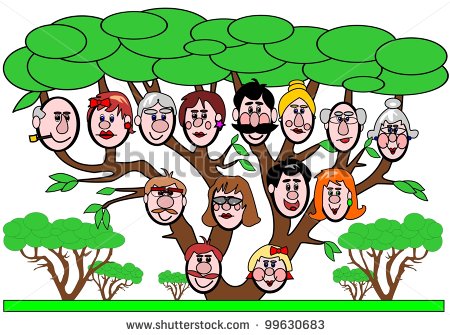
Is this for real?
Family trees should follow the mother, not the father. 
The clan system cannot be monetized. The corporate party system monetizes everything. The 1% get more from our mother, while the 99% are deprived. Since 1779 the main mission of the CROWN/Vatican is to wipe out the Great Law, kaia’nereh:kowa, so the war continues.
We get our clan from our mother, which can never change. The clans are headed by clan mothers. Through the consensual decision making process our clans come to one mind on all issues. Only the women appoint the leaders of the council of men and have the power to remove their antlers.

iotiyaner, clan mother.
The party system is based on 51% so they can never come to one mind. Anyone can change their party. Voting is secret and counting is done by the bureaucracy. Stalin said, “It matters not who wins the vote, only who does the counting”.
Haudenosaunee Customs: "What's your clan, m'am?
Haudenosaunee Customs: “What’s your clan, m’am?
The women’s council and the men’s council are equal. The clan mothers act as judges and mediators. The party system head appoints judges to the judiciary. The US Senate is the artificial version of the women’s council made up of men. Congress is the artificial version of the men’s council. A hierarchical president presides over both councils, to make sure war continues. The US in 239 years has had 222 wars.
The women decide issues of citizenship, political office, naming, clan designations and adoptions. Women as judges condemn criminals and dename wrong doers.
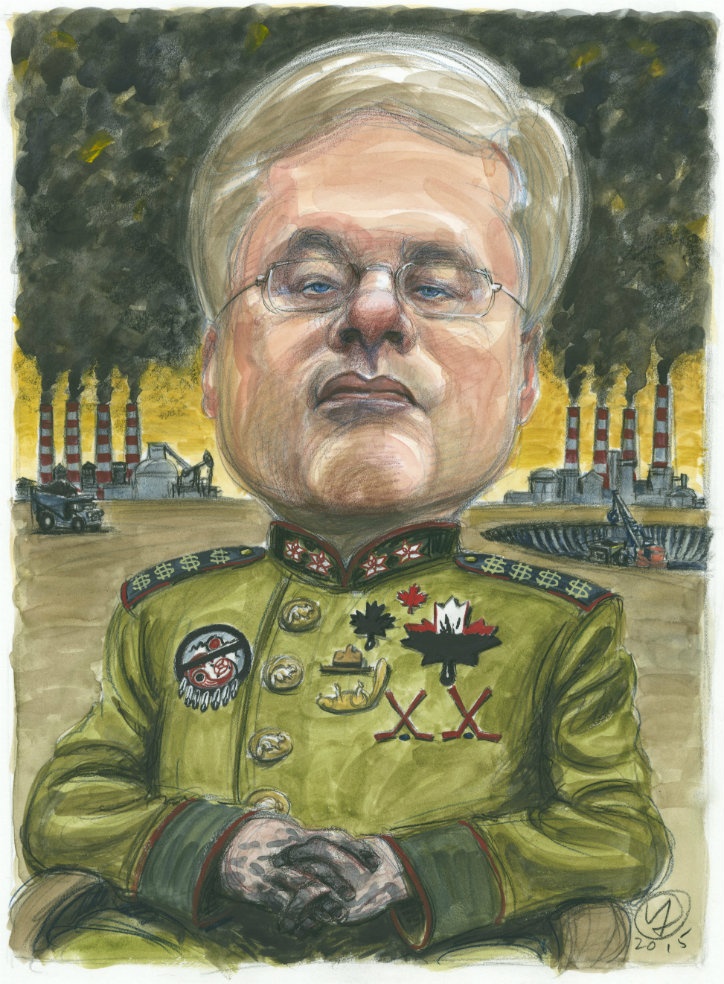
Crooked politician.
Poster boy of “artificial party system”! 
The will is the power of the people, which comes from the villages. They are run by the clans headed by the women. We identify ourselves by our mother’s clan. As we all have a clan and the right to have a clan, and a nation, we are tied to our nation by our mother and father. The women consider all matters first, both civil, political and otherwise. Upon reaching a consensus, they send the decision to the men’s council. The men consider the matter, return their decision to the women who review it. No matter is closed as long as anyone female or male wishes to discuss it.
The mental, physical health and domestic peace must be maintained using the tools in the great law of peace. Gaiwiio is ethical behavior in all matters. Women imprint discussions in their memories, having no writing, to tell their children.
'I'm only interested in locating wealthy relatives.'Clans, women’s councils and our fires are the basis of our communities. The rising smoke of our message of peace is seen afar. Decisions are not forced. Every person has a voice on all issues. In the party system 100,000 will give their power to one person for a set time. Our system is based on acknowledgement and respect. Theirs is based solely on money and 51% so war will never end.
When the council of women implement the clan system worldwide, it will shake everything back to its natural order, like the waves will always bring the grains of sand back into the order on the beach. As Muddy Waters wrote and Robert Plant sings: “You know you shook me. You shook me all night long. You shook me, mama”.

MNN Mohawk Nation News kahentinetha@mohawknationnews.com more news, books, workshops, to donate and sign up for MNN newsletters, go towww.mohawknationnews.com  More stories at MNN Archives.  Address:  Box 991, Kahnawake [Quebec, Canada] J0Lthahoketoteh@mohawknationnews.com for original Mohawk music visit thahoketoteh.ws

May 27, 2015

Meet Author Julian Kunnie 'Cost of Globalization'

Meet the Author
Julian E Kunnie


at
Barnes & Noble – Foothills Mall
May 30th, 1-5pm
TUCSON, ARIZONA

.


Dr. Julian Kunnie (on far right) at the Indigenous Peoples Border Summit
on Tohono O'odham land, standing on the imaginary border line
with Mohawks, Acoma Pueblo, Dineh, Oneida and Lakota.
Photo Brenda Norrell

Meet the author in Tucson: Dr. Julian Kunnie, who many of you met at the Indigenous Border Summits in Arizona, is the author of 'The Cost of Globalization.' Along with traveling the world from South Africa to China and beyond, Dr. Kunnie has hosted Ofelia Rivas, Tohono O'odham, to speak on the brutality of Border Patrol agents at his classes at the University of Arizona. 
-- Brenda, Censored News

Julian Kunnie is Professor of Religious Studies/Classics at the University of Arizona. He is the author of four books (listed below). His most recent publication is The Cost of Globalization: Dangers to the Earth and Its People(McFarland, April 2015). In addition, he has produced two educational DVDs - Umoya: The Spirit in Africa (2000), which illustrates the dynamic growth of Indigenous Churches in Africa; and Black and Brown: An Afro-Latino Journey (2006), which explores the ancient African presence in Mexico. He produced two DVDs in 2011, aided by Veronica Martinez - We Belong to Mother Earth: Dineh Elder and Hataali Jones Benally Speaks and The Global Indigenous Peoples Performing Arts Festival, from Pingtung, Taiwan, following his research visit to Taiwan and China in August 2011.
He has delivered papers and lectures at colleges, universities, and communities on six continents. Kunnie is currently working on a prison research project that interrogates issues of race, class, and gender and is geared toward preventing the incarceration of youth, particularly those of color. He has visited Napierville Correctional Facility in South Africa and San Quentin Correctional Facility in California for his research. He recently launched the Nyakweri Ecological Restoration and Preservation Project with Samwel Naikada from Transmara, Kenya, that is concerned with studying the impact of global warming and climate change on the Nyakweri Forest Preserve. The project trains students in areas of ecological sustainability through practical immersion and living in the Nyakweri forest.
Over the years and during his tenure as Professor and Director of Africana Studies at the UA, Kunnie pioneered/taught courses in Africana Philosophy, History, Political Economy, Geography, Psychology, History of Religions, Racism and Social Change, and Aesthetics of Dance. He currently teaches courses in African/Indigenous Religions, African American Religion, Malcolm X and Martin Luther King Jr., and is planning to teach a new course on Indigenous Religions, Buddhism, and Christianity in 2012.
Recent Publications:

Ecuador's Indigenous to confront Chevron in shareholder meeting for rainforest damage and lies

By 350 Bay Area
Censored News

Protest at Chevron Annual Shareholders Meeting, Wednesday 7:00 am
Chevron_Toxico.jpgWith evidence mounting that Chevron falsified evidence to evade paying a $9.5 billion pollution liability in Ecuador, Chevron CEO John Watson faces an embarrassing public reprimand this week from an Ecuadorian indigenous leader who has traveled from the rainforest to the company's annual meeting to confront top management with proof that it has gone rogue in the long-running litigation.
Humberto Piaguaje, a leader of Ecuador's Secoya indigenous tribe, will enter the company's annual meeting Wednesday as a shareholder with a proxy. He'll raise the issue of a new forensic report that proves Chevron's star witness lied under oath and explosive internal company videos that suggest Chevron scientists tried to defraud Ecuador's courts to evade a court-mandated clean-up of oil contamination that has afflicted Ecuador's rainforest for decades.
Join us on May 27th at Chevron's Annual Shareholder meeting as we take our demands to Chevron's doorstep and stand in solidarity with shareholders calling for a change in Chevron’s culture of deception, corruption and destruction.
RSVP for Chevron Shareholders Protest, 7:00 am Wedneday, May 27 at 350 Bay Area or on Facebook

May 26, 2015

Words of Compañera Selena, Zapatista Listener


2015

Words of Compañera Selena, Listener

Words of Compañera Selena, Listener,i

Good evening compañeros and compañeras of the Sixth.
Good evening brothers and sisters.
Good evening to everyone in general.
The topic that I will be explaining to you, actually I will read it to you, is the same topic the other compañera presented on, but with more information about the youth, both Zapatistas and non-Zapatistas.
We as Zapatista youth are facing a low intensity war that the bad government and the bad capitalists wage against us. They put ideas into our heads about modern life, like cellphones, clothes, and shoes; they put these bad ideas into our heads through TV, through soap operas, soccer games, and commercials, so that we as youth will be distracted and not think about how to organize our struggle.
But we Zapatista youth have not often fallen for this, because despite these attempts when we do buy clothes they are not the stylish ones; we buy the kind of clothes the poor wear, which as you can see is how we are dressed right now. We also buy shoes, but they are just a whatever kind of shoe, like the poor use; we don’t buy the kind with the pointy heels. If we were to use that kind of shoe, well where we live there is a lot of mud, and if we young women wear these shoes we’re going to get stuck, and we’re going to have to use our hand to get the shoe out. We also don’t buy those leather boots because the same thing can happen, they can come unglued in the mud because they are not strong enough; yes, of course we buy boots, but they are work boots, the kind that resist the mud, we don’t buy shoes that don’t resist.
And we also buy cellphones, but we know how to use them like Zapatistas, for something useful. We also have TV, but we use it to listen to the news, not to distract ourselves.
We did buy these things, but first we had to sweat and work the mother earth to be able to buy what we wanted.
On the other hand, youth who are not Zapatistas are those who most often fall for the tricks of the bad government, because believe it or not, those poor-poor youth abandon their families, their community, and they go to work in the United States, to Playa del Carmen, or to other countries, just to be able to buy that cellphone, that pair of pants, shirt, or stylish shoe. They leave because they don’t want to work the earth, because they are lazy. Why do we say they are poor-poor? Because they are poor like us; but they are also poor thinkers because they leave their communities and when they come back they bring bad ideas with them, other ways of living. They come back with ideas to assault or rob others, to consume and plant marijuana; and when they get back to their houses they say they do not want to work with the machete because they’re no longer used to it; that it would be better to go back again to where they were, that they no longer want to drink pozol,ii they say they don’t even know what pozol is anymore, even though they grew up with pozol, with beans. They pretend, in those places where they go, that they aren’t familiar with the food of the poor; they pretend to be children of rich folk, but this is a lie; they are poor like us.
On the other hand, we Zapatistas are poor, but rich in thinking. Why? Because even though we have shoes and clothes and cellphones, we don’t change our thinking or our way of life, because to us as Zapatista youth it doesn’t matter to us how we are dressed, or what kinds of things we have. What’s important to us is that the work we do is for the good of the community. That is what we Zapatistas want, and it’s what we want for the whole world: that there not be rulers, that there not be exploiters, that we as indigenous people are not exploited.
I’m not sure if you understood what I read.
Well, that was all the words I wanted to share with you, hopefully they are useful to you.
i The Zapatistas use the Spanish “Escucha,” meaning listener, to refer to an assigned position or responsibility, often given to young people, to go and listen at a meeting, gathering, or event and report back to others in the Zapatista communities who were not in attendance.
ii A drink made from ground maize mixed with water and often consumed in the Mexican countryside as a midmorning or midday meal