Indigenous Peoples and Human Rights

August 12, 2015

Mohawk Nation News 'Tug of War'

TUG OF WAR

mnnlogo1

Please post & distribute. Nia:wen.
MNN. Aug. 12, 2015. If you don’t want to play their tug of war game, just drop the rope. They’ll still keep playing. But no one will be on the rope. The matrix is designed to keep everybody playing this game.
Joke Norton: "Wish I could help. See ya later!"
Joke Norton: “Wish I could help. See ya later!”

Joke Norton of Kahnawake plays this game by getting us on each end pulling and tugging, dividing our community. This monetization and class system allows the 1% to control the 99%.
Joke Norton's dream
Joke Norton’s dream for Kahnawake.

To confuse us, the well programmed incorporated chiefs talk about us and the history of our struggle like a salesman and a politician, “It’s not us that’s illegal. It’s them”. Then they proceed with their plans for our assimilation and legalization of genocide. They tell us how it’s going to be good for all of us. Joke Norton wants to be just like his mentors that he looks up to, like Donald Trump.
So it's over our burial ground!
So it’s over our burial ground!

In the Kahnawake Highway 30 dispute, Joe has two sides playing tug of war, us and the town of Chateauguay. In the meantime, he plans to personally develop a shopping mall, in partnership with a number of outside developers. Joe is privatizing Kahnawake, using our sovereignty and funds to enrich himself and his partners. He wants a Joke Norton Shopping Mall of Kahnawake, a Joke Norton Tower, streets named after him, with all the whistles and commercials. The Joke Norton casino floating off the shore of Joke Norton Mall, just like Donald Trump, his mentor. A shuttle will take customers to the casino, where he will smile and collect the money, all of which will go into his pocket and then into his off-shore accounts.
Joke Norton: "Just think. You can get a job dancing at the casino"!
Joke Norton: “Just think. You can get a job dancing at the casino”!

Joe Norton has already left Kahnawake and kaianerehkowa in his own mind. All of his tug of war, divide and conquer stragegies will fail when the people stop playing the game and let go of the rope. Joke Norton wants to swim with the big fish in the Admiralty waters. Joe, they’re gonna eat you up and shit you out!
Lets end this whole tug of war strategy by dropping the rope.
Yes, Joe, all criminals are gonna get it.
As Frank Zappa brilliantly reminds us of the tug of war strategy imposed upon us through the media: “So I’m watchin and I’m waitin, hoping for the best! Even think I’ll go to prayin everytime I hear them saying there’s no way to delay that trouble coming every day”. Drop the rope, people!

MNN Mohawk Nation News kahentinetha@mohawknationnews.com more news, books, workshops, to donate and sign up for MNN newsletters, go towww.mohawknationnews.com  More stories at MNN Archives.  Address:  Box 991, Kahnawake [Quebec, Canada]J0L 1B0 Thahoketoteh@mohawknationnews.com

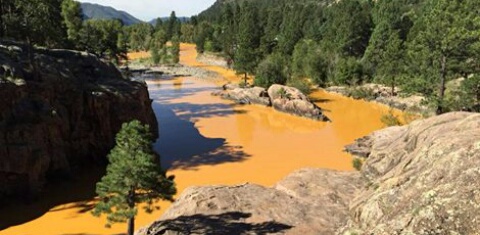
Warning! U.S. EPA tells Navajo People to Waive their Rights - Gold King spill

.


Navajo President warns Navajos not to sign US EPA Waivers of Liability -- the US EPA was responsible for the massive gold mine spill

By Navajo Nation
Censored News
English with French and Dutch translations

WINDOW ROCK, Ariz. - The U.S. EPA has been seeking signatures from the Navajo People on Standard Form No. 95 which, if signed, will waive future claims against the U.S. EPA.
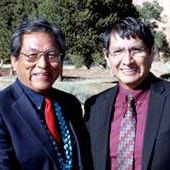
"The Federal Government is asking our People to waive their future rights because they know without the waiver they will be paying millions to our People. This is simple; the Feds are protecting themselves at the expense of the Navajo people and it is outrageous," President Russell Begaye said.

Standard Form No. 95 states the following:

I CERTIFY THAT THE AMOUNT OF CLAIM COVERS ONLY DAMAGES AND INJURIES CAUSED BY THE INCIDENT ABOVE AND AGREE TO ACCEPT SAID AMOUNT IN "FULL SATISFACTION AND FINAL SETTLEMENT OF THIS CLAIM"

All signors will be limited to the specific claims filed, and any future claims for injuries caused by the Gold King Mine will be waived.

"The U.S. EPA has admitted they are at fault and stated this disaster will last for decades. This is unacceptable. The damages to our People will be long term and the Navajo Nation will not settle for pennies. I have consistently stated that the Navajo people deserve to be compensated for every penny lost. I will not allow fine print to let U.S. EPA off the hook. The Navajo people deserve better from the United States government," President Begaye said.
The U.S. EPA has been attending local public hearings across the Navajo Nation, in Shiprock, Aneth and Oljato and passing out Standard Form No. 95 to participants urging them to sign the form. The Navajo Nation Attorney General has advised that Form No. 95 will settle for current claims and preclude all future claims from the spill.
"We are also concerned for our neighbors, and whether this Standard Form No. 95 is being circulated in other communities. This is not just hurting the Navajo People but all those in the Four Corners Region. Think twice before you sign this form, we must hold U.S. EPA fully accountable for their negligence," Vice-President Nez said.

French translation by Christine Prat

ATTENTION! L’AGENCE DE PROTECTION DE L’ENVIRONNEMENT DES ETATS-UNIS DIT AUX NAVAJO DE RENONCER A LEURS DROITS DANS L’ACCIDENT DE LA MINE GOLD KING

On August 12, 2015, in Activités minières, Navajos, by Chris P
Par la Nation Navajo [c.-à-d. le Gouvernement Navajo – NdT]*
12 août 2015
Traduction Christine Prat
WINDOW ROCK, Arizona – L’Agence de Protection de l’Environnement des Etats-Unis (EPA) a tenté d’obtenir des signatures du Peuple Navajo sur le formulaire standard No. 95, lequel, s’il est signé, fera renoncer à des réclamations futures contre l’Agence Fédérale.
image« Le Gouvernement Fédéral demande à notre Peuple de renoncer à ses droits pour le futur, parce qu’ils savent que sans ce renoncement ils devront payer des millions à notre Peuple. C’est simple: les instances Fédérales se protègent aux dépens du peuple Navajo, et c’est scandaleux » dit le Président Begaye.
Le Formulaire Standard No. 95 dit ce qui suit :
« JE CERTIFIE QUE LE MONTANT RECLAME COUVRE SEULEMENT LES DEGATS ET LES BLESSURES CAUSES PAR L’INCIDENT SUS-MENTIONNE ET JE SUIS D’ACCORD POUR ACCEPTER LADITE SOMME EN « TOUTE SATISFACTION ET COMME REGLEMENT FINAL DE CETTE RECLAMATION »
Tous les signataires devront se limiter aux réclamations spécifiques déjà déposées, et devront renoncer à toutes réclamations futures pour des blessures ou problèmes de santé causés par la mine Gold King.
« L’Agence de Protection de l’Environnement des Etats-Unis a admis être en tort et a déclaré que la catastrophe durerait des décennies. C’est inacceptable. Les dommages pour notre Peuple seront à long terme et la Nation Navajo n’acceptera pas d’arrangement pour quelques sous. J’ai systématiquement déclaré que le peuple Navajo mérite des compensations pour chaque sou perdu. Je n’autoriserai pas les petits caractères à épargner l’EPA des Etats-Unis. Le peuple Navajo mérite mieux de la part du Gouvernement des Etats-Unis » dit le Président Begaye.
L’EPA a assisté à des audiences publiques locales dans la Nation Navajo, à Shiprock, Aneth et Olijato, et distribué le Formulaire Standard No. 95 aux participants, en insistant pour qu’ils le signent. Le ministre de la Justice de la Nation Navajo a prévenu que le Formulaire No. 95 réglera les réclamations actuelles et empêchera toute réclamation future pour les suites de la fuite.
« Nous sommes aussi inquiets pour nos voisins, et nous demandons si le Formulaire Standard No. 95 est également distribué dans d’autres communautés. Ceci ne touche pas seulement le Peuple Navajo, mais tous ceux de la Région de Four Corners [‘Quatre Coins’, la frontière entre l’Utah, le Colorado, le Nouveau-Mexique et l’Arizona, qui a été tracée à la règle sur une carte – NdT]. Réfléchissez bien avant de signer ce formulaire, nous devons tenir l’Agence de Protection de l’Environnement des Etats-Unis pour entièrement responsable de sa négligence » dit le Vice Président Nez.
* ‘La Nation Navajo’ peut avoir plusieurs significations: géographiquement, il s’agit du territoire de la Réserve actuelle, politiquement, il s’agit du Gouvernement Navajo, qui ne représente pas toujours l’ensemble de la population concernée…


Home » Nieuws » * WAARSCHUWING! US EPA ZEGT NAVAJO’S DAT ZE HUN RECHTEN MOETEN OPBERGEN- GOLD KING SPILL


Dutch translation by Alice Holemans, NAIS Gazette


* WAARSCHUWING! US EPA ZEGT NAVAJO’S DAT ZE HUN RECHTEN MOETEN OPBERGEN- GOLD KING SPILL
Navajo President waarschuwt de Navajo’s “ontheffing van aansprakelijkheid” van de US EPA NIET te onderteken en. – de US EPA was verantwoordelijk voor het enorme goudmijn-l ek.

Door Navajo Nation
Vertaald door NAIS: www.denaisgazet.be

WINDOW ROCK, ARIZONA – De US EPA probeert handtekeningen op het Standard Form.N° 95 los te krijgen van het Navajo volk. Wanneer zij dit ondertekenen verspelen ze hun rechten en toekomstige schadeclaims tegen US EPA.

“ De federale regering vraagt onze mensen om hun toekomstige rechten op te bergen omdat zij weten dat zij ons anders miljoenen schadevergoeding moeten betalen. Dit is zo simpel; de Feds beschermen zichzelf ten koste van het Navajo volk en dit is schandalig,” zei President Begaye.

Op Standard Form N° 95 staat het volgende:
Ik verklaar dat het bedrag van de vordering enkel de schade zal dekken die door het bovengenoemde incident veroorzaakt zijn en akkoord te gaan met het bovengenoemde bedrag in “volle tevredenheid en definitieve afwikkeling van deze vordering”
Alle ondertekenaars zullen beperkt worden tot de specifieke claims die ingediend werden, en daarmee zullen alle toekomstige claims voor toegebrachte schade, veroorzaakt door de Gold King Mine van de tafel geveegd kunnen worden.

“ De US EPA heeft toegegeven dat zij in fout waren, en verklaard dat deze ramp nog tientallen jaren gevolgen zal hebben. Dit is onaanvaardbaar. De schade aan ons volk zal nog vele jaren voelbaar zijn en de Navajo laten zich niet met een aalmoes afschepen. Ik heb consequent verklaard dat het Navajo volk het verdient om voor elke cent verlies vergoed te worden.
Ik zal niet toestaan dat de US EPA ermee weg kan door ‘de kleine lettertjes’.
Het Navajo volk verdient meer respect van de regering van de Verenigde Staten,” zei President Begaye.

De US EPA was aanwezig bij de lokale hoorzittingen doorheen de Navajo Nation, in Shiprock, Aneth en Olijato, en telkens deelden zij hun Form.N°95 rond aan de deelnemers terwijl zij aandrongen om dit meteen te tekenen.
De Attorney General van de Navajo Nation heeft duidelijk gesteld dat Form.N°95 de huidige schadeclaims zal afwikkelen en alle toekomstige schadeclaims veroorzaakt door het drama zal uitsluiten.

“Wij maken ons ook zorgen over onze buren en of deze Standard Form.N° 95 ook in andere gemeenschappen rondgaat. Dit kwetst niet alleen het Navajo volk maar iedereen in de Four Corners Regio.
Denk twee keer na voor u dit formulier ondertekend, we moeten US EPA aansprakelijk houden voor hun nalatigheid.”

August 11, 2015

Shame on McCain! Protest Thursday Save Oak Flat!


Join us to protest John McCain's giveaway of Oak Flat to Rio Tinto this Thursday!

What: Shame On McCain Protest


When: 9:30am – 11:00am, Thursday, August 13, 2015


Where: 88 E. Broadway Blvd, in front of TEP Headquarters where one of three "private town halls" will take place.

Senator John McCain has so much to be ashamed of: giving away sacred Apache Land at Oak Flat, sponsoring Senate Bill 750 which waives ALL LAWs and gives Border Patrol unlimited authority to wreak havoc on public and tribal lands for 100 miles north of the US/MX border, refusing to meet with constituents who disagree with him, and holding "private town halls" where the public is locked out and big industry is invited in.


Hopi's Owl and Panther Project for Refugee Children Celebrates 20th Anniversary


The Hopi Foundation's Owl and Panther Project for refugee children of torture, violence and displacement, includes children and youths from Iraq, Bhutan, Nepal, Somalia, Ethiopia, and the Congo
By Brenda Norrell
Censored News
The Hopi Foundation's Owl and Panther Program is celebrating its 20th Anniversary, with a second showing of the artwork and sharing of poetry of refugee children at Tucson Museum of Art.
The following article is published in memory of Amy Shubitz, and her work with the Hopi Owl and Panther Program, which allows child victims of torture and displacement to have a creative voice. The Sanctuary Movement gave birth to this program. Before she passed, Amy stood in the church, Southside in Tucson, and turned to me, remembering the thousands of Indigenous Peoples who escaped torture and death in Central America and South America in the 70s and 80s, who passed through this church and were given sanctuary here. It was a powerful moment, one I will never forget. 
The Owl and Panther artwork was first on exhibit in 2013 at the Tucson Museum of Art. Below is the article I wrote of the heart moving exhibit. 
Also, in the news today, Arizona Wildcat has an article on the current exhibit in 2015. http://www.wildcat.arizona.edu/article/2015/08/museum-as-sanctuary-voices-displaced
Museum as Sanctuary: Giving Voice to Tucson's Refugees
By Brenda Norrell
July 17, 2013
Someone is dying on the border today. It is 108 degrees beneath the sun and hotter to the west of here. Here, in the Sonoran Desert, there is always a need for sanctuary, for refuge.
Just north of the border , the Tucson Museum of Art opened a new exhibit, “Museum as Sanctuary: Giving Voice to Tucson’s Refugees.” It is collaboration between the Tucson Museum and the Hopi Foundation’s Owl and Panther Program, where art is medicine for refugee children healing from the trauma of torture and exile.
On the museum walls, the real story of this border, and borders around the world, comes alive in the vivid color of the paintings and the haunting self portraits of refugees. It is dramatic self expression that is in itself a voice for refugees who find solace here. The exhibit is the result of a three year project of the museum and the Hopi Foundation. It is not a single voice, but the voices of 31 individuals.
Epiphanie has painted the Ethiopian flag. Another’s father is in political exile from Chile. There is a painting of a woman fleeing from her burning village. One painting is black, except for the stars in the sky, and shares the dark feelings of the painter.
Still, however, there is also the field of dreams.
Mohammad has painted “Soccer Man.”
Bhagat says, “I plan on being a world famous soccer player.”
In another self portrait, a young woman is blindfolded. Wendy is from Guatemala. “Escaping machine guns, bullets, hunger, running from place to place. Seeing people get killed and sleeping with my shoes on. That was my childhood.”
Nada’s husband was disappeared in Iraq. Sarah, from the Congo, says her favorite animal is the cheetah because it can run faster than the others. These expressions
are the original energies of refugees from all parts of the earth, from a mining town in the Atakama Desert in Chile to Ethiopia, Nepal , Bhutan and other countries.
In a collaborative poem from the children of Owl and Panther, there is a description of a “square mile of heaven,” which includes peanut butter cookies, vegetable curry, mesquite and coming together to solve problems without hurting anyone.
In the handcrafts, there is a magnificent bird fashioned from paper towel and toilet paper rolls, painted with brilliant colors. “It is old from 1,000 years ago. I’ve seen this bird in Iraq,” are the descriptive words.
Anish writes of the story of the Owl and Panther, adapted from a Cherokee legend, which gives the program its name.
“They must look into the dark with the wisdom and vigilant eyes of the owl and panther. The great medicine comes to those who are watchful.”
In the Owl and Panther legend, the plants and animals were asked to stay awake for seven days and nights. Those that were able to do, were given great gifts. On the museum walls, the program shares the teaching that children must stay alert, like the cedar, spruce and pine that stay green all winter. They must look into the darkness with the wisdom and vigilance of the owl and panther, who were given the gift of seeing in the dark night.
Here there is the field of dreams, but in border regions around the world, refugees and migrants fill cells and in the US, they fill private prisons for profit. On the border of Guatemala and Mexico, women, sick and hungry, who have walked across continents are imprisoned with their children in migrant prisons.
Tucson is a place of sanctuary, because here there are people who are awake. On the US Mexico border, there are those that walk in this heat, in this death inducing heat, and search for the bodies along the border. Tohono O’odham human rights activists are among the few who respond to the pleas of families in Mexico or Central America. They walk in this sun, cheating death, and search for the living and dead in the Sonoran Desert. The migrants have often survived the beatings and torture of robbers and kidnappers while walking through Mexico.
In this militarized zone of the border, life is precious, all life, including life beyond these borders. In 2007, protests in Tucson focused on US torture and the role of the US Army Intelligence Center at Fort Huachuca, southeast of Tucson.
The tortures in Abu Ghraib and Guantanamo reveal the same torture techniques that were used in Central America by the Latin military leaders trained by the US at the School of the Americas in Fort Benning, Georgia. The result was the rape, mutilation, disappearance and murder of masses of Indigenous Peoples in Central America in the 1980s.

The School of Americas torture manuals, confirmed publically in 1996, were produced at Fort Huachuca. More recently, soldiers trained at the Fort Huachuca U.S. Army Intelligence Training Center, have gone on to torture at Abu-Ghraib in Iraq and Guantanamo.
Here in Tucson, torture comes full circle.
During the Fort Huachuca protest, the Hopi Foundation Center for the Prevention and Resolution of Violence, which serves refugees and victims of torture, offered a presentation of poetry from its Owl and Panther Program. The Owl and Panther Program began in 1995 with creative writing, giving young victims of torture and exile an opportunity to express themselves through poetry.

Vicki Hernandez, among the youths, said, "You can't just torture a little bit."

"Torture in any form is a crime against humanity."
Years earlier, in December of 2000, Amy Shubitz, director of the Hopi Foundation's Center for the Prevention and Resolution of Violence, insisted that I not miss the poetry readings of the children of the refugees in the Owl and Panther Program. Amy said the project serves torture victims and perpetrators arriving from around the world. She said it grew out of the Sanctuary Movement, which provided shelter to those fleeing persecution, primarily in Central and South America.
At one of these gatherings, speaker Federico Anaya Gallardo, a human rights attorney from Mexico City working closely with the Zapatistas, told the children in
the program, “Take care of the pain. Humans are not animals, not coyotes. We are more like bees or wolves, we cannot live if we are not together."
Frederico shared the story of Eleanor Roosevelt's initiation of the Declaration of Human Rights, as the world was recovering from the horror of the Holocaust.
"We struggle so no one can take our accomplishments away from us," he told the children. "Human rights are for everyone, even those who do not respect them. We respect the rights of our enemies. The difference between a good person and a bad person is the good person works also for the rights of the bad.
"The first rule of human rights is not to remain silent. All witnesses have the duty to say what we saw."
Amy walked with me through a small adobe church and said that more than 10,000 Indigenous Peoples had passed through this church fleeing torture. Amy asked me to tell this story, her story, and I agreed.
Shortly after that, Amy became ill and died in 2003. She never reached old age and the time when we hoped to write this story. When she passed, Marge Pellegrino wrote, “Refugees from Mali, Mauritania, Sudan and Uganda cry with those from Guatemala, Salvador and Honduras, part of the more than 10,600 Amy helped usher through Tucson in the 1980s when they escaped the death squads in Central America.”
Today, in the art of Amy’s beloved Owl and Panther Project, are the words of Tek on the walls of the Tucson Museum of Art.
Love to mix color and show the beauty of the desert,” says Tek. Tek’s colors are wild color, vibrant colors.
Wrapped in these images are the Sonoran Desert itself, the blood red color of the cactus fruit, deep red of the earth, the blue of the water and sky, and the green of the pungent chaparral. There is the yellow of the sun, with its dualities of life giver and life taker.
Now, at the end of the day, the sun has ended its machete blows. The monsoon rain clouds have gathered, providing some shade and promise. With those dark monsoon clouds comes the threat of deadly torrents rushing across the top of the dry baked earth, torrents of rain in the arroyos that carry away people and cars,
mangled with trees and cows.
Meanwhile, on the Tucson Museum wall, a butterfly necklace hangs on the self-portrait of a young woman with long dark hair.
“The butterfly necklace represents happiness and beauty of the worlds,” she writes.
Amy would have liked that.
Poem: Collaboration of Owl and Panther, March 2012
A square mile of heaven,
just what I needed,
windy and loud,
my tummy full of
peanut butter cookies,
going for seconds
of vegetable curry,
the smell of mesquite,
people working together
solving problems together
without fighting,
having fun
lots of little hands,
yowls of laughter,
floating on the wind,
talking our way
through border patrol,
snoring in the van
on the way back home,
a day in that
square mile of heaven,
just what we needed.


The Tucson Museum of Art hosted the exhibition of works created by the Museum as Sanctuary participants entitled Museum as Sanctuary: Giving Voice to Tucson’s Refugees. This exhibition is an opportunity to display works of art—and stories—that highlight culture, community, and identity.
The Museum as Sanctuary Program is a unique partnership with The Hopi Foundation’s Owl & Panther Project and the Tucson Museum of Art. The Hopi Foundation’s Owl & Panther Project works with refugee families in the Tucson area who have been impacted by torture, trauma or traumatic dislocation.  At TMA individuals have focused on the benefits of creative expression through art-making and in-gallery activities.  Participants of the program come from countries all around the world such as Iraq, Bhutan, Nepal, Somalia, Ethiopia, and the Congo to name a few.