Paiute Shoshone Journalist Myron Dewey was a drone activist and filmmaker. Myron was a witness and documented with drones, video and photography the excessive force of militarized law enforcement, and surveillance of TigerSwan, which operated without a license in North Dakota, and other security contractors, at Standing Rock, 2016-2017, during the resistance to Dakota Access Pipeline.
Myron Dewey's Death: No charges filed against the driver who was responsible -- Investigation ongoing
By Brenda Norrell Censored News
Feb. 4, 2022
YOMBA, Nevada -- There have been no charges filed against the driver responsible for the death of Paiute Shoshone journalist Myron Dewey, killed in a head-on collision four months ago. Although the driver of the other vehicle was found at fault, the Nye County Sheriff's Department said the investigation is ongoing.
In the homeland of Wovoka, Myron live-streamed at the Fallon Navy Bombing Range the day before his death. Myron warned of the pending expansion of the bombing range, and the new lithium mining here in Paiute Shoshone homelands.
In the fatal accident, the driver of a larger truck, a 2017 Toyota Tacoma truck, pulled into Myron's lane on Ione Road, an isolated dirt road near Yomba, hitting Myron's smaller SUV head-on.
The head-on crash resulted in Myron's death two hours after impact on September 26, 2021. A family member living nearby, listed as the next of kin, was able to reach the site and be with Myron during his final time.
The driver of the Toyota truck, John David Walsh of Reno, was conscious after the crash and was airlifted to a Reno hospital.
The Nye County Sheriff's Department told Censored News on Thursday that the investigation is ongoing.
Nye County Sheriff's Office Administrative Tech Julie Nicholson told Censored News, "This is currently an active investigation and I can’t release further information until it is completed. Please feel free to check in at a later time."
Censored News asked Nye County Sheriff's Department if any charges have been filed against Walsh. Walsh was found to be at fault by the Nevada Highway Patrol in its accident report.
Censored News also asked Nye County if the blood test was completed on Walsh and what the results were. The response on Thursday was that the investigation is ongoing.
Nye County Sheriff Officer RJ Ramirez wrote in his accident report:
"Looking at the accident scene you could that John was headed northbound when John went left side of the road hitting Myron. Both vehicles came to a complete stop upon impact. Both vehicles sustained substantial damage to the driver's side front ends."
Myron's final resting place is in his home community of Walker River Paiute. It is also the final resting place of Wovoka.
Myron was a well-known drone activist and filmmaker, who documented the militarized brutality and surveillance at Standing Rock during the resistance of Water Protectors to the Dakota Access Pipeline. Myron's photos and videos captured TigerSwan and other security operatives, the excessive militarized force of sheriffs' deputies from across the United States, and the surveillance technology at Standing Rock in 2016 and 2017.
Myron: The Day Before
Myron was widely known as a Water Protector at Standing Rock, who carried out drone surveillance of militarized law enforcement during the defense of the water as construction was underway of the Dakota Access Pipeline in North Dakota, threatening the water of millions.
The bombing range, in central Nevada, is used by the Navy Seals for the bombing, ground maneuvers, and electronic warfare, according to the U.S. Navy.
Although large-scale expansion is now being pushed, Native people are opposed to the massive bombing range expansion. Myron and Native leaders in the region have been speaking out and battling this expansion.
Returning to his childhood homeland at Yomba on Saturday, the day before the fatal crash, Myron said live on social media during the live stream, "This is what we grew up around, the military-industrial complex."
Myron said the military was flying over sacred places. Describing the destruction of the sacred here, he said both mining and the bombing ranges have caused the desecration of sacred places.
Myron warned of the lithium mining now targeting Thacker Pass in northern Nevada, which is a Massacre site.
Myron said when he hears, "Thank you for your service," another image comes to mind: "Killing, rape, genocide."
"I am a survivor of a mass genocide across the United States."
Pointing out that genocide is being carried out around the world, he said, "In Nevada it is still fresh."
An Avenger missile launcher live-streamed in Myron Dewey's broadcast on Saturday, before he was killed in a car crash on Sunday. This Avenger in the Nevada desert range of his homeland comes after another Avenger was positioned in the militarized police force, during the resistance to the Dakota Access Pipeline, at Standing Rock five years ago.
At Standing Rock, Myron and the Water Protectors witnessed an Avenger missile launcher. On that Saturday, now five years after Standing Rock, in the Nevada desert at the bombing range, Myron filmed another Avenger and pointed out that it is protecting communication equipment.
Myron said his video is to warn his grandchildren of this corporate greed, and the greed that demands power and military force.
Speaking on climate change, he said there were not enough pine nuts to feed the people during the ceremony this year.
Myron also speaks of the green-washing now targeting Nevada, and the need to protect and defend the land and water.
"Take a breath," he said, "Take a moment and appreciate what you have."
As a journalist, drone activist and filmmaker at Standing Rock, Myron was a witness and documented the excessive force and brutality of private contractors and law enforcement. These photos were posted by Myron at Standing Rock, 2016 -- 2017, showing the sniper on the hill, one of the surveillance helicopters over the camp, the bridge, and the militarized tanks.
At Standing Rock, Myron Dewey was a witness
Myron Dewey was a journalist, drone activist and filmmaker. He was also a witness.
Myron's documentation at Standing Rock includes the excessive force of militarized police, resulting in the critical injuries of Water Protectors. The cases continue in court.
Myron photographed TigerSwan and other security contractors, the surveillance helicopters and the spy technology which likely disrupted Water Protectors' cell phones and illegally accessed their calls. As the court cases continue, it is clear that Myron's documentation is valuable evidence.
Morton County stated that TigerSwan provided the 'intelligence' for the fusion center of multiple law enforcement agencies. North Dakota said TigerSwan operated without a license. North Dakota's response team said they were unprepared for the use of drones by Water Protectors, which includes Myron's drones, and did not know what to do about the drone surveillance carried out by Water Protectors.
The Intercept, in an expensive legal battle, went to court. Now, a state judge says that thousands of TigerSwan spy documents will be released. Energy Transfer, Dakota Access Pipeline's owner, was in court too, trying to halt the release of the spy documents.
Perhaps some cases will eventually be heard by the U.S. Supreme Court. We hope so. We hope there will be justice. Myron was killed in a head-on collision when a driver in a truck pulled into his lane on an isolated dirt road near Yomba and killed him.
More:
Censored News: Nye County releases accident report on the death of Myron Dewey
Top photo: Screenshot by Censored News from Myron's video
Article copyright Brenda Norrell, may not be used without permission.
Myron's Video Nov. 20, 2016
The attack by militarized law enforcement on unarmed Water Protectors at Standing Rock on Nov. 20, 2016, resulted in critical injuries. The cases continue in court.
Myron Dewey's video: Myron said, "Police and fireman use: Percussion grenades Mace Rubber bullets Water Canon."
Article copyright by Brenda Norrell, Censored News. This content may not be used for news, dissertations, books, films or any other purpose, without written permission from the author. The photos and videos are the property of the photographer or his estate.
The Shift from Authentic Journalism to Armchair Plagiarism
By Brenda Norrell
Censored News
The shift from authentic journalism, to armchair plagiarism, went undetected for years. At the newspaper Indian Country Today, where I was a staff reporter, the shift began after the newspaper was purchased by new owners in New York State, in the late 1990s.
Reporters who actually went out to cover the news were driven into financial ruin while paying our own expenses and then fired. Those who never left their easy chairs continued in their role as plagiarizers.
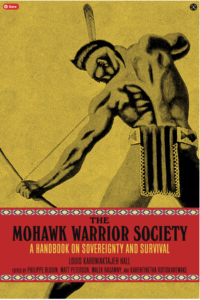
MNN. FEB. 1, 2022. This amazing book contains new oral history by key figures of the Rotisken’rhakéhte’s revival in the 1970s, and tells the story of the Warriors’ famous flag,
their armed occupation of Ganienkeh in 1974, and the role of their kaianerekowa constitution, the Great Peace, in guiding their commitment to freedom and independence.
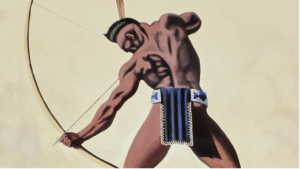
The first collection of its kind, The Mohawk Warrior Society: A Handbook on Sovereignty and Survival uncovers a hidden history and paints a bold portrait of the spectacular experience of Kanien’kehá:ka survival and self-defense. In this anthology, Mohawk Warriors tell their own story with their own voices and serve as an example and inspiration for future generations struggling against the environmental, cultural, and social devastation cast upon the modern world. This 320-page book also has a stunning collection of over 40 full-color pages of paintings, artwork, and flyers by Louis Karoniaktajeh Hall. Learn more about the book and contributors below. Preorder your copy, check out all the rewards, and please consider choosing a “donation” option or add-on so we can send free copies to the kanien’keha:ka kahnistensera (Mohawk Mothers) who are based in Kahnawake to get them out into the world. Thanks in advance for your help getting this important book into the world!
The first collection of its kind, this anthology by members of the Mohawk Warrior Society uncovers a hidden history and paints a bold portrait of the spectacular experience of Kanien’kehá:ka survival and self-defense. Providing extensive documentation, context, and analysis, the book features foundational writings by prolific visual artist and polemicist Louis Karoniaktajeh Hall (1918–1993)—such as his landmark 1979 pamphlet, The Warrior’s Handbook, as well as selections of his pioneering artwork. This book contains new oral history by key figures of the Rotisken’rhakéhte’s revival in the 1970s, and tells the story of the Warriors’ famous flag, their armed occupation of Ganienkeh in 1974, and the role of their constitution, the Great Peace, in guiding their commitment to freedom and independence. We hear directly the story of how the Kanien’kehá:ka Longhouse became one the most militant resistance groups in North America, gaining international attention with the Oka Crisis of 1990. This auto-history of the Rotisken’rhakéhte is complemented by a Mohawk history timeline from colonization to the present, a glossary of Mohawk political philosophy, and a new map in the Kanien’kéha language. At last, the Mohawk Warriors can tell their own story with their own voices, and to serve as an example and inspiration for future generations struggling against the environmental, cultural, and social devastation cast upon the modern world.
The book is by Louis Karoniaktajeh Hall, Kahentinetha Rotiskarewake, Philippe Blouin, Matt Peterson, and Malek Rasamny.
Praise
“While many have heard of AIM & the Red Power movement of the ’60s and ’70s, most probably do not know the story of the Mohawk warriors and their influence on Indigenous struggles for land and self-determination, then and now. These include the 1974 Ganienkeh land reclamation (which still exists today as sovereign Mohawk territory), the 1990 Oka Crisis (an armed standoff that revived the fighting spirit & warrior culture of Indigenous peoples across North America), and the Warrior/Warrior Unity flag, a powerful symbol of Indigenous resistance today commonly seen at blockades & rallies. The Mohawk Warrior Society tells this history in the words of the Mohawks themselves. Comprised of interviews with some of the key participants, as well as The Warrior’s Handbook and Rebuilding the Iroquois Confederacy (both written by Louis Karoniaktajeh Hall, who also designed the Warrior/Unity flag), this book documents the important contributions Mohawk warriors have made to modern Indigenous resistance in North America.” —Gord Hill, Kwakwaka’wakw, author of 500 Years of Indigenous Resistance and The Antifa Comic Book
“This clear and stimulating book had me on edge from beginning to end. No matter who we are we can learn from these histories of the Iroquois Confederacy as related by its present-day members, lessons pertaining to non-hierarchical political organization and the care of the land. In the age of Black Lives Matter this work makes the case for autonomous life-spaces free of US or Canadian state control.” —Michael Taussig, Class of 1933 Emeritus Professor of Anthropology, Columbia University, City of New York
“This book is a window into a world seldom glimpsed by Europeans and their settler descendants. Revealed to us is the inner vision of First Nation liberation movements that emerged from forms of government within which group autonomy and individual freedom have been cherished for thousands of years. Despite inspiring the US Constitution, these confederacies were heavily repressed and forced underground. At the end of the 1960s, the Warrior Society was rekindled by seven original members who vowed to defend their people against state violence depriving them of their rights. Overnight, they were joined by hundreds throughout Mohawk lands, then thousands all over the Iroquois Confederacy, with supporters from the East Coast to the West Coast in North and South America. The Warrior Society emerged within a broader cultural renaissance that imbued traditional matrilineal cultures with new vitality. As part of the global awakening of the 1960s, they were more popularly rooted than AIM or the Black Panthers. Their Great Law provides an ecological and democratic framework for peaceful coexistence of all peoples.” —George Katsiaficas, author of The Subversion of Politics: European Autonomous Social Movements and the Decolonization of Everyday Life and The Global Imagination of 1968: Revolution and Counterrevolution
“This book takes the reader behind the masks of the Mohawk Warrior Society, exploring the deep roots of the controversial Indigenous movement that precipitated the 78-day standoff at Oka in 1990. Offering unprecedented oral histories, concept glossaries, and transcripts of internal documents, this auto-history presents the perspective of the Rotisken’rhakéte in their own words. All readers interested in contemporary Indigenous resistance to colonialism will find much of value in this unique compendium that goes beyond the well-known symbols to explain their origins and meaning.” —Jon Parmenter, Associate Professor of History at Cornell University, and author of The Edge of the Woods: Iroquoia, 1534–1701
“The Mohawk Warrior Society is an excellent collection of stories about colonialism and resistance in Turtle Island—a must read for settler allies seeking to learn and unlearn the histories of colonial violence that structure our contemporary relations. In providing vital histories of state repression and Indigenous resilience, the teachings in this volume can inform all contemporary efforts working towards decolonialization.” —Jeffrey Monaghan, Criminology and Criminal Justice, Carleton University, co-author of Policing Indigenous Movements: Dissent and the Security State
“I’ve been blessed because I came to know the Unity Flag by seeing Oka on TV when I was young. When I got married they wrapped us with the flag, it has been a part of all the spiritual ceremonies that I went to, it has been present at every blockade. Along with the Women’s Warrior Flag, it’s a symbol that’s embedded in our spirit, and it’s always been an inspiration. Louis Hall, Ganienkeh, and The Warrior’s Handbook were way ahead of their time, back when people were just starting to fight back, fighting to get their land back. The intention of The Warrior’s Handbook and Unity Flag was for all Indigenous nations throughout the hemisphere and really the whole world to unite, and first and foremost to fight. That’s why this book is so important, it’s something that Louis Hall has gifted to all red nations.” —Kanahus Freedom Manuel, Indigenous land defender, Secwepemc Women Warrior Society, Tiny House Warriors
“This is a compelling account of the political struggle for the return of indigenous thought through the words of those Kaianerehkó:wa Mohawks affiliated with the original 1970s Warrior Society. It offers a trenchant and witty critique of settler colonialism together with a body of teachings aimed at re-establishing balance and harmony. It is for the Kanien’kehá:ka, the indigenous peoples of Turtle Island, and all people troubled by the state of our relations to each other and to the beings of the land that make us as well as those who care for it.” —Eduardo Kohn, Associate Professor of Anthropology at McGill University, and author of How Forests Think
About the Contributors
Louis Karoniaktajeh Hall (1918–1993) was a prolific Kanien’kehá:a painter and writer from Kahnawake, whose work continues to inspire generations of indigenous people today. A man of all trades, Karoniaktajeh worked as a butcher, a carpenter, and a mason. Initially groomed for a life in the priesthood, Karoniaktajeh (on the edge of the sky) began his life as a devout Christian before later turning against what he saw as the fallacies of European religion, and deciding to reintegrate himself into the traditional Longhouse and help revive “the old ways.” Appointed as the Secretary of the Ganienkeh Council Fire, he became a prominent defender of indigenous sovereignty, and was instrumental in the reconstitution of the Rotisken’rhakéhte (Mohawk Warrior Society). His distinctive artwork includes the iconic Unity Flag, which still symbolizes indigenous pride across Turtle Island (North America). His legacy as a revivor and innovator of traditional Mohawk culture includes his works The Warrior’s Handbook (1979) and Rebuilding the Iroquois Confederacy (1980). Both these texts, which served during their time as a political and cultural call to arms for indigenous communities across Turtle Island, were initially printed by hand and distributed in secret.
Kahentinetha Rotiskarewake is a Kanien’kehá:ka from the Bear Clan in Kahnawà:ke. Initially working in the fashion industry, Kahentinetha went on to play a key role as speaker and writer in the indigenous resistance, a role which she has fulfilled consistently for the last six decades. During this time she witnessed and took part in numerous struggles, including the blockade of the Akwesasne border crossing in 1968. She has published several books including Mohawk Warrior Three, and has been in charge of running the Mohawk Nation News service since the Oka Crisis in 1990. She now cares for her twenty children, grandchildren, and great-grandchildren. Kahentinetha means “she who is always at the forefront.”
Philippe Blouin writes, translates, and studies political anthropology and philosophy in Tionni’tio’tià:kon (Montreal). His current PhD research at McGill University seeks to understand and share the teachings of the Tehiohate (Two Row Wampum) to build decolonial alliances. He has published essays in Liaisons, Stasis, and an afterword to George Sorel’s Reflections on Violence.
Matt Peterson is an organizer at Woodbine, an experimental space in New York City. He is the co-director of The Native and the Refugee, a multi-media documentary project on American Indian reservations and Palestinian refugee camps.
Malek Rasamny co-directed the research project The Native and the Refugee and the feature film Spaces of Exception. He is currently a doctoral candidate in the department of Social Anthropology and Ethnology at the Ecole des hautes études en sciences sociales (EHESS) in Paris.
Details
The Mohawk Warrior Society: A Handbook on Sovereignty and Survival Editors: Louis Karoniaktajeh Hall • Edited by Kahentinetha Rotiskarewake, Philippe Blouin, Matt Peterson, and Malek Rasamny Series: PM Press ISBN: 9781629639413 Published: 05/24/2022 Format: Paperback Size: 6×9 Pages: 320 Subjects: SOCIAL SCIENCE / Native American Studies • HISTORY / Indigenous Peoples of the Americas • POLITICAL SCIENCE / Colonialism & Post-Colonialism
Table of Contents
Part I. 1. An Introduction to Sovereignty and Survival Part II. An Oral History of the Warrior Society 1. Tekarontakeh 2. Kakwirakeron 3. Kanasaraken 4. Ateronhiatakon Part III. Rekindling Resistance 1. Basic Principles of the Kaianerekó:wa, by Kahentinetha (1997) 2. The Iroquoian Use of Wampum, by Ateronhiatakon (1988) 3. I Am A Warrior, by Karhiio Part IV. On Karoniaktajeh 1. Who was Karoniaktajeh?, by Kahentinetha 2. Karonhiaktajeh Remembered Part V. Karoniaktajeh’s Writings 1. Ganienkeh Manifesto (1974) 2. Warrior’s Handbook (1979) 3. Rebuilding the Iroquois Confederacy (1985) Part VI. Appendices 1. Mohawk Warrior History Timeline 2. Skakwatakwen Concept Glossary 3. Place and Peoples Names 4. Pronunciation Guide
Detail of the reversible benefit bandana
All proceeds go to Resist Line 3–Camp Migizi. The bandanas are union made and printed with the text:
Water is Life / Resist all pipelines
Land Back / Burn down settler colonialism
Designed by Mantis, a Diné Two-Spirit Tattoo Artist living and fighting alongside Migizi on the frontlines of Line 3. Working towards decolonization and land back baybeeee.
We think karonhiaktajeh Louie Hall would love the words in this song: “Louie, Louie, we gotta go. yeah, yeah, yeah, yeah, yeah!”