Indigenous Peoples and Human Rights

August 4, 2026

Tohono O'odham Nation Presents Case Against Border Wall


Tohono O'odham Nation Presents Case Against Border Wall

By Brenda Norrell, Censored News, August 3, 2026

SELLS, Arizona -- The Tohono O'odham Nation said attorneys argued a strong case in opposition to the construction of a border wall on O'odham land, pointing out that only Congress can deplete its land. The Nation's attorneys in Washington are seeking a preliminary injunction to prevent the border wall construction by the U.S. Department of Homeland Security.

"Only Congress has the authority to diminish the reservation, not DHS," the Tohono O'odham Nation said in a statement on Monday. "Even the law that authorized construction did not include any explicit approval from Congress to take the Nation's land."

August 3, 2026

'Contesting Surveillance Infrastructure on Indigenous Lands' Ophelia Rivas, Tohono O'odham, Co-authors Book on Surveillance

Photo credit: Contesting Surveillance Infrastructure on Tohono O’odham Je’ved by Ophelia Rivas, Caitlin Blanchfield, and Nina Kolowratnik,

Contesting Surveillance Infrastructure on Indigenous Lands

Ophelia Rivas, Tohono O'odham, is co-author of a new book revealing border surveillance

By Ophelia Rivas, Caitlin Blanchfield, and Nina Kolowratnik


The broad slope and rounded crest of O’ks Tak’am Do’ak outline the profile of a woman sitting and facing the west. Her name is O’ks Ta’kam. She is part the O’odham origin story, passed down through oral history. She sits there vigilant, a warrior protecting, and will warn the people when a catastrophic event will occur. When this event comes, she will stand and gather the smallest creatures in her skirt to protect them.

The mountain forms part of the Tak’Va’Vak range which cuts through Tohono O’odham land, joining peaks like Han’a-mek and Ma’mke-mad. These mountains are known as a place to gather sweet fruits from the chu-chues (organ pipe cactus). They are home to caves, springs, and seasonal water holes. Each year ceremonies and hunts take place all across the Tak’Va’Vak, and trails lead through the mountain passes, connecting the springs at A’al Va’pai (Quitobaqito) to O’odham villages in Sonora, and leading all the way to the salty Ge-Ka-ch’k (Sea of Cortez). The mountains hold deer, mountain rams, javalina. They hold burial places. Medicines grow there. In the evening they are especially beautiful, bathed in crimson.


'Significant Impact' is now being released.

Ophelia Rivas, Tohono O'odham
I think that land has always been defined by Europeans as property so they have a different perspective on land, and from that perspective it’s very difficult to understand. And I’m saying that just from seeing the Border Patrol and how they react when we talk about our land and how we’re connected to it. It just seems to not make a difference to them that it’s of great concern to us. It’s very difficult for them to understand and therefore they just continue to disrespect all the things we’ve been telling them not to disturb, like our caves on the mountain. They removed pottery that has human remains or ceremony items, they removed them from the mountains. And it’s very disturbing to us, people who have continued to follow our way of life and live our ceremony life. It affects us, but it also affects people who don’t follow that tradition.

Essay excerpted from
This essay is excerpted from Significant Impact: Contesting Surveillance Infrastructure on Tohono O’odham Je’ved by Ophelia Rivas, Caitlin Blanchfield, and Nina Kolowratnik,

urbanNext (August 2, 2026) Contesting Surveillance Infrastructure on Indigenous Lands. Retrieved from https://urbannext.net/significant-impact-contesting-surveillance/.

Ophelia Rivas website is https://www.oodhamrights.org/

Copyright By Ophelia Rivas, Caitlin Blanchfield, and Nina Kolowratnik

August 2, 2026

Paddle to Nisqually, Tribal Canoe Journeys 2026


Saturday, August 1, 2026. Photo courtesy Nisqually Tribe

Saturday, August 1, 2026. Photo courtesy Nisqually Tribe

Courtesy Nisqually Tribe

 Paddle to Nisqually, Tribal Canoe Journeys 2026


Paddle To Nisqually 2026, Censored News, July 30, 2026


LIVESTREAM https://tinyurl.com/3tk75h56
Dates: July 31st to August 5th, 2026

Watch on YouTube https://www.youtube.com/playlist?app=desktop&list=PLWMEvm2-225s

The 2026 Paddle to Nisqually Medicine Creek Potlatch is hosted by the Nisqually Tribe. Canoe Journey 2026, Paddle to Nisqually Medicine Creek Potlatch, continues an inter-tribal celebration and annual gathering of Northwest indigenous nations. The annual tribal journey in the Pacific Northwest region was sparked by the Paddle to Seattle in 1989 as part of Washington State’s Centennial celebration.

Many Canoe Journeys have been held since 1989, when pullers (the preferred term because of the pulling motion on the paddle) from Canada, Alaska and Washington voyaged from their home communities to sites in the Pacific Northwest. The Canoe Journey has grown to include over 100 canoes and the participation of Canoe Families from other native canoe cultures, including Native American tribes, First Nations peoples, Alaska Natives, Inuit, Maori, Native Hawaiians, and other indigenous peoples from across the world.

Courtesy Nisqually Tribe

Courtesy Nisqually Tribe


August 1, 2026

Mohawk Nation News 'Rekindling Resistance'


REKINDLING RESISTANCE

Posted on August 1, 2026 by Kan1enkehaka
Mohawk Nation News
https://mohawknationnews.com/blog/2026/08/01/rekindling-resistance/


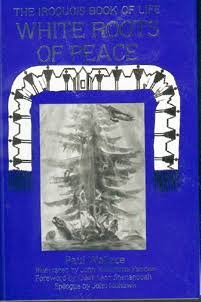
GREAT WHITE ROOTS OF PEACE

MNN. July 26, 2026. To acquire peace, Dekanawida did not base his ideas on faith and hope. He described a giant white pine that reached into the sky, symbolizing the sisterhood and brotherhood of all human beings. At its roots were the five nations of the original Rotinonhsión:ni Confederacy. A structure was designed to make the individual the center of power so that no dictator could seize control. The people met to discuss issues and came to an understanding. The governmental structure included the separation of powers of the judicial, executive and legislative branches. The Rotinonhsión:ni nations were made up of democratic social units to form a peaceful confederacy of all Indigenous people. After the upheaval of Indigenous culture by the European invasion, the Iroquois and many other Indigenous nations, such as the Aztec, Blackfeet, Sioux, Hopis, and others had the same ideas about the return of Indigenous thought.