Indigenous Peoples and Human Rights

April 14, 2014

Robyn Jackson 'What water really costs' Dine' Grassroots defend water at Tucson conference

What Water Really Costs: Diné Grassroots at Water Conference in Tucson

Photos and article by Robyn Jackson
Censored News
Dutch translation NAIS

TUCSON -- How would you define “quality of life?" For a group of Navajo water rights advocates, “quality of life” includes respect, equality, health, and consideration. Yet, at this year’s Water Resources Research Center (WRRC) Annual Conference, held in Tucson, Arizona, on April 7, 2014, the phrase had a very different meaning for representatives of the cities that make up central and southern Arizona. These cities have long grown accustomed to abundant access to good water through the Central Arizona Project (CAP), a 336 mile canal that draws water from the Colorado River, transporting it across central and southern Arizona.  It remains the most expensive water project constructed in the U.S.

I attended this conference with a group of Navajo grassroots people.  We understand that respect for water is respect for life, yet water is blatantly disrespected and taken advantage of in cities such as Phoenix, Tucson, Scottsdale, and Fountain Hills, to provide wasteful and extravagant luxuries. Outside many buildings are outdoor spray mists that quickly evaporate in the desert heat. The town of Fountain Hill is known for its fountain that spews water 560 feet in the air, every hour for 15 minutes. An aerial view reveals the number of backyard swimming pools and large irrigation fields. All of this and much more is ongoing in the Sonoran desert. How is this infrastructure and lifestyle sustainable? How much longer can this go on, especially given increasingly drier climate predictions due to global warming?

Interestingly and revealingly, a related concern was indeed brought up at the Water Resources Research Center conference. One individual commented on how western states are receiving less precipitation and eastern states have seen increased snow and rainfall, so perhaps southern Arizona should acquire more water from those states. This comment illustrates how extracting water from elsewhere is an easy thought process for much of central and southern Arizona’s population. CAP has made this population unaccountable to their surroundings.

There appears to be a general lack of awareness of the impact of unsustainable water imports on everyone else. Consideration for other people and communities is lacking. There were a few exceptions, some participants of the conference expressed concern and advocated for water conservation and sustainability. Yet there is a great deal that still needs to happen for true equality and for social and environmental justice. For example, at the beginning of the conference and throughout, it was made clear by many speakers that water for revenue receives first priority. Everything else comes afterwards. Water for people, water for our health and environment all comes after turning a profit from water. Industries like power plants are already guaranteed water use. There was no discussion on how these entities and other industries could lessen their water consumption. There was only limited discussion on conservation and recycling methods.

To speak to this great disparity with water allocation and usage were a group of Navajo grassroots representatives who traveled to Tucson and attended the one day conference, which cost $125 per person to attend. This Navajo group had to be persistent in securing a presentation slot for one Diné Water Rights activist, who was eventually included on a panel. She spoke about the water realities of her community on the Western side of the Navajo reservation, though it is similar across all of the reservation. 

The communities of the Black Mesa area have long witnessed the drying up of natural springs that are the result of the massive draw-down of the Navajo aquifer from Peabody coal mining operations.  
This mine provides coal to Navajo Generating Station, which then relays power to the Central Arizona Project. This means Navajos pay twice for southern Arizona's cheap water:  Navajo rights to the Colorado River are ignored, then Navajo land and groundwater are degraded to provide the cheap energy needed to pump that water over the mountains.  Navajo livelihoods and health are compromised.  None of CAP benefits the Navajo people.
At noon four other Diné water rights activists were allowed the opportunity to comment during lunch. The first speaker described the extreme difference between living conditions in central and southern Arizona, and on the Navajo Nation. He asked conference participants if a swimming pool in every backyard was necessary. Another grassroots activist brought up the exclusion of Native American representation in the 1922 Colorado River Compact. Export of our region’s water was already planned long before we were allowed a place at the table.

One Navajo Nation government representative spoke as well. This was Jason John, who is with the Navajo Department of Water Resources. Additionally, former Navajo council delegate George Arthur, now member of the Colorado Water Users Association, presented. While these individuals act as liaisons for Navajo and tribal interests, their presentations were lacking. Primarily their talk addressed barriers the Navajo people face in acquiring access to the Colorado River. No solutions or assertion of our water claims was presented. With such presentations, it was difficult to have confidence in their ability to be the best advocates for our people.
Confidence was already suffering after another Navajo government representative, Navajo Nation Department of Justice attorney Stanley Pollack, gave a lecture hosted by the University of Arizona, titled: “Little Colorado River: Failure of the Settlement and the Triumph of Social Media.” Pollack claimed that the most recent attempt to minimize Navajo water rights, SB2109, failed because grassroots groups spread misconceptions through social media. After much published resentment by Diné water rights activists, at not being allowed to rebut Pollack’s lecture, the University of Arizona later hosted a panel of Navajo and Hopi water rights activists to present their perspective on SB2109.  Every step of the way our water warriors have had to persist in getting their voices included.

Diné Water Rights representatives strongly reminded conference participants, many of whom represented utilities, industry, and federal, state, and city governments, and everyone else who could afford the $125 registration fee, that they are the world’s privileged. While they divvy up how the Colorado River will be allocated and to what purpose and benefit, the rest of us have been making do with what little we receive or don’t receive. More than anything else, our grassroots representatives reminded the other half, the privileged and elite, that we are here and we will speak for ourselves. We will fight for our rights, our future, and we will most certainly resist continued exploitation and injustice against our lands, water and people. They cannot expect the rest of us to make concession after concession while they continue to live extravagantly, taking more than they need and sacrificing the

Navajo people and others quality of life for their leisure.

Lakota Voice 'Rosebud Sioux Tribe counts first coup on megaloads'


Rosebud Sioux Tribe Counts First Coup on Megaloads


by Ann-erika White Bird
Lakota Voice
Tonight, a small number of Sicangu Lakota Tribal members took a stand against the megaloads rolling through reservation lands. Lakota Voice arrived, after being passed by one megaload headed north on Highway 83, a common thoroughfare for semi-trucks traveling from Nebraska.
Gary Dorr, a part of the Oyate Wahacanka Woecun – Shielding the People, and enrolled member of the Nez Perce, was on the scene at the Rosebud Casino gas station. Darwin Spotted Tail, Dustin Running Horse and other members of the Sicangu Lakota Oyate monitored the situation until the Rosebud Sioux Tribal Police arrived.

Mohawk Nation News 'Mohawk--Russia 1710 Treaty Belt'


MOHAWK-RUSSIA 1710 TREATY BELT


mnnlogo1


MNN. Apr. 13, 2014. In 1710 the four chiefs from the [Iroquois Confederacy] Rotino’shonni:onwe went to the Court of Queen Anne in London to make peace treaties with the 13 European monarchical families. It was the first International Conference on World Peace called by our people to make the same kind of peace treaties we had with each of our nations on Great Turtle Island. Our chiefs represented all our friends and allies. They gave each monarch a Guswentha/Two Row Wampum Belt. Peter the Great of Russia accepted it. This treaty belt was recently found in a museum  in St. Petersburg, Russia.
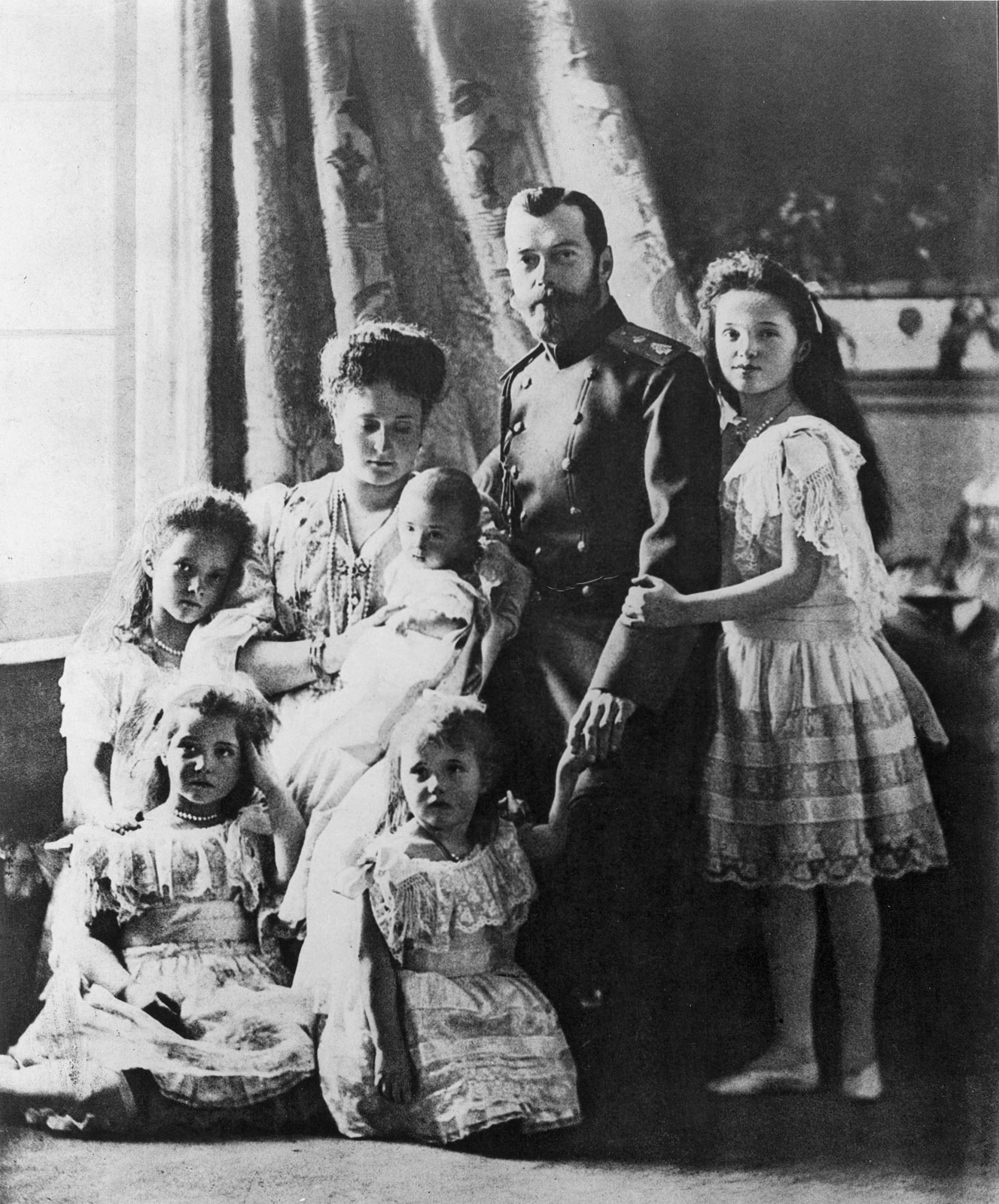
Nicholas II of Romanovs set up Permanent Court of Arbitration 1899.
Nicholas II of Romanovs set up Permanent Court of Arbitration 1899 for world peace and to stop war.
Background: Rotino’shonni:onwe were asked to spread the peace. When the original United Nations was formed, they uprooted the biggest white pine tree, buried their weapons underneath for all time, never to be used against each other. Then it was replanted.  
The Roman Empire [the Vatican] has never set foot in Russia. The Vatican sent the Jesuits to set up the genocide of all Indigenous in the 1500s, murdering over 150 million. They went west into Europe but not east.
Rotino'shonni:onwe chiefs on world trade mission.
Rotino’shonni:onwe chiefs of Great Turtle Island on world peace mission, London 1710.
Russia never breached the treaty as they were never part of the Vatican. They opposed the genocide of our people that was carried out by the Jesuits on behalf of the Vatican. In 1776 the Vatican carried out the first “false flag”, the American Revolutionary War, to stop world peace, which already existed on Great Turtle Island and was starting to spread to  Europe.
Gaucho Jesuit Francis ready to leads his troops to annihilation.
Gaucho Jesuit Francis leads his  child raping followers to annihilation.
In 1899 Nicholas II of Russia set up the Permanent Court of Arbitration for world peace and to end war. In 1917 the Romanov family was murdered by the machinations of the banking families of Europe [World War I].
Your visits are in our communal memory.
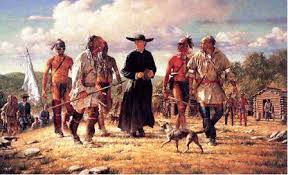
“Black Robe, your genocide is in our communal memory”.

The Mohawks are going to nuke the Vatican and all their corporate banking structures. We will take them down for good by putting them on trial for genocide, before the Permanent Court of Arbitration. Jesuits and their top general, the Pope, the military arm of the Vatican that keeps the world under military rule, will be dissolved. It is time to repolish the covenant chain between the Rotino’shonni:onwe and Russia that this belt represents.
As our Cherokee brother, Elvis, warns the people at the Vatican, “Your walls are starting to crumble”.  Elvis Presley. “Joshua Fought the Battle”. skull w arrow
MNN Mohawk Nation News kahentinetha2@yahoo.com For more news, books, workshops, to donate and sign up for MNN newsletters, go towww.mohawknationnews.com  More stories at MNN Archives.  Address:  Box 991, Kahnawake [Quebec, Canada] J0L thahoketoteh@hotmail.com for original Mohawk music visit thahoketoteh.ws
“US Orwellian tool VOA finished in Russia”.                                                                       “Karl Marx and the Iroquois Constitution”.                                                                           US Continental Congress meet Iroquois Confederacy. The American Revolutionary  War was to chop down the 3,300 year old tree of peace at Onondaga.  ‘Continental Congress meet Iroquois Confederacy.’ 


Snowden revelations lead to Pulitzer Prizes for courageous media

A Vindication for the Public: The Guardian and Washington Post Win the Pulitzer Prize
April 14, 2014
I am grateful to the committee for their recognition of the efforts of those involved in the last year's reporting, and join others around the world in congratulating Glenn Greenwald, Laura Poitras, Barton Gellman, Ewen MacAskill, and all of the others at the Guardian and Washington Post on winning the Pulitzer Prize for Public Service.
Today's decision is a vindication for everyone who believes that the public has a role in government. We owe it to the efforts of the brave reporters and their colleagues who kept working in the face of extraordinary intimidation, including the forced destruction of journalistic materials, the inappropriate use of terrorism laws, and so many other means of pressure to get them to stop what the world now recognizes was work of vital public importance.
This decision reminds us that what no individual conscience can change, a free press can. My efforts would have been meaningless without the dedication, passion, and skill of these newspapers, and they have my gratitude and respect for their extraordinary service to our society. Their work has given us a better future and a more accountable democracy.
----------------------------------------
The 2014 Pulitzer Prize winners:
JOURNALISM:
Public Service: The Guardian US and The Washington Post
Breaking News Reporting: The Boston Globe staff
Investigative Reporting: Chris Hamby of The Center for Public Integrity, Washington, D.C.
Explanatory Reporting: Eli Saslow of The Washington Post
Local Reporting: Will Hobson and Michael LaForgia of the Tampa Bay Times
National Reporting: David Philipps of The Gazette, Colorado Springs, Colo.
International Reporting: Jason Szep and Andrew R.C. Marshall of Reuters
Feature Writing: No award
Commentary: Stephen Henderson of the Detroit Free Press
Criticism: Inga Saffron of The Philadelphia Inquirer
Editorial Writing: Editorial staff of The Oregonian, Portland
Editorial Cartooning: Kevin Siers of The Charlotte Observer
Breaking News Photography: Tyler Hicks of The New York Times

Feature Photography:
 Josh Haner of The New York Times
___
LETTERS AND DRAMA
Fiction: "The Goldfinch" by Donna Tartt (Little, Brown)
Drama: "The Flick" by Annie Baker
History: "The Internal Enemy: Slavery and War in Virginia, 1772-1832" by Alan Taylor (W.W. Norton)

Biography
: "Margaret Fuller: A New American Life" by Megan Marshall (Houghton Mifflin Harcourt)
Poetry: "3 Sections" by Vijay Seshadri (Graywolf Press)
General Nonfiction: "Toms River": A Story of Science and Salvation by Dan Fagin (Bantam Books)
___
MUSIC
"Become Ocean" by John Luther Adams, premiered on June 20, 2013, by the Seattle Symphony (Taiga Press/Theodore Front Musical Literature)
The Pulitzers are given out each year by Columbia University on the recommendation of a board of journalists and others.
View a full list of this year's nominees and finalists on the The Pulitzer website.

April 12, 2014

Pte Ospiye Spiritual Camp at Bridger begins resisting Black Snake tarsands pipeline


Chief Arvol Looking Horse blesses new camp resisting Black Snake tarsands pipeline


By Joye Braun, Lakota
Censored News
Today April 12, 2014

Joye Braun
Cheyenne River Lakota
The Pte Ospiye Spiritual Camp in Bridger has its grounds blessed today by the Keeper of the White Buffalo Calf Pipe. Campers and organizers of the camp started the journey of the camp in Green Grass, South Dakota, with prayers and then caravaned to Bridger for the blessing of the grounds.
Tipis will be set up Monday, and grounds will be worked on while the camp progresses. The campers were told by elders to camp, just camp, and pray everything will work out in the end. So that is what they are doing. The camp is awaiting promised funds to be deposited into their account with the Cheyenne River Sioux Tribe, in the meantime, they are in desperate need of support from the outside community who are also worried about the Black Snake Crossing ancestral lands and treaty land.
Donated supplies can be sent to Pte Ospiye Camp c/o Toni and Byron Buffalo at 532 Chinatown, EB, PO Box 863 , Eagle Butte 57625 monetary donations can be sent to CRST Madam Treasurer PO Box 590 Eagle Butte SD 57625, remember to earmark your donation to the Spiritual Camp in Bridger.
Campers are welcome to come. We ask that you come prepared to work and to be responsible. The nights get cold. Bring a tent, warm sleeping roll and remember it is expected to get wet and cold.
.
Cheyenne River Lakotas at Bridger, South Dakota 

Also see: Lakotas Rosebud tarsands resistance camp continues:
http://www.scribd.com/doc/217553104/Rosebud-Sioux-Tribe-continues-to-occupy-Spirit-Camp

.
Rosebud Lakotas Spiritual Camp Ideal, South Dakota


Also see: Moccasins on the Ground training, Pine Ridge Red Shirt, South Dakota, April 25 -- 27, 2014
http://bsnorrell.blogspot.com/2014/04/moccasins-on-ground-activist-training.html

Zapatistas invite Indigenous for exchange in May 2014


To: The Sixth in Mexico and the World
From: Subcomandante Insurgente Moisés

Enlish, French, Dutch and Italian translations: http://enlacezapatista.ezln.org.mx/

Compañeras, compañeros and compañeroas of the Sixth:
We send greetings from all of the Zapatista men and women of the EZLN
We want to let you know about our next steps:

1. Native Peoples: During the week of May 26 to 30, 2014, in one of our Caracoles, we will have an initial exchange with brothers and sisters from different native peoples and indigenous organizations. During this exchange, we will all share our ways of thinking and histories of struggle and resistance as indigenous peoples. For this initial exchange, we are inviting particular organizations and native peoples from Mexico, including: the Kumiai, Rarámuri, Náyeri, Wixárika, O'odham, Nahua, Zoque, Coca, Purépecha, Hñahñu, Mazahua, Amuzgo, Ñuu Savi, Me’phaa, Ñuhu, Totonaco, Popoluca, Binnizá, Chinanteco, Mazateco, Ikoot, Chatino, Afromestizo, Triqui, Maya Peninsular, Tzotzil. Tzeltal, Chol, Zoque, and migrants.
In the future, we will invite other native peoples from Mexico and the world. This exchange is a closed event and is ONLY for the native peoples and organizations that are explicitly invited. Those people who have not been invited will not be allowed to enter.
2. On Saturday, May 31, 2014, in the Caracol of Oventik, we, along with some of our indigenous brothers and sisters, will present the conclusions from our initial exchange and a circulate a declaration about how we will proceed in our struggle against the dispossession we suffer and for our indigenous rights and culture. This event is open, all are invited, and whoever wants and is able to may attend. This will begin at approximately 1400 hours.
3. On Sunday, June 1, 2014, also in the Caracol of Oventik, we will have a modest homage to our deceased compañero: Don Luis Villoro Toranzo. This event is open, all are invited, and whoever wants and is able to may attend. It will be at approximately 1400 hours, and will include the participation of the comandantas and comandantes of the Indigenous Revolutionary Clandestine Committee- General Command of the EZLN, writer Juan Villoro, and Subcomandante Insurgente Moisés.
4. From Monday June 2, 2014 through Sunday, June 8, 2014, in the Caracol of Oventik and at the CIDECI facilities in San Cristóbal de Las Casas, there will be a seminar—that is, some talks—on the theme of “ETHICS IN THE FACE OF DISPOSSESSION.” This event is also in honor of our compañero Don Luis Villoro Toranzo. The seminar is open, all are invited, and those who want and are able to may attend.
The seminar will begin with a session in the Caracol of Oventik on June 2, 2014, at a time yet to be confirmed, with the participation of the EZLN. The seminar will continue on June 3 in CIDECI-UNITIERRA-Chiapas, in San Cristóbal de Las Casas, Chiapas, Mexico.
This seminar is organized by the EZLN, CIDECI-UNITIERRA-Chiapas, and collectives of students from the Zapatista Little School in Mexico and the World. The following artists and intellectuals will participate, among others: Carlos González, John Berger, Dr. Pablo González Casanova, Dr. Adolfo Gilly, Dr. Immanuel Wallerstein, Neus Espresante, María de Jesús de la Fuente de O’Higgins, Gustavo Esteva Figueroa, Juan Villoro, Dr. Raymundo Sánchez Barraza, Dr. Paulina Fernández Christlieb, Hugo Blanco Galdós, Raúl Zibechi, Dr. Marcos Roitman, Dr. Sylvia Marcos, Dr. Gilberto López y Rivas, Greg Ruggiero, Karla Quiñonez, Dr. Carlos Antonio Aguirre Rojas, Corinne Kumar, Dr. John Holloway, Magdalena Gómez, Dr. Luisa Paré, Dr. Alicia Castellanos Guerrero, Maestra Ana Lydia Flores Marín, Dr. María Eugenia Sánchez Díaz, Dr. Eduardo Almeida Acosta, Julieta Egurrola, Dr. Arturo Anguiano Orozco, Dr. Fernanda Navarro, Beatriz Aurora, Efraín Herrera, Antonio Ramírez Chávez, Gloria Domingo Manuel “Domi,” Dr. Márgara Millán, Servando Gajá, Lic. Bárbara Zamora López, Malú Huacuja del Toro, Dr. Sergio Tischler Visquerra, Dr. Jérôme Baschet, Dr. Ángeles Eraña, Maestra Mariana Favela, Profesor Enrique Ávila, Claudia Aguirre, Alejandro Varas Orozco, Rosario Hernández, Manuel Rozental, Vilma Almendra, John Gibler, Dr. Eckart Boege Schmidt, Pablo Reyna Esteves, Roco, Guillermo Velázquez, Moyenei Valdés, Hebe Rosell, Amparo Sánchez “Amparanoia,” Modesto López, Marta de Cea, Nicolás Falcoff, Óscar Chávez, Sergio Rodríguez Lascano, and a few more who have not yet been confirmed.
5. During this seminar, the EZLN will announce a proposal for a new initiative for the National and International Sixth.
6. Over the next few days we will be announcing more details about these events.
Also, I wanted to let you know that, if his health permits, Subcomandante Insurgente Marcos will be present and may participate in some of the public events.
That’s all.
From the Mountains of Southeastern Mexico,
Subcomandante Insurgente Moisés
Mexico, March 2014, the 20th year of the war against oblivion
Originally Published in Spanish by Enlace Zapatista