Indigenous Peoples and Human Rights
Showing posts with label Russia. Show all posts

July 16, 2026

At the United Nations, Indigenous Human Rights Defenders Testify on Persecution and Treaties

At the United Nations, Indigenous Human Rights Defenders Testify on Persecution and Treaties

By Brenda Norrell, Censored News, Thursday, July 16, 2026 Upddated

GENEVA --  At the U.N. Expert Mechanism on the Rights of Indigenous Peoples, Indigenous youth and women are in the forefront, while Indigenous from around the world describe their struggle to be recognized by the governments in their homelands, and be heard and respected. Indigenous in Canada reported success today in treaty negotiations.


Australia Aborignals and Torres Strait Islanders: Women and Youth Testify

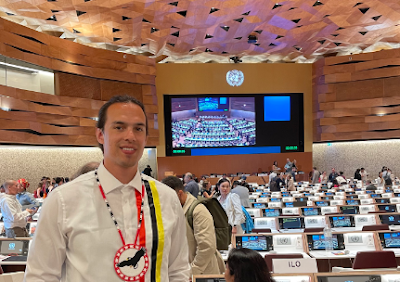
Aboriginal youths from Australia and Torres Islanders were among the strong youth voices at the United Nations today. The delegation shown here said biomedical research is being weaponized against their people; and is being carried out against them without free, prior and informed consent.

"Biomedical data must be wholly managed, stored, and owned by its respective communities. Indigenous people will always be the first scientists and health practitioners. The next 20 years must be defined by indigenous authority over our research, our data, and our health future," the youth delegate said.

T
his week, Indigenous youths testified that they must be recognized and involved in decision making at the United Nations.


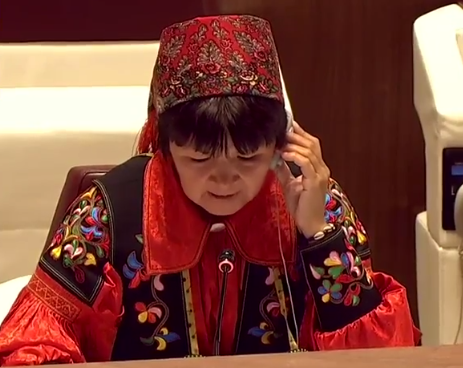
Exiled Russian delegate testifying.

Russia and Ecuador at the UN -- They're not giving up. Again today, exiled Indigenous from Russia and the Far North called for the release of two women imprisoned in Russia, U.N. participants and climate justice advocates, Daria Egereva and Natalia Leongardt, who have been behind bars for six months. The Russian Federation has repeatedly taken the floor attempting to discredit the delegation of exiled human rights defenders. Russia is demanding that they be silenced and removed from the sessions.

Ecuador: Delegates parents targeted

In a another wave of oppression for those speaking out at the U.N. Pacha Teran of Ecuador said yesterday that her parents home was attacked after she testified at the U.N. Expert Mechanism on the Rights of Indigenous Peoples in Geneva, which is broadcast globally by the U.N.

"Con mi participo en la 19.ª sesión del EMRIP - ONU, donde he denunciado vulneraciones de derechos en mi pais, hoy la vivienda de mis padres fue objeto de una agresión."

(With my participation in the 19th session of the EMRIP - UN, where I denounced human rights violations in my country, today my parents' home was the target of an attack," Teran said on social media on Wednesday.)

Teran is in the delegation testifying on the militarization and violence by the government of Ecuador security forces. 

Colombia's women bear the greatest burden. Screenshot Censored News.

COLOMBIA: Indigenous Women Carry the Greatest Burden

"How many rights can a people lose before the world recognizes it?" Colombia's Indigenous delegate from the Ethnic Commission for Peace in Defense of Territorial Rights asked the U.N.

"This is the question we bring today on behalf of indigenous people and particularly women in Colombia. Colombia has borne the brunt of decades of fights and ethnic communities are currently trapped between armed leaders murdered with impunity."

"Boys and girls suffer forced recruitment in a persistent fashion. The women bear the brunt of this. They are the most displaced and have the greatest violation of their collective rights."

The dismantling of the peace agreement has resulted in a loss of hope.

The peace agreements included an indigenous historic chapter. Eight years later, only 13 percent of those commitments have been fully complied with.

"Prior consultation, which is a mandate in the constitution, continues to be ineffective. And in less than a month, a government which has dismantled the peace agreements has taken over. And as a result, there is a loss of hope."

"The communities are the guardians of the environmental rights protecting all of our territories where the state is absent. Food sovereignty of thousands of families depends on this. And in the territories which are most hit by the conflict, it is the communities and community leaders, in their majority women, who ensure the guardianship of this for the next generation to avoid the war that has been our scourge."

While Colombia prepares for a new president, Indigenous Peoples said the situation is urgent.

"Experts, we would like to ask for an urgent recommendation to protect indigenous communities and their women leaders before the 7th of August when the government is to change in Colombia."


Red River Metis Ambassador Clement Chartier 

Red River Metis of Manitoba, Canada, described the negotiations with Canada that resulted in a decade of reconciliation, which led to over $3 billion in funds for Red River Metis. Red River Metis Ambassador Clement Chartier said Canada embraced the U.N. Declaration on the Rights of Indigenous Peoples, during Trudeau's administration, and began implementing it. Red River Metis now have a Treaty for final ratification in process in Canada.

During the U.N. Expert Mechanism on the Rights of Indigenous Peoples today in Geneva, Indigenous described their struggles to be recognized and heard in their home countries.

The B.C. Treaty Commission in Canada reported success as it moves forward with modern day treaty negotiations for self-governance for Native Nations in B.C.


Indigenous from Peru continue to call for action to ensure the rights of Indigenous Peoples, at the U.N. Expert Mechanism on the Rights of Indigenous Peoples. Indigenous in Peru, Brazil, Argentina, Nicaragua, and Ecuador told the U.N. this week of the militarized oppression in their countries -- the deaths, imprisonments, loss of land and poisoning of their rivers -- as they defend their lands and water from logging, mining, and oil and gas drilling.


Racism in Argentina and the southernmost region of South America

"Being Indigenous should be a source of pride," said an Indigenous representative from the southernmost region of South America. She spoke on behalf of Identidad Marrón, a civil society organization that works against structural racism that affects indigenous peoples and human mobility in Argentina and neighboring countries -- Chile, Uruguay, and Bolivia -- known as the South Cone region of South America.

Racism has not disappeared for Indigenous Peoples here, and it is now twenty years after the U.N. Declaration on the Rights of Indigenous Peoples. She said whether they are in their countries or in neighboring countries, there is racism.

"In our cities, we continue to be identified primarily by the color of our skin, our traits, or our national origin rather than the rights that the Declaration recognizes, we hold."

"Such social profiling, which is facilitated increasingly by biometric technologies and facial recognition, is limiting access to rights and leading many people to hide their Indigenous identity, not because they're ashamed, but because they need to survive."

"Therefore, we would like to suggest that in monitoring opinion number 18 of 2025 on the rights of Indigenous peoples to data, we include the status of mobility or on the move and racial profiling and algorithmic profiling incidents as categories, ventilated ones, not— and an intersecting approach."

"States also need to take measures to prevent racial profiling, including Argentina. The rights of Indigenous peoples need to support us where we live, work, and move, and they should also ensure that migration does not mean that we are invisible, and being Indigenous should be a source of pride."

Indonesia

Indigenous from Indonesia point out that the reality in their homelands, and what the government of Indonesia says in the United Nations sessions are not the same. Indigenous point out that the mining that the Indonesian government claims it has stopped is actually proceeding, and a pipeline is doing further damage.


AFRICA: An Indigenous Ogani delegate described how the lack of recognition for Indigenous in Ethiopia and Nigeria has resulted in destruction mining and oil extraction, during the discussion on the U.N. Declaration on the Rights of Indigenous Peoples, UN DRIP.

"As we prepare to celebrate the 20th anniversary of the adoption of the UN DRIP,
it is saddening to report that many countries in Africa, particularly Ethiopia and Nigeria have not implemented UN DRIP and are yet to recognize indigenous people in their countries."

"Denying indigenous people amounts to denying their collective rights. Recognition of indigenous people are not given privilege, but an existential issue.

"The UN Special Rapporteur on the rights of indigenous people have identified lack of
recognition as one major issue that contributes to indigenous people's exclusion in Africa."

The lack of recognition results in large scale mining operations in the Oromiyo territory in Ethiopia, and oil extracting on Ogoni, Nigeria, where extraction has been taking place without the people's free, prior and informed consent.

"Furthermore, these attractive activities have been destroying the forest and contaminating waters of Indigenous communities in Ethiopia and Nigeria."

"We call on the Expert Mechanism to reinforce its effort for the endorsement of UN and recognition of indigenous people in Africa. Ethiopia and Nigeria should
recognize and ensure the full participation of Indigenous people in decision making process affecting their land and resources."

Censored News Original Series: UN Expert Mechanism

'Keeping It Alive' the Beauty of Ancient Languages, Path to Memory and Identity

Indigenous at UN Expose AI Data Centers and Racially Biased Misinformation

At the UN, Indigenous Testify on Persecution and Treaties

UN Expert Mechanism on the Rights of Indigenous Peoples Begins in Geneva

Copyright Brenda Norrell, Censored News 2026

July 15, 2025

Poisoned Water and Oppression: Breaking the Silence in Russia, Amazon and Okinawa

Russia's Indigenous Speaking at the U.N. in Geneva on Monday. Screenshot Censored News.

Breaking the Silence -- Indigenous in Russia, Amazon and Okinawa Tell U.N. of Poisoned Water, Dying Reindeer and Oppression as Illegal Mining Brings Disease and Death

By Brenda Norrell, Censored News, July 15, 2025

GENEVA -- Indigenous Peoples are silenced when they speak out about mining in Russia, while drug trafficking, logging and illegal mining are forcing isolated Indigenous Peoples from their homelands in the Amazon. In Okinawa, Japan refuses to recognize Indigenous Peoples, and they suffer from the toxic dumping left behind by the U.S. military.

July 30, 2024

Indigenous Russian Human Rights Defenders Targeted by Russian Government Appeal to United Nations


Indigenous Russian Human Rights Defenders Targeted by Russian Government Appeal to United Nations

"We are reaching out to you regarding the egregious act committed by the Russian government, which simultaneously included 55 organizations of indigenous peoples of Russia, fighting for their rights, in the list of extremist and terrorist organizations."

"According to the legislation of the Russian Federation, from now on any participation in the activities of these organizations, cooperation, or even communication with them threatens years of imprisonment for each representative of the indigenous peoples of Russia." Continue reading: https://icipr.international/archives/1053

The Voices of Russia's Anti-War Indigenous Women Denied Credentials at U.N. are Heard Anyway

Photo Yana Tannagasheva addressing U.N. https://vimeo.com/981992869
 

The voices of Russia's anti-war Indigenous activists who were denied credentials were heard anyway at the U.N. Expert Mechanism on the Rights of Indigenous Peoples in Geneva. They told the U.N. that Russia needs mineral industries to wage its wars, and is asserting pressure at the U.N.

Oral intervention by Yana Tannagasheva, International Committee of Indigenous Peoples of Russia, to U.N. Expert Mechanism on Rights of Indigenous Peoples 2024. 

Censored News, July 11, 2024
Russian translation

Thank you, Mr./Madam Chair, for the floor.

The Russian government talks all the time about the colonialism of IP (Indigenous Peoples) in other countries but has never said that the IP of the North, Siberia and the Far East were also colonized and continue to suffer. The everyday reality of the Indigenous Peoples of Russia is profoundly different from the rights described by Russian government and some of non-independent Indigenous representatives from Russia.

July 27, 2024

The Mother Tongue: Countering the Identity Thieves of Canada, Russia, Japan and U.S.


Photo: Indigenous Youth, Food Knowledge and Arctic Change


The Mother Tongue: Recovering Indigenous Languages from the Identity Thieves of Canada, Russia, Japan and United States


By Brenda Norrell, Censored News, July 16, 2024

Updated July 28, 2024: More from Russia and Japan


GENEVA -- Indigenous languages are on the verge of extinction in Russia. An ancient language in Japan is denied recognition by the government, while Native Americans struggle to recover from the torture in boarding schools that was meant to silence them. In Canada, efforts are underway to revitalize Anishinaabe after Native languages and culture were targeted with erasure in residential schools, presenters  told the United Nations Expert Mechanism on the Rights of Indigenous Peoples.

With Indigenous languages near extinction in Russia, an Indigenous youth from a reindeer herding community near the Arctic tundra, said newspapers are still  important here and are helping preserve the language, Nenets, among the endangered languages, in the vanishing north.

"Despite the decline in circulation of paper newspapers in the era of digitalization, our national newspaper retains an important role in the life of the people, clearly addressing their current agenda and giving ethnic journalists and language activists the opportunity to write in their native language," Nechei Serotetto, Indigenous youth from the Russian Arctic, told the United Nations Expert Mechanism.

"Moreover, the newspaper allows informing about twenty thousand Nenets of the Autonomous Okrug who are nomadic thousands of kilometers away and do not always have access to satellite internet coverage."

In Japan, speaking an ancient language was punishable by death.

Today, Japan refuses to recognize the language, the Lew Chewan/Okinawan languages, and its people. After Japan's annexation of the Lew Chew kingdom in 1879, the languages faced prohibition, Risako Sakai, ACSILs, told the United Nations.

"During WWII, the Japanese military ordered that speaking in Lew Chewan languages could result in execution, leading to the marginalization and near extinction of our native languages. In fact, the Japanese military executed Okinawans for speaking Indigenous languages, calling us “spy."

Josh Gandier. Photo Southern Chief's Organization, Censored News


"My own hope for this decade is to see the restoration, formation and protection of intergenerational connections between youths, language keepers and communities," said Southern Chiefs Organization's youth delegate Josh Gandier, Peguis First Nation.

July 17, 2024

Violence and Repression: Indigenous from Russia, Algeria and Nicaragua Appeal to United Nations

An Indigenous woman from Russia describes the coal and gold mining at the U.N. Screenshot Censored News.

Violence and Repression: Indigenous from Russia, Algeria and Nicaragua Appeal to the United Nations

By Brenda Norrell, Censored News, July 17, 2024

GENEVA -- The coal and gold mining in Russia has driven Indigenous Peoples from their homes and poisoned their rivers. In Nicaragua, the assassinations and imprisonment of land defenders has fractured families and communities, presenters told the United Nations Expert Mechanism on the Rights of Indigenous Peoples.


In Algeria, the people have barely survived 3,000 years of violent colonization and genocide.

"Other people should not undergo what we have experienced – which is the case now in Palestine," said the representative from the Algeria Association, Learned Society of scientific research, religious and mystical bodies. Describing the genocide in Algeria, he said France has thousands of bones and craniums of the people in French museums.

July 14, 2024

Indigenous Expose Racism and Genocide at U.N. -- Governments Rush to Deny Abuses and Insult Presenters


Rachana Sam At on behalf of the Asia Indigenous Peoples Caucus points out that Indigenous Peoples can not participate in this process unless approved by a non-governmental organization, and this must change for there to be enhanced participation. Photo AIPC.

Indigenous Expose Racism and Genocide at U.N. -- Governments Rush to Deny Abuses and Insult Presenters

By Brenda Norrell, Censored News, July 14, 2024

GENEVA -- Indigenous youths spoke with courage and eloquence, calling out the environmental racism and genocide carried out by governments around the world. In response, government representatives rushed to deny the human rights abuses, and in some cases, used insulting language to criticize Indigenous Peoples who exposed their abuses, during the U.N. Expert Mechanism on the Rights of Indigenous Peoples.

The representative of France denied the government is responsible for genocide in New Caledonia. Azerbaijan denied responsibility for genocide in Armenia and used derogatory accusations, describing speakers as frauds and part of a "smear campaign." 

The United States government failed to describe the ongoing seizure of Native ancestral lands for lithium and copper mines, and fake green energy projects targeting ceremonial places.

The Russian Federation government criticized speakers on Thursday. Responding to speakers statements, he said their status needs to be examined. He claimed some had lost touch with their communities, and some were funded by former colonial powers. He also said one organization presenting a statement was not recognized in Russia.

"We need to exclude the participation of chauvinists and racists," the Russian Federation government representative said.

July 28, 2023

Indigenous Peoples Under Attack by Militarized Forces: From Peru to the Tohono O'odham Nation, murder with impunity


United Nations Expert Mechanism on the Rights of Indigenous Peoples, UN Human Rights Council

Indigenous Peoples Under Attack by Militarized Forces: From Peru to the Tohono O'odham Nation, Murder with Impunity

Native Hawaiians and Indigenous in Guam want the US military out; Russian youths want an end to war


By Brenda Norrell, 
Censored News
July 17, updated July 29, 2023

GENEVA -- Native Hawaiians want the US military off their lands, and training exercises in the Pacific shut down. An aquifer has been poisoned in Honolulu, and unexploded ordinances left behind make lands inaccessible.

Christopher Edward said the U.S. military installation in Hawaii is the largest in the world, 200,000 acres, and has resulted in the displacement of Native Hawaiians from their traditional lands. Edward testified before the United Nations Expert Mechanism on the Rights of Indigenous Peoples.

Edward joined Indigenous from around the world in reporting human rights abuses, during the session, "The Impact of Militarization on the Rights of Indigenous Peoples."

July 12, 2013

Snowden statement to human rights groups in Moscow July 12, 2013

Statement by Edward Snowden to human rights groups at Moscow’s Sheremetyevo airport

Friday July 12, 15:00 UTC

Wikileaks

Edward Joseph Snowden delivered a statement to human rights organizations and individuals at Sheremetyevo airport at 5pm Moscow time today, Friday 12th July. The meeting lasted 45 minutes. The human rights organizations included Amnesty International and Human Rights Watch and were given the opportunity afterwards to ask Mr Snowden questions.
The Human Rights Watch representative used this opportunity to tell Mr Snowden that on her way to the airport she had received a call from the US Ambassador to Russia, who asked her to relay to Mr Snowden that the US Government does not categorise Mr Snowden as a whistleblower and that he has broken United States law. This further proves the United States Government’s persecution of Mr Snowden and therefore that his right to seek and accept asylum should be upheld. Seated to the left of Mr. Snowden was Sarah Harrison, a legal advisor in this matter from WikiLeaks and to Mr. Snowden’s right, a translator.Transcript of Edward Joseph Snowden statement, given at 5pm Moscow time on Friday 12th July 2013. (Transcript corrected to delivery)

Hello. My name is Ed Snowden. A little over one month ago, I had family, a home in paradise, and I lived in great comfort. I also had the capability without any warrant to search for, seize, and read your communications. Anyone’s communications at any time. That is the power to change people’s fates.
It is also a serious violation of the law. The 4th and 5th Amendments to the Constitution of my country, Article 12 of the Universal Declaration of Human Rights, and numerous statutes and treaties forbid such systems of massive, pervasive surveillance. While the US Constitution marks these programs as illegal, my government argues that secret court rulings, which the world is not permitted to see, somehow legitimize an illegal affair. These rulings simply corrupt the most basic notion of justice – that it must be seen to be done. The immoral cannot be made moral through the use of secret law.
I believe in the principle declared at Nuremberg in 1945: "Individuals have international duties which transcend the national obligations of obedience. Therefore individual citizens have the duty to violate domestic laws to prevent crimes against peace and humanity from occurring."
Accordingly, I did what I believed right and began a campaign to correct this wrongdoing. I did not seek to enrich myself. I did not seek to sell US secrets. I did not partner with any foreign government to guarantee my safety. Instead, I took what I knew to the public, so what affects all of us can be discussed by all of us in the light of day, and I asked the world for justice.
That moral decision to tell the public about spying that affects all of us has been costly, but it was the right thing to do and I have no regrets.
Since that time, the government and intelligence services of the United States of America have attempted to make an example of me, a warning to all others who might speak out as I have. I have been made stateless and hounded for my act of political expression. The United States Government has placed me on no-fly lists. It demanded Hong Kong return me outside of the framework of its laws, in direct violation of the principle of non-refoulement – the Law of Nations. It has threatened with sanctions countries who would stand up for my human rights and the UN asylum system. It has even taken the unprecedented step of ordering military allies to ground a Latin American president’s plane in search for a political refugee. These dangerous escalations represent a threat not just to the dignity of Latin America, but to the basic rights shared by every person, every nation, to live free from persecution, and to seek and enjoy asylum.
Yet even in the face of this historically disproportionate aggression, countries around the world have offered support and asylum. These nations, including Russia, Venezuela, Bolivia, Nicaragua, and Ecuador have my gratitude and respect for being the first to stand against human rights violations carried out by the powerful rather than the powerless. By refusing to compromise their principles in the face of intimidation, they have earned the respect of the world. It is my intention to travel to each of these countries to extend my personal thanks to their people and leaders.
I announce today my formal acceptance of all offers of support or asylum I have been extended and all others that may be offered in the future. With, for example, the grant of asylum provided by Venezuela’s President Maduro, my asylee status is now formal, and no state has a basis by which to limit or interfere with my right to enjoy that asylum. As we have seen, however, some governments in Western European and North American states have demonstrated a willingness to act outside the law, and this behavior persists today. This unlawful threat makes it impossible for me to travel to Latin America and enjoy the asylum granted there in accordance with our shared rights.
This willingness by powerful states to act extra-legally represents a threat to all of us, and must not be allowed to succeed. Accordingly, I ask for your assistance in requesting guarantees of safe passage from the relevant nations in securing my travel to Latin America, as well as requesting asylum in Russia until such time as these states accede to law and my legal travel is permitted. I will be submitting my request to Russia today, and hope it will be accepted favorably.
If you have any questions, I will answer what I can.
Thank you.
----------------------------------------------------------------------------------------------------------
Also see:
Live coverge:
Friday, July 12, 2013: The Guardian
Video News: Snowden meets with human rights groups, will apply for Russian asylum before trying for Latin America RT News

The UN calls for respect for Snowden's right to seek asylum
Democratic Underground

12 de Julio de 2013 | 14:41

The UN High Commissioner for Human Rights Navi Pillay said today that former U.S. intelligence analyst Edward Snowden has the right to seek asylum and should be protected for disclosing information that violates human rights.
"Snowden's case shows the need to protect people who disclose information that has implications for the respect of human rights and the importance of ensuring respect for the right to privacy," said Pillay said in a statement.
La ONU pide que se respete el derecho de Snowden a solicitar asilo
La Alta Comisionada de Derechos Humanos de la ONU, Navi Pillay, afirmó hoy que el ex analista de la CIA estadounidense Edward Snowden tiene derecho a solicitar asilo y debería ser protegido por haber revelado información que atenta contra los derechos humanos.
"El caso de Snowden muestra la necesidad de proteger a las personas que revelan información que tiene implicaciones en el respeto de los derechos humanos, así como la importancia de asegurar el respeto por el derecho a la privacidad", aseguró Pillay citada en un comunicado.

http://www.eldeber.com.bo/la-onu-pide-que-se-respete-el-derecho-de-snowden-a-solicitar-asilo-/130712144141?utm_source=twitterfeed&utm_medium=twitter

 
Amnesty International Meets U.S. Whistleblower Edward Snowden 
Press Release
July 12, 2013
Contact: Carol Gregory, cgregory@aiusa.org, 202-675-8759, @AIUSAmedia
(WASHINGTON, D.C) - Amnesty International met with U.S. whistleblower Edward Snowden at Moscow's Sheremetyevo Airport on Friday.
Sergei Nikitin, head of Amnesty International's Moscow office, attended the meeting. Nikitin said:
"Amnesty International was pleased to reiterate our support for Edward Snowden in person. We will continue to pressure governments to ensure his rights are respected - this includes the unassailable right to claim asylum wherever he may choose.
"What he has disclosed is patently in the public interest and as a whistleblower his actions were justified. He has exposed unlawful sweeping surveillance programs that unquestionably interfere with an individual's right to privacy.
"States that attempt to stop a person from revealing such unlawful behavior are flouting international law. Freedom of expression is a fundamental right.
"Instead of addressing or even owning up to these blatant breaches, the US government is more intent on persecuting him. Attempts to pressure governments to block his efforts to seek asylum are deplorable."
Amnesty International is a Nobel Peace Prize-winning grassroots activist organization with more than 3 million supporters, activists, and volunteers in more than 150 countries campaigning for human rights worldwide. The organization investigates and exposes abuses, educates and mobilizes the public, and works to protect people wherever justice, freedom, truth, and dignity are denied.