Indigenous Peoples and Human Rights
Showing posts with label assassinations. Show all posts

July 17, 2024

Violence and Repression: Indigenous from Russia, Algeria and Nicaragua Appeal to United Nations

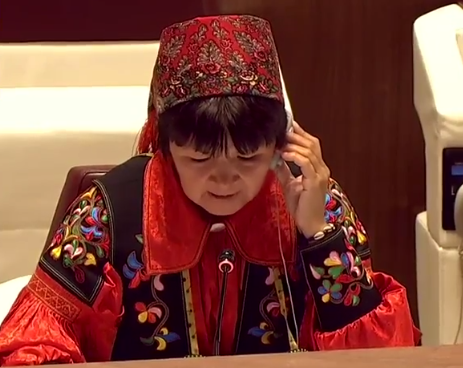
An Indigenous woman from Russia describes the coal and gold mining at the U.N. Screenshot Censored News.

Violence and Repression: Indigenous from Russia, Algeria and Nicaragua Appeal to the United Nations

By Brenda Norrell, Censored News, July 17, 2024

GENEVA -- The coal and gold mining in Russia has driven Indigenous Peoples from their homes and poisoned their rivers. In Nicaragua, the assassinations and imprisonment of land defenders has fractured families and communities, presenters told the United Nations Expert Mechanism on the Rights of Indigenous Peoples.


In Algeria, the people have barely survived 3,000 years of violent colonization and genocide.

"Other people should not undergo what we have experienced – which is the case now in Palestine," said the representative from the Algeria Association, Learned Society of scientific research, religious and mystical bodies. Describing the genocide in Algeria, he said France has thousands of bones and craniums of the people in French museums.

July 28, 2023

Indigenous Peoples Under Attack by Militarized Forces: From Peru to the Tohono O'odham Nation, murder with impunity


United Nations Expert Mechanism on the Rights of Indigenous Peoples, UN Human Rights Council

Indigenous Peoples Under Attack by Militarized Forces: From Peru to the Tohono O'odham Nation, Murder with Impunity

Native Hawaiians and Indigenous in Guam want the US military out; Russian youths want an end to war


By Brenda Norrell, 
Censored News
July 17, updated July 29, 2023

GENEVA -- Native Hawaiians want the US military off their lands, and training exercises in the Pacific shut down. An aquifer has been poisoned in Honolulu, and unexploded ordinances left behind make lands inaccessible.

Christopher Edward said the U.S. military installation in Hawaii is the largest in the world, 200,000 acres, and has resulted in the displacement of Native Hawaiians from their traditional lands. Edward testified before the United Nations Expert Mechanism on the Rights of Indigenous Peoples.

Edward joined Indigenous from around the world in reporting human rights abuses, during the session, "The Impact of Militarization on the Rights of Indigenous Peoples."

June 16, 2023

Peltier, Oak Flat and Enbridge Line 5: Priorities in UN Permanent Forum on Indigenous Issues Report


The U.N. Permanent Forum on Indigenous Issues urged UNESCO to step up the protection of world heritage sites to protect sites from the mining giant Rio Tinto, including Apaches Oak Flat. Rio Tinto blew up 46,000 years of Australian Aboriginals' history and sacred teachings when it blew up Juukan Gorge caves in Western Australia. (Panel of ancient rock art painting, Quinkan Cave near Laura, Cape York, Queensland, Australia)


By Brenda Norrell

Censored News

June 16, 2023


NEW YORK -- The release of imprisoned Leonard Peltier, the protection of Apaches sacred Oak Flat, and the halt of Enbridge's Line 5 were included in the final report of the United Nations Permanent Forum on Indigenous Issues. The murders of Indigenous in Nicaragua, the imprisonment of Australian Aboriginal children, cross-border crime in the Amazon, and the rights and safety of Indigenous journalists are in the report from the UNPFII's 22nd session held in New York, April 17 -- 28, 2023.


June 17, 2022

TORONTO -- In the Snake Bed: Indigenous Assassinated while Mining Corporations Lure Natives


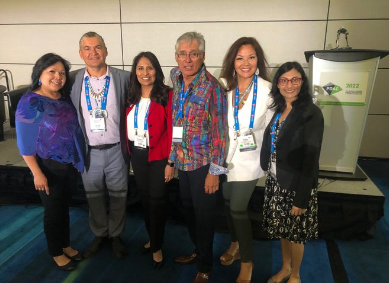
At the Toronto conference, Dore Copper mining board member Martha Manuel; Clean Air Metals mining board member Shannin Metatawabin; Inclusive mining founder Rosario Astuvilca-Roja; Newmont-Goldcorp board member Matthew Coon Come, KWG chromite mining board member Fiona Blondin, and reporter Alisha Hiayat.


Western Shoshone Carl Bad Bear Sampson protests Newmont gold mining, Longest Walk 2008. Photo by Brenda Norrell.


While Indigenous are being assassinated defending their land and water from mining -- global mining corporations lure Natives at world mining conference in Toronto 

By Brenda Norrell
Censored News
French translation by Christine Prat:
Updated June 28, 2022

TORONTO -- While Indigenous are being assassinated around the world defending  their homelands from mining, the world's largest mining conference was held in Toronto, June 13 -- 15.

As Indigenous gathered with the mining industry at the annual Prospectors and Developers Association of Canada, around the world Indigenous protest the loss of lives, land and clean rivers.

Chief Wayne Moonias of Neskantaga First Nation said mining contaminated their rivers. His community hasn’t had drinking water for 27 years.

“My 24 year old daughter never had clean drinking water."

Myka Jaymalin, with Anakbayan Filipino youths, said that Canada is home to 75 percent of the world’s mining companies. She said that between 2001 and 2019, at least 300 environmental defenders were killed in the Philippines.

Kirsten Francescone, Latin America Program Coordinator for Mining Watch Canada, said, “They are engaging in practices that are destroying the environment. They’re committing environmental and human rights crimes.”

Meanwhile, the mining corporations hosting and attending the Toronto conference  have a long history in Indian country, including Rio Tinto's Resolution Copper, now targeting Apaches sacred Oak Flat, and Newmont, which devastated Western Shoshone lands with gold mining.

Cameco, which mined uranium near Pine Ridge, pushed for more uranium mining in Toronto.

The agenda of the mining conference, shown below in the Indigenous Program, reveals the industry's strategy on how to avoid honoring Indigenous rights. Mining corporations now target Indigenous lands around the world and are linked to murders  of land defenders -- from South Africa and Australia to the Americas.

The U.N. Declaration on the Rights of Indigenous Peoples was one of the topics in the Indigenous Peoples Program in Toronto.

The agenda, however, of mining corporations is clear: It is to make as much money as possible, attract as many investors as possible, and avoid compliance with as many environmental laws as possible while mining gold, copper, silver, lithium and uranium.

The rapid addition of Natives to the boards of directors since the fall of 2021 is among the new strategies of mining corporations, whose agenda is to seize the land, gouge out the earth, rip out her veins, deplete and poison the water, and made profits.

The diverse topics in Toronto ranged from iron ore mining in Ukraine, to the use of  social media, luring young people with a program for youths.

Greenwashing, and the push for electric vehicles

Electric vehicles are part of the ongoing greenwashing. The mining of lithium and other metals for batteries is now targeting Indigenous lands and water, and resulting in cruel working conditions in mines around the world for children.

The Toronto conference identified critical minerals, including scandium, lithium and gallium, for electrification and energy storage for electric vehicles. Rio Tinto was among the presenters.

Paiutes in Nevada are battling to protect the sacred Thacker Pass, the Paiute massacre site, from a planned lithium mine. Hualapai in northwest Arizona are also battling a planned lithium mine on their ancestral land west of Flagstaff. Havasupai on their ancestral land in the Grand Canyon are battling uranium mining. Barona Band of Mission Indians are protesting new lithium mining near the California Mexico border.


Bingham open pit copper mine near Salt Lake City, Utah, operated by Rio Tinto. 


Rio Tinto: Sexual Assaults

Rio Tinto is the owner of Resolution Copper, now targeting Apaches Sacred Oak Flat with a copper mine east of Phoenix.

In Toronto, Rio Tinto discussed its report, of its own "workplace culture" that was published in February. Rio Tinto mine workers reported sexual assault, harassment, racism, bullying and other forms of discrimination throughout the company.

'By location, employees in Australia (52 percent) and South Africa (56 percent) were the most likely to experience bullying.

'Of those surveyed, 28 percent of women and 7 percent of men reported having been sexually harassed at work. Twenty-one women reported actual or attempted rape or sexual assault,' National Jeweler reports.

"Of those who identify as Aboriginal or Torres Strait Islander in Australia, 40 percent of men and 32 percent of women said they experienced racism." 

In Toronto, CBC reports that miners and First Nations from northwestern Ontario led a discussion on First Nations' consent in mining projects.

The chiefs of Long Lake #58, and Animbiigoo Zaagi'igan Anishinaabek, joined representatives of Greenstone Gold Mines on one panel, CBC reports.

While mining was cutting and scraping out the earth, Chief Theresa Nelson of   Animbiigoo Zaagi'igan Anishinaabek, praised Greenstone mining.


In October 2021, four gunmen shot and killed South African anti-mining activist Fikile Ntshangase in her home.


From Award-Winning Environmentalist to Newmont Gold Mining Board

Cree Grand Chief Matthew Coon Come was among the speakers in the Indigenous Program in Toronto. Coon Come earlier served as Chief of the Assembly of First Nations in Canada.

Coon Come also led the Cree’s fight against the massive James Bay hydroelectric development project in Quebec and was awarded the prestigious Goldman Environmental Prize in 1994.

The Goldman Prize said the Hydro Quebec, If completed, would have consisted of more than 30 dams and 600 dikes, blocking nine major rivers.

Now, Coon Come is on the board of Newmont gold corporation, after serving on the board of Goldcorp. Coon Come was appointed to Goldcorp's board in July of 2017. Goldcorp is now owned by Newmont. The gold mining corporations have been protested for abusing human rights, and the land and water, on Western Shoshone land and globally.

Coon Come's salary and benefits from Newmont gold mining are shown below.

Natives Join Boards of Mining Companies

Dore Copper Mines, Clean Air Metals, and KWG Resources added Natives to boards in the fall of 2021. Newmont-Goldcorp added a Native board member in 2017.
 
In Toronto, the Indigenous Program included Martha Manuel, Neskonlith Band, Secwepemculecw, British Columbia. Manuel is now on the board of directors for Doré Copper Mines.

Martha Manuel, daughter of Indigenous activist and national leader George Manuel, worked for New Gold Inc. until 2020. 

Announcing Manuel's addition to the board in August, Doré said it plans to restart the Chibougamau mining camp. Doré Copper Mining Corp. is a copper-gold explorer and developer in the Chibougamau area of Québec, Canada.

Indigenous Program speakers included Shannin Metatawabin, on the board of Clean Air Metals. Metatawabin is Cree / Inninow from Fort Albany (Pethtabeck) First Nation of the Mushkegowuk Cree Nation.

Clean Air Metals appointed Metatawabin in November. Clean Air Metals owns the Thunder Bay North Project, a platinum, palladium, copper, and nickel mining project located near Thunder Bay, Ontario, and the Lac des Iles Mine owned by Impala Platinum.

The Thunder Bay North project is on the traditional territories of the Fort William First Nation, Red Rock First Nation and Biinjitiwabik Zaaging Anishinabek.

The Indigenous Program included KWG Resources board member Fiona Blondin. KWG announced in September that Blondin, Yellowknives Dene First Nation in the Northwest Territories, was selected as director of the company.

Now, KWG Resources is exploring chromite, used in making stainless steel, in the James Bay Lowlands of Ontario. It is part of mineral-rich area known as the Ring of Fire.

Indigenous program facilitator Lana Eagle, White Cap Dakota, is a consultant promoting mining.

Gold mining in Venezuela and Brazil results in murder, rape and disease. The situation in the Yanomami territory in Brazil is catastrophic and now resembles a war zone. “Yanomami under Attack” documents violence, sexual abuse and high rates of malaria and mercury poisoning among the Yanomami as a result of the illegal mining, Survival International reports.


World mining conference Toronto 2022


THE AGENDA
The Indigenous Program 

Partnerships, participation, and ESG-I: Canada and the emerging global paradigm for Indigenous communities and the mining industry (IN PERSON)

Chair: Sandra Gogal, Cassels Brock & Blackwell LLP Toronto, Canada

Monday, June 13, 2022, 11:45 AM - 1:15 PM

Speaker(s):
Modertor

John Hibble, Coeuraj, Toronto, Canada

Sandra Gogal, Cassels Brock & Blackwell LLP, Toronto, Canada

Camilla Lott, Vale, Rio de Janeiro, Brazil

Mark Podlasly, University of British Columbia Sauder School of Business, Vancouver, Canada

Sharon Singh, Bennett Jones LLP, Vancouver, Canada

Saga Williams, AS Williams Consulting, Curve Lake First Nation, Canada

----------------------------------

FPIC and collaborative consent: Navigating UNDRIP the right way (IN PERSON)

Chair: Sandra Gogal, Cassels Brock & Blackwell LLP, Toronto, Canada

2:45 PM - 4:15 PM

Speaker(s):
Moderator
Sandra Gogal, Cassels Brock & Blackwell LLP, Toronto, Canada

Chad Norman Day, Tahltan Central Government, Smithers and Telegraph Creek, Canada

Chief Judy Desmoulin, Longlake #58 First Nation, Canada

Grand Chief Jackson Lafferty, Tłı̨chǫ Government, Behchoko, Canada

Chief Theresa Nelson, Animbiigoo Zaagi'igan Anishinaabek First Nation, Canada

Angela Bigg, Rio Tinto -Diavik Diamond Mines Inc., Yellowknife, Canada

Daniel Gagné, Greenstone Gold Mines, Geraldton, Canada

Eric Lamontagne, Greenstone Gold Mines, Geraldton, Canada

Winter Bailey, Rio Tinto Diavik Diamond Mine, Yellowknife, Canada

(Agenda) June 21 2021 was a historic day as Canada marked the 25th anniversary of National Indigenous Peoples Day and Bill C-15: An Act respecting the United Nations Declaration on the Rights of Indigenous People, received royal assent.

Through the development of an Action Plan over the next two years, the Bill will outline a road map for ensuring Canadian laws are consistent with the principles of UNDRIP.

As we are approaching one year since the adoption of the Bill, a panel of speakers will comment on the development of the Action Plan and what we can expect for it’s implementation.

Learn about the proactive steps majors and juniors are taking to better understand anticipated changes by adopting best practices around engagement.
Hear from legal experts about the development and meaning of FPIC and collaborative consent, where they overlap and how they differ. Witness an open discussion between companies and community partners on their interpretation of meaningful consultation and expectations from project partners.


Economic reconciliation pathways: Reimagining equity participation models (IN PERSON)

Chair: Lana Eagle, Lana Eagle Consulting, Campbell River, Canada Sarah Weber, C3 Alliance Corp. Vancouver, Canada
1:30 PM - 3:00 PM

Speaker(s):
Moderator
Don Bubar, Avalon Advanced Materials Inc., Toronto, Canada
Abraham Drost, Clean Air Metals, Inc., Thunder Bay, Canada
Frank Hardy, Biinjitiwaabik Zaaging Anishinaabek, MacDiarmid, Canada
Dawn Madahbee Leach, National Indigenous Economic Development Board, Birch Island, Canada
Donald McInnes, Vancouver British Columbia, Canada
Joe Moses, Clean Air Metals, Thunder Bay, Canada

(Agenda) The concept of economic reconciliation centres on the fundamental right to self-determination Indigenous peoples have to freely pursue their economic, social and cultural development. In recent years this concept has become prevalent in the natural resources sector, to describe resource revenue sharing models in project partnerships, allowing communities to reinvest funds, advance capacity and build generational wealth.

In the fall of 2021, PDAC undertook research to build greater awareness around the economic opportunities associated with Indigenous community partnerships at the exploration phase of the mineral development sequence. The Economic Impacts of Exploration Projects on Indigenous Communities report identifies several opportunities communities and Indigenous businesses can pursue to maximize project investment and create mutually beneficial agreements leading to long-term financial prosperity for all proponents.

This session aims to educate exploration companies, vendors, and other stakeholders about the steps they can take to ensure Indigenous communities and businesses participate fruitfully in mineral exploration. Learn about the unique participation models companies have employed, how these agreements were constructed and the financial tools available at our disposal.
-----------------------------------------------

Claiming your seat: Reflections on accelerating Indigenous representation on corporate boards (IN PERSON)
Indigenous on boards of directors of mining corporations in Canada.

Chair: Rosario Astuvilca-Rojas, CEO & Founder Inclusive Mining, Toronto, Canada (Peruvian, Indigenous ancestry, began her mining career in 1996 at Centromin (Empresa Minera del Centro del Perú) in Perú.

4:30 PM - 5:30 PM

Speaker(s):
Moderator
Alisha Hiyate, The Northern Miner, Toronto, Canada

Fiona Blondin, KWG Resources Inc. Board Member, Cambridge, Canada

Matthew Coon Come, Newmont Board Member, Mistissini, Canada

Martha Manuel, Doré Copper Mining Corp. Board Member, Kamloops, Canada

Shannin Metatawabin, Clean Air Metals Board Member, Belfast, Canada

-----------------------------------------------------------------------------------------------

Empowering Indigenous entrepreneurs: Increasing industry participation through procurement, employee training and retention (IN PERSON)

Chair: Glenn Nolan, Noront Resources Ltd., Toronto, Canada

11:30 AM - 1:00 PM

Speaker(s):
Moderator
Karen Restoule, Shared Value Solutions, Dokis First Nation, Canada

Jason Batiste, Wabun Tribal Council, Mattagami First Nation, Canada

Melanie J. Campbell,
Natural Resources Canada, Ottawa, Canada

Chad Norman Day, Tahltan Central Government, Smithers and Telegraph Creek, Canada

Paul Gruner, Tahltan Nation Development Corporation, Yellowknife, Canada
At each stage of the mining supply chain there are opportunities for companies to partner with Indigenous businesses. In this session, we focus on empowering indigenous entrepreneurs by increasing industry participation through procurement, employee training and retention.
------------------------------------

In Sonora, bordering Arizona, José de Jesús Robledo Cruz and María de Jesús Gómez were killed in April 2021 after organizing a campaign against Mexico’s largest gold-mining company Penmont. It wasn’t the first time the married couple had been targeted: In 2017, they were kidnapped and tortured by unknown assailants dressed in army fatigues. When their bodies were discovered last year, a note with the names of 13 other activists was attached to one of them. Nearly three-quarters of the human rights defenders killed in Mexico were protecting land, the environment or Indigenous rights.
https://news.mongabay.com/2022/04/more-than-half-of-activists-killed-in-2021-were-land-environment-defenders/

Toronto: Indigenous Peoples Program

Economic reconciliation pathways: Reimagining equity participation models

Chair: Lana Eagle, Lana Eagle Consulting, Campbell River, Canada Sarah Weber, C3 Alliance Corp. Vancouver, Canada

8:00 AM - 9:30 AM
Moderator
Don Bubar, Avalon Advanced Materials Inc., Toronto, Canada
Abraham Drost, Clean Air Metals, Inc., Thunder Bay, Canada
Frank Hardy, Biinjitiwaabik Zaaging Anishinaabek, MacDiarmid, Canada
Dawn Madahbee Leach, National Indigenous Economic Development Board, Birch Island, Canada
Donald McInnes, Vancouver British Columbia, Canada
Joe Moses, Clean Air Metals, Thunder Bay, Canada
The concept of economic reconciliation centres on the fundamental right to self-determination Indigenous peoples have to freely pursue their economic, social and cultural development. In recent years this concept has become prevalent in the natural resources sector, to describe resource revenue sharing models in project partnerships, allowing communities to reinvest funds, advance capacity and build generational wealth.
.This is the recording of an in-person session from PDAC 2022 in Toronto, that is available on-demand for our online attendees.
------------------------------


Toronto Indigenous Peoples Program

Exploring the social impact of mineral development projects in Indigenous communities (ONLINE)

ONLINE
Chair: Lana Eagle, Lana Eagle Consulting, Campbell River, Canada Michael Fox, Indigenous Community Engagement, Fort William, Canada Glenn Nolan, Noront Resources Ltd., Toronto, Canada

12:30 PM - 1:30 PM

Speaker(s):
Sabrina Dias, SOOP Strategies Inc., Toronto, Canada

Beverely Russell, Project Manager, Gitanyow Education & Training Institute, Gitanyow Hereditary Chiefs, British Columbia, Canada

Dorinda Shirey, Gitanyow Elder, British Columbia, Canada

Norma Vazquez, SOOP Strategies Inc., Toronto, Canada

(Agenda) In 2021 PDAC set out to identify anticipated impacts and subsequent increased demands on social infrastructure within host Indigenous communities that are proximal to mineral development projects in Canada.

Using a gendered lens, the Social Impact Study established a set of practical strategies mineral resource development companies can exercise to mitigate or manage the social impacts on host Indigenous communities, as well as to create opportunities for improving situations often found in remote, Indigenous communities.

In this session hear community leaders’ reflections on findings, companies employing GBA+ principles and approaches as part of their permitting process and how these recommendations can be adopted to new projects.
----------------------------------------------

Indigenous cultural awareness: How traditional values, teachings and knowledge have influenced the industry over the years (ONLINE)

ONLINE
Chair: Lana Eagle, Lana Eagle Consulting, Campbell River, Canada

12:30 PM - 1:30 PM

Speaker(s):
Moderator

Lana Eagle, Lana Eagle Consulting, Campbell River, Canada

Ed Sackaney, Knowledge & Wisdom Keeper, Fort Albany First Nation, Canada

Jason Batiste, Wabun Tribal Council Coeuraj, Mattagami First Nation, Canada

Nalaine Morin, Tahltan Central Government, Smithers, Canada

(Agenda) In this session, Indigenous leaders from across Canada come together to discuss core values, teachings and knowledge and reflect on the impact Indigenous culture has had on the mineral industry. These leaders share how they view resource development and discuss similarities and differences between key cultural pillars.

Company and community leaders identify the factors that lead to strong partnerships and successful long-term relationships. All speakers come together to reflect on what resource development means to them and their thoughts on where the industry is headed.


Photo: Newmont's gold mining on Western Shoshone land. Carrie Dann, Western Shoshone said, "To dig under the earth to get to that gold, to pump out that water to get to that gold, is a crime, it's a crime against humanity, a crime against life, the very life upon which all people depend on, not only people but we have other things out there -- we have the deer, we have the eagle, we have the rabbits, we have all life out there and the gold mining today is going to destroy that, it is destroying that, the life for the future generations is going to be gone."

NEWMONT MINING

Newmont states, "In 2019, Newmont became the world’s leading gold company and a producer of copper, silver, zinc and lead following the transformational acquisition of Goldcorp and its world-class mines, including four operations in Canada."

"Newmont’s 100 percent-owned operating assets in Canada include Éléonore in Quebec and Musselwhite and Porcupine in Ontario as well as the Red Lake operation in Ontario until its sale to Evolution Mining on March 31, 2020. Canadian exploration properties are the Coffee project in the Yukon as well as the Galore Creek joint venture with Teck Resources Limited in British Columbia (B.C.). Our North America regional office is located in Vancouver, B.C." according to Newmont.


Source: Newmont:

.
Asbestos mine in Quebec: Source: Rabble/Chilanga Cement
"The Terrible Paradox of the Green Energy Transition
https://rabble.ca/environment/the-terrible-paradox-of-t)he-green-energy-transition/


At the world mining conference in Toronto, Peru, Brazil and Canada had their own three days of sponsors. Indigenous in Peru and Brazil continue to be murdered as they defend their land and water from mining. In Canada, there is a trail of cancer and disease from mining. -- Censored News. 

The world's largest mining convention in Toronto this week.


References:

More than half of activists killed in 2021 were land and environment defenders. Article  by Mongaby news

Survival International: Yanomami under attack by miners in Brazil and Venezuela

Read more: 

Paiute Shoshone Myron Dewey warned of lithium mining the day before he was killed

Paiute Shoshone Journalist Myron Dewey

Paiute Shoshone journalist Myron Dewey warned of lithium mining at the Paiute Massacre Site at Thacker Pass, on the day before he was killed. A truck pulled into his lane, on a dirt road, and hit him head-on.

Dewey was a journalist and drone activist at Standing Rock in North Dakota, 2016 -- 2017, during the resistance to Dakota Access Pipeline. At home in Nevada in September, Myron livestreamed from the Fallon bombing range, warning of its expansion, the day before he was killed in the head-on collision on an isolated road near his family's home in the Paiute homelands at Yomba.

Lithium future
"The first challenge for researchers is to reduce the amounts of metals that need to be mined for EV batteries. Amounts vary depending on the battery type and model of vehicle, but a single car lithium-ion battery pack (of a type known as NMC532) could contain around 8 kg of lithium, 35 kg of nickel, 20 kg of manganese and 14 kg of cobalt, according to figures from Argonne National Laboratory." -- Nature

Barona Mission Indians and Hualapai Defend Ancestral Lands from Lithium Mining

"Members of the Barona band of Mission Indians and other tribal nations have joined a fight aiming to stop the proposed Sandy Valley lithium mine in Arizona and proposed lithium mining at the Salton Sea in California that could adversely impact Native Americans."

Mining Companies Strike Gold by Destroying Public Lands: Tohono O'odham cancer is the result of arsenic from copper mining

Contaminated water—polluted by old, closed gold mines in Montana’s Little Rocky Mountains—flows down the peaks toward the Fort Belknap Indian Community’s reservation in September 2021. Cleanup costs at least $3 million annually. 
PHOTO BY KATY SPENCE/MONTANA ENVIRONMENTAL INFORMATION CENTER

Tohono O'odham Nation on Arizona Border: After a century-old copper-mining facility on the Tohono O’odham Nation in Arizona closed in 1999, for example, the Department of Health and Human Services found the mine had added enough arsenic to local drinking water to cause nausea — and skin, bladder and lung cancers.

Mandan, Hidatsa and Arikara Nation, Fort Belknap, North Dakota: Beautiful tree-covered peaks turn to pale yellow slash when toxic gold mining runoff ran down from Montana  -- The contamination came from a gold mine that had operated in the mountains from the 1860s until 1998. The mine used cyanide to extract the gold. The process produced tremendous amounts of toxic runoff, which included not just cyanide but acids created when the rocks were exposed to air. That all made its way into local tap water.


Canada's Ring of Fire: Canada's Mining Push Puts Major Carbon Sink and Indigenous In Crosshairs -- by Mongabay news

  • A massive mining project called the Ring of Fire is being proposed in Canada’s Hudson Bay lowlands, a region that houses one of the biggest peatland complexes in the world and is home to several Indigenous communities.
  • According to the federal and provincial governments, this region hosts one of the “most promising mineral development opportunities,” which is expected to generate jobs and revenues in the remote region.
  • Environmentalists say the proposed development threatens to degrade peatlands, which act as a massive carbon store, and could lead to an increase in emissions; First Nations communities have also voiced concerns about mining impacts on traditional lands and livelihoods

  • https://news.mongabay.com/2022/06/canada-mining-push-puts-major-carbon-sink-and-indigenous-lands-in-the-crosshairs/

Article copyright Brenda Norrell, Censored News

June 23, 2021

Europe rallies for Indigenous rights as Zapatistas arrive in Spain

Photo El Pais, Mexico


Zapata lives! Zapatista Army Squadron 421 disembarks in Galicia to begin its European tour


The delegation was received by an assembly of collectives from all over the continent in a festive atmosphere

By Brenda Norrell
Censored News

The Zapatistas delegation disembarked from their ship on Tuesday to the sound of bagpipes and a festival, El Pais reports.

Manuel Raxo, the representative of Payasos Rebeldes, one of the collectives of the Galician assembly, said the defense of land and life is what unites them with the Zapatista army. "It is an opportunity to unite and wake up, as they claim, for the territory and all the struggles that unite us."

May 8, 2015

Death by police and COINTELPRO: UN Reviews US Human Rights Violations on Monday


United Nations hears US human rights violation on Monday: Death by police, theft of Indigenous children, coal and uranium mining cancer alleys, border migrant abuse, unjust imprisonment, spying, torture and assassinations

By Brenda Norrell


The United States human rights violations will be reviewed on May 11, 2015, before the United Nations Human Rights Council in Geneva. The murder of unarmed blacks by police officers, COINTELPRO, and freedom for Leonard Peltier and Mumia Abu Jamal, are on the agenda.


Racial discrimination and unjust imprisonment top the list of human rights violations by the United States. The seizure of Indigenous children from their homes, and death by environmental pollution, particularly for Native Americans in the Southwest, are included in the United States human rights atrocities. 

The fact that the US continues to fund Israel, while Israel carries out Apartheid in Palestine, is in the human rights violations. As expected, the US has already attempted to defend its record on spying, torture and targeted assassinations.


Taking the lead, the US Human Rights Network, in its statement for the upcoming Universal Periodic Review on Monday, calls for the release of political prisoners Leonard Peltier and Mumia Abu Jamal.


"More than 20 racial and social justice activists and human rights defenders languish in prisons throughout the U.S. These political prisoners are COINTELPRO/Civil Rights Eraxxvi activists who were persecuted because of their political beliefs and activities. They are now indigent, aging, infirmed, and entitled to immediate relief. UPR Recommendations 92.94, 92.153 and 92.154 call on the U.S. government to “end the discrimination against persons of African descent;' and to 'release all of its political prisoners…including Leonard Peltier and Mumia Abu Jamal.”


The US Human Rights Network points out the environmental racism, which has resulted in widespread death for the poor in the US. The example is New Mexico, where coal-fired power plants, uranium mining and atomic testing poison the region, and target both Native American and Chicano communities. Coal-fired power plants and uranium mining poison the Navajo Nation, while the Pueblos have been scarred with the legacy of death from both uranium mining and atomic testing.


The Human Rights Network states, "Throughout the U.S., communities of color and Indigenous Peoples are disproportionately exposed to environmental pollution. In New Mexico for example, they suffer disproportionate health impacts - primarily cancer - from pollution caused by industrial and extractive activities (including uranium mining and processing), yet many are denied effective legal recourse."


On the issue of global human rights, the US Human Rights Network points out that the US continues to fund Israel, in the face of Israel's ongoing human rights atrocities in Palestine.


"Since 2010, Israel is, by far, the largest recipient of U.S. foreign military assistance. Providing military assistance to Israel in the face of longstanding impunity for human rights crimes represents an ongoing failure of the U.S. to fully implement International Humanitarian Law (IHL) and accountability measures required under the U.S. Leahy Laws." Read the full report of the US Human Rights Network: http://www.ushrnetwork.org/sites/ushrnetwork.org/files/upr_exec_summary_of_stakeholder_reports.pdf


US State Department glosses over violations

Meanwhile, in what Russell Means, Lakota, often called "another dog and pony show," the US State Department has already submitted a statement glossing over its human rights violations.

In the US State Dept. response, there is no mention of the United States drone assassinations. The US has little to say in its own defense about spying on its citizens (which the US Appeals Court has just ruled illegal) or spying on the world's leaders and citizens.

As for the US response concerning its own spying, if it were not tragic, it would be laughable.

The US State Dept. response is brief: "See general comments. We collect information about our citizens only in accordance with U.S. law and international obligations."

The US State Dept. actually denies its own assassination programs, which has been well-documented by former CIA agents and whistleblowers. The US responds in its statement:

Recommendation 142: Halt selective assassinations committed by contractors, and the privatization of conflicts with the use of private military companies.
U.S. position: See general comments. Our contractors are not authorized to engage in direct hostilities or offensive operations or to commit assassinations. Like U.S. government personnel, contractors may only use force consistent with our international and domestic legal obligations. We have expressed support for the International Code of Conduct for Private Security Service Providers.

As expected, the US State Dept. denies it has violated the Geneva Conventions by carrying out widespread torture, disappearances and targeted assassinations. Further, the US denies its role in the ongoing abuse of migrants at the borders and prison-for-profit schemes involving migrants. The US assumes no responsibility in the militarization of the US border, or confesses that US Homeland Security selected Israel's defense contractor Elbit Systems to build spy towers on the Arizona border this year, including on the Tohono O'odham Nation.

Read the US State Department's full statement for the Review: http://www.state.gov/j/drl/upr/2015/237250.htm

UN High Commissioner lists some violations of Indigenous rights

Meanwhile, in its summary for the upcoming Review, the United Nations High Commissioner on Human Rights has listed US human rights violations -- as stated by what the UN refers to as "stakeholders."


The children who never came home
Carlisle Indian School, Penn.
Photo by Brenda Norrell
The removal of Indigenous children from their homes is among the current human rights violations listed. This follows generations of abuse, torture and murder of Native American children who were kidnapped by US agents and forced into US boarding schools, leaving behind missing children, fractured families and generations of trauma. The boarding schools also militarized Native children, resulting in Natives joining the US armed forces in large numbers and serving in the same US military force responsible for the widespread genocide of Native Americans.

Currently the seizure of Native American children from their homes and families by social services and other US agents, in violation of law, is being fought by Lakotas in the Dakotas and other Native Americans throughout the US.

In its report, the High Commissioner states: "JS10 stated that indigenous children are removed from their families and communities at disproportionate rates as compared to other children and once removed they often suffer psychological, economic and cultural harms."

One of the crimes largely ignored by the media in the US is medical research targeting people of color without their knowledge. What type of research was Johns Hopkins carrying out at Fort Defiance PHS hospital in Arizona, and elsewhere, all those years? Many of the Navajos who went there did not speak English and trusted the doctors and translators to make decisions for them. Johns Hopkins is being sued for infecting Guatemalans with STDs.

Also, has Indian Health Service been collecting DNA without American Indian patients knowledge? (A Native youth was recognized for her achievement in creating a DNA kit for IHS.) 

The facts are known that Indian Health Service systematically sterilized American Indian women in the US, many in the 1970s, as documented by Censored News in this video interview with Jean Whitehorse, Dine', at the AIM West gathering. Extensive investigations are now revealing how Native children in Canada in boarding schools were secretly used in medical and psychological experiments. Less is known about those experiments in US boarding schools and hospitals. Video interview with Jean Whitehorse: https://www.youtube.com/watch?v=26-QlIGhXcE

In the High Commissioner's report on the United States, some of the human rights violations of "Minorities and indigenous peoples" are listed.
JS46 stated that Alaska and Hawaii were each a state of peoples recognized under the law of nations and international law as nations, claiming self-determination and self governance. According to JS46, the US submitted misleading reports to cloak the violations of the Charter of the United Nations and international law.250 87. While acknowledging the efforts made by the Government in recent years to advance the rights of indigenous peoples, JS5 noted with deep concern that indigenous peoples, including American Indian, Alaska Native and Native Hawaiian peoples, still face significant challenges that are related to historical discrimination, acts of oppression, and inadequate government policies.251 JS5 recommended the Government to adopt measures to effectively protect sacred areas of indigenous peoples against environmental exploitation and degradation. 252 JS19 made similar recommendations.253 88. JS48 requested that the UPR Working Group recommend that the US fully implement the UN Declaration on the Rights of Indigenous Peoples without seeking to diminish the inherent rights of Indigenous Peoples to, inter alia, self-determination, free, prior and informed consent, rights to traditionally owned, occupied and used lands, territories and resources, cultural rights and sacred areas.254 JS44 made similar remarks and recommended protecting cultural landscapes and sacred areas of indigenous peoples and A/HRC/WG.6/22/USA/3 11 ensure that consultations are held with the communities affected by development projects and exploitation of natural resources.255 JS42 made a similar recommendation.256 89. JS26 stated that the principle of free, prior and informed consent relating to indigenous peoples must be central to domestic and foreign policy. Sacred sites must be protected across the country.257 90. JS40 stressed that the reclamation of traditional lands and natural resources is a primary goal for the Nipmuc Nation and the Chappaquiddick Wampanoag Tribe. 258 Tribal members are continually challenged in their right to hunt and fish without license. Some cases have resulted in arrests of tribal members.259 WSNC recommended that the Government respond to WSNC requests for negotiation on treaty and land rights.260 91. JS48 indicated that the US continues to make unilateral decisions to extract resources (gold, uranium, coal, timber, water, etc.), and to carry out development projects with devastating impacts on the sacred areas, including waters and other resources. 261 92. JS48 requested that the UPR WG recommend that the US reconsider its rejection, in its first UPR review, of recommendation 92.154262 regarding the end of the incarceration of the Indian activist Leonard Peltier. 263 93. JS42 asked the UPR WG to recommend that the US engage in peace processes with Indigenous Peoples by providing safe access to land, water and education, and safety from violence. 264

Besides the United States, the Human Rights Council will also review human rights in Belarus, Liberia, Malawi, Mongolia, Panama, Maldives, Andorra, Bulgaria, Honduras, Marshall Islands, Croatia, Jamaica and Libya during the session, which is the 22nd session, May 4 -- 15, 2015.

Read the UN High Commissioners full statement: http://www.ushrnetwork.org/sites/ushrnetwork.org/files/summary_of_stakeholders_information_usa_upr_2015.pdf

Also see: Hungry Aboriginal children used in bureaucrats experiments in Canada:
http://www.cbc.ca/news/canada/manitoba/hungry-aboriginal-people-used-in-bureaucrats-experiments-1.1317051


NOTE: Please forward additional statements submitted to the UN, for publication in Censored News to: brendanorrell@gmail.com

Dutch translation by Alice Holemans, NAIS


Home » Nieuws » * DOOD DOOR POLITIE EN COINTELPRO: VN ZAL SCHENDINGEN VAN MENSENRECHTEN BEOORDELEN.
* DOOD DOOR POLITIE EN COINTELPRO : VN ZAL VS SCHENDINGEN VAN MENSENRECHTEN BEOORDELEN
 Verenigde Naties horen VS mensenrechtenschendingen op maandag: Dood door politie, diefstal van inheemse kinderen, kolen en uranium mijnbouw –kankers, mishandelingen van migranten aan de grens, onrechtvaardige opsluitingen, spionage en moorden.
Vertaald door NAIS: www.denaisgazet.be

Gen.jpg
De mensenrechtenschendingen door de VS zullen op maandag 11 mei 2015 beoordeeld worden door de Verenigde Naties in Genève. De moord van ongewapende zwarten door politieagenten, COINTELPRO, en vrijlating van Leonard Peltier en Mumia Abu Jamal, staan op het agenda.
Rassendiscriminatie en onrechtvaardige opsluitingen kronen de lijst van schendingen tegen mensenrechten gepleegd door de Verenigde Staten.
Het wegnemen van inheemse kinderen, en dood door vervuiling van het milieu, in het bijzonder voor Native Amerikanen in het Zuidwesten, maken ook deel uit van de wreedheden tegen mensenrechten.
Het feit dat de VS doorgaat met het financieren van Israël, terwijl Israël openlijk Apartheid voert in Palestina, is een schending van mensenrechten.
Zoals te verwachten was heeft de VS reeds een poging gedaan om zijn dossier over spionage, folteringen en doelgerichte moorden te verdedigen.

Het US Human Rights Network zal maandag de spits af bijten met zijn verklaring voor de komende ‘Periodic Review’ over de roep tot vrijlating van politieke gevangenen Leonard Peltier en Mumia Abu Jamal.
“ Meer dan 20 raciale en sociale activisten voor rechtvaardigheid en mensenrechten kwijnen weg in de VS gevangenissen. Deze politieke gevangenen zijn COINTELPRO/Civil Rights Eraxxvi activisten die werden vervolgd voor hun politieke overtuiging en activiteiten.
Nu zijn zij behoeftig, oud, ziek, en hebben zij recht op onmiddellijke vrijlating.
UPR Recommendations 92.94, 92.153 and 92.154 roept de VS regering op om een einde te maken aan de” discriminatie tegen personen van Afrikaanse afkomst; en al zijn politieke gevangenen, waaronder Leonard Peltier en Mumia Abu Jamal, vrij te laten.”

Het US Human Rights Network wijst op het milieu racisme, dat resulteerde in wijdverspreide sterfgevallen bij de armen in de VS.
Het voorbeeld is New Mexico, waar door kolenaangevoerde elektriciteitscentrales, uraniumontginningen en kernproeven het gebied vergiftigen, en zowel de Native Amerikaanse als de Chicano gemeenschappen bedreigen.
Kolenaangevoerde elektriciteitscentrales en uraniummijnen vergiftigen de Navajo Natie, terwijl de Pueblo’s getekend zijn met de erfenis van sterfgevallen door uraniummijnen en kernproeven.

Het Human Rights Network stelt: “Doorheen de Verenigde Staten zijn gekleurde gemeenschappen en inheemse volken onevenredig blootgesteld aan milieuvervuiling. In New Mexico bijvoorbeeld, zijn er onevenredige gevolgen voor de volksgezondheid- voornamelijk kanker- door pollutie veroorzaakt door industriële en extractive activiteiten (inbegrepen uraniumontginningen en verwerkingen), maar velen worden effectieve juridische bijstand geweigerd.”

Over de kwestie van mondiale mensenrechten, wijst het US Human Rights Network erop dat de VS Israël blijven financieren, ondanks de wreedheden tegen mensenrechten in Palestina.

“ Sinds 2010 is Israël veruit de grootste ontvanger van VS buitenlandse militaire assistentie. Het militaire assistentie verlenen aan Israël, gelet op de langdurende straffeloosheid voor zijn misdaden tegen de mensheid,geeft het falen van de VS weer om volledig de ‘International Humanitarian Law’ (IHL) te implementeren en aansprakelijkheidmaatregelen vereist onder de US Leahy Laws”
Lees het volledige verslag van het Human Right Network hier, ‘Engels):http://www.ushrnetwork.org/sites/ushrnetwork.org/files/upr_exec_summary_of_stakeholder_reports.pdf

Ondertussen, in wat Russel Means, Lakota, meermaals “een andere hond en pony show” noemde, heeft de VS reeds een verklaring, die zijn mensenrechtenschendingen mooi met een laag vernis bedekt heeft, ingediend.

In de verklaring van het VS State Dept wordt met geen woord gerept over de drone- moorden. De VS kon niet veel aanvoeren tot zijn eigen verdediging over spionage op zijn burgers ( wat het beroepshof van de VS net als onwettig verklaard had), of het bespioneren van de leiders en burgers van de wereld.
Moest het antwoord van de Vs betreffende zijn eigen spionage niet zo tragisch zijn, zou het lachwekkend zijn.
Het antwoord van het VS State Dept is kort: “ Zie algemene opmerkingen. Wij verzamelen enkel informatie over onze burgers in overeenstemming met de VS wet en internationale verplichtingen.”

Het US State Dept. ontkent daadwerkelijk zijn eigen moord- programma’s, die wel degelijk gedocumenteerd werden door voormalige CIA agenten en klokkenluiders.
Het VS antwoord in zijn verklaring: “ Recommendation 142: Halt aan selectieve moorden uitgevoerd door opdrachtnemers, en de privatisering van conflicten door het gebruik van private militaire bedrijven.
US positie: Zie algemene opmerkingen. Onze aannemers zijn niet gemachtigd om zich te mengen in directe vijandelijkheden of offensieve operaties of om moorden te plegen. Zoals het VS personeel mogen aannemers enkel macht gebruiken wanneer het consistent is met onze internationale en binnenlandse wettelijke verplichtingen. Wij hebben onze steun uitgesproken voor de Internationale gedragscode voor private Security Service Providers.”

Zoals te verwachten was, ontkende het VS State Dept. dat ze de conventie van Genève heeft geschonden door het uitvoeren van wijdverspreide folteringen, verdwijningen en doelgerichte moorden.
Verder ontkent de VS zijn rol in de voortdurende mishandelingen van migranten aan de grenzen en ‘gevangenis -voor winst- systemen’ ten koste van de migranten.
De VS neemt geen aansprakelijkheid aan in het militariseren van de VS grens, of geeft toe dat US Homeland Security dit jaar Israël’ s ‘defense contractor Elbit Systems uitgekozen heeft om spionnentorens te bouwen op de grens van Arizona, spionnentorens die ook gericht staan op de Tohono O’odham Nation.
Lees de volledige verklaring van het US State Dept hier, (Engels):http://www.state.gov/j/drl/upr/2015/237250.htm
Ondertussen heeft de UN High Commissioner voor mensenrechten in zijn samenvatting voor de komende beoordeling, de schendingen van mensenrechten door de VS opgelijst.
Het verwijderen van inheemse kinderen uit hun families is opgenomen in de lijst van mensenrechtenschendingen.
Deze volgen op generatielange mishandelingen, folteringen en vermoorden van Native Amerikaanse kinderen die ontvoerd werden door VS agenten en in VS kostscholen gedwongen werden, verdwenen kinderen, gebroken families en generaties van trauma achterlatend.

De UN Hihg Commissioner zegt: “JS10 stelt dat inheemse kinderen weggenomen werden van hun families en gemeenschappen in onevenredige getallen in vergelijking met andere kinderen, en eens weggenomen psychologische, economische en culturele schade ondergingen.”

Sommige van de mensenrechtenschendingen van ‘Minderheden en inheemse volken’ worden opgelijst in het rapport van de High Commissioner.

JS46 stelt dat Alaska en Hawaii erkend werden als naties onder de wet van naties en international law; die aanspraak maakten op zelfbeschikking en zelfbestuur.
Volgens JS46 diende de VS misleidende rapporten in om de schendingen van de ‘Charter of the United Nations en International Law250 87’ te verhullen.
Terwijl de inspanningen van de afgelopen jaren die gemaakt werden door de regering om de rechten van inheemse volken te verbeteren wel erkent worden, merkt te JS5 met diepe bezorgdheid dat inheemse volken, waaronder Amerikaanse indianen, Alaska Natives en Native Hawaiian volken, nog steeds belangrijke uitdagingen moeten aangaan die gerelateerd zijn aan historische discriminatie, daden van onderdrukking, en inadequaat overheidbeleid.

251 JS5 adviseert de overheid om maatregelen te treffen die daadwerkelijk sacrale gebieden van inheemse volken beschermen tegen exploitatie van milieu en degradatie.

252 JS19 heeft overeenstemmende aanbevelingen gemaakt.

253 88.JS48 verzoekt dat de ‘UPR Working Group’ adviseert dat de VS de VN verklaring van de rechten van de inheemse volken volledig eerbiedigt, om onder meer: zelfbeschikking, vrije voorafgaande en geïnformeerde instemming, rechten tot traditionele, bezette en gebruikte gronden, territoria en grondstoffen, culturele rechten en sacrale gebieden, zonder te proberen om de inherent rechten van inheemse volken te minimaliseren.

254 JS42 maakt soortgelijke opmerkingen en adviseerde de bescherming van culturele landschappen en sacrale gebieden van inheemse volken en A/HRC/WG.6/22/USA/3 11 verzeker dat raadplegingen gehouden worden met de gemeenschappen die getroffen worden door ontwikkelingsprojecten en exploitatie van natuurlijke bronnen.

255 JS42 gaf een soortgelijke aanbeveling.
256 89.JS26 stelde dat het principe van vrije, voorafgaande geïnformeerde instemming centraal moet staan in het binnenlandse en buitenlandse beleid. Sacrale sites moeten heel het land door beschermd worden.

257 90.JS40 benadrukt dat de terugwinning van traditionele gronden en natuurlijke bronnen de hoofdbekommernis is voor de Nipmuc Nation en de Chappaquiddick Wampanoag Tribe. 258 tribale leden worden voortdurend beknot in hun recht om te jagen en te vissen zonder licentie. Sommige gevallen resulteerden in arrestaties van tribale leden.

259 WSNC adviseert dat de overheid het verzoek van WSNC voor onderhandelingen over Treaty en landrechten inwilligt.

JS48 gaf aan dat de VS verdergaat met het maken van eenzijdige beslissingen om grondstoffen te onttrekken (goud, kolen, hout, water, enzovoort), en met ontwikkelingsprojecten uit te voeren met verwoestende effecten voor de sacrale gebieden, waaronder water en andere bronnen.

261 92.JS48 verzoekt dat de UPR WG aanbeveling doet dat de VS zijn afwijzing, in zijn eerste UPR review, van aanbeveling 92.154262 om de opsluiting de Indiaanse activist Leonard Peltier ongedaan te maken.
263 93.js42 vraagt de UPR WG om de VS te adviseren om zich te engageren in vredesprocessen met inheemse volken door een veilige toegang tot land, water, onderwijs en veiligheid tegen geweld te voorzien.

Most Viewed This Week

Donate to Censored News, Reader Supported News

Donate to Censored News, Reader Supported News
Donate for Equipment